
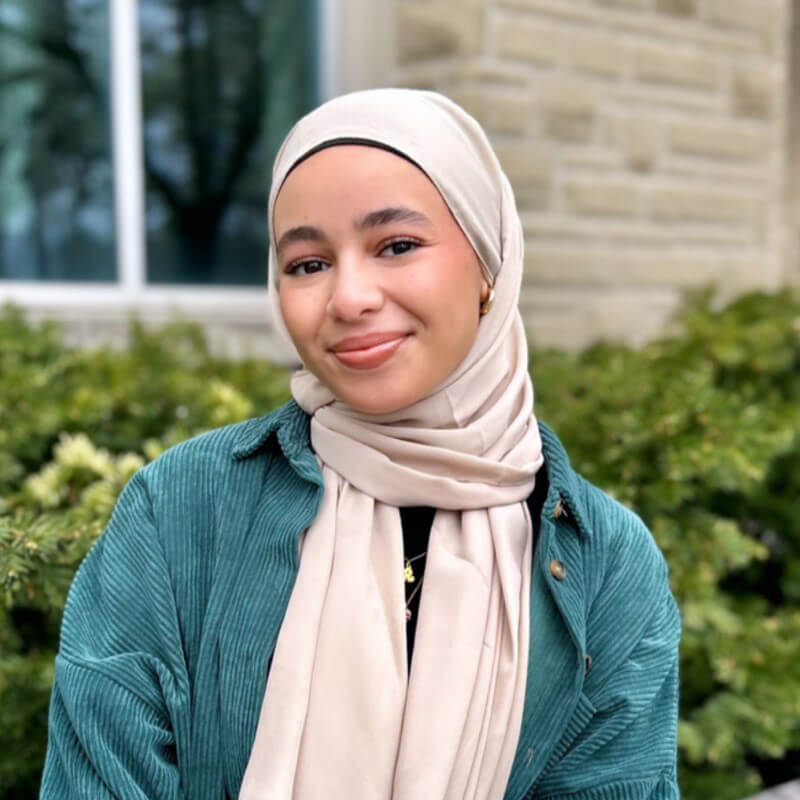
The latest candidate in our series of Q&As with influential women in the technology business is Randa Mudathir, CEO & Co-founder, NovaSonix Healthcare, provider of a clip-on ultrasound attachment that captures AI-analyzed musculoskeletal 3D scans in seconds, delivering advanced 3D imaging at the point of care.
Name: Randa Mudathir
Job Title & Company: CEO & co-founder, NovaSonix Healthcare
Years in the Industry: 5 Years
The Quote That Most Inspires You: One of my mantras, handed down from my graduate school supervisor: “The worst they can say is no.” We pass on opportunities all the time because we’re bracing for rejection, convinced we’re not ready, not far enough along, not the right fit. I’ve lost count of how many times I pushed through that hesitation anyway, and the conversation or opportunity turned into something genuinely valuable. The founders who make it aren’t the ones who avoid “nos,” they’re the ones who stop flinching and learn what each no is actually telling them.
What drew you to a career in the consumer and/or business technology industry?
I have always been drawn to research and technology and originally planned to pursue a career in academia. During my master’s in biophysics, I helped develop the very technology NovaSonix is now commercializing. As we collaborated with physicians on our research, we could see the impact it could have on the current workflow for diagnosing and treating MSK conditions — and we kept hearing the same question: “Will you be selling this? I’d love to have it in my practice.”
It felt shortsighted to keep the device purely as a research tool, so our founding team came together, started pitching it, and spun NovaSonix out to bring the technology to market.
Have you encountered any roadblocks along the way that were related to your gender?
The majority of our team is women, and most of us, with the exception of one co-founder, are first-time founders. We often get asked if we have what it takes to commercially grow the company. What I’ve noticed, though, is that male co-founders in our space at a similar stage and without a commercial background tend to be met with “I know the right person to connect you with to strengthen your team” rather than skepticism about their ability to deliver.
The default response to them is support; the default response to us is doubt. That’s why networks that intentionally go out of their way to support women founders and women-led companies have been so important to us. They close that gap and give us the same kind of constructive backing our male peers receive by default.
What unique characteristics or perspective do you feel you bring to your organization as a woman?
As a woman leading a healthcare company, I bring both empathy and resilience to how I lead. Empathy shapes how we design our technology — keeping the patient, especially populations whose pain is often dismissed, at the centre of every decision — and how I lead our team, by listening first and building space for people to challenge ideas. Resilience comes from building a women-led company in a space where trust and capital don’t come by default; it’s made us more resourceful, more disciplined, and more intentional about every decision we make.
Technology is historically a male-dominated industry, yet the use of tech is fully embraced by women, and many studies even suggest that females are the primary buyers of tech in the home. What do you feel the technology industry needs to attract more women, particularly into high-level positions?
Attracting more women into senior roles in tech starts with fixing how capital flows. Women founders still receive only a small fraction of venture funding, and that gap shapes everything downstream — who gets to build companies, who scales them, and who ends up in the executive and board seats those companies create.
Visibility matters: women can’t aspire to roles they don’t see, so we need more visibly funded, visibly scaling women-led companies — not as exceptions, but as the norm.
Equally important is the shift from mentorship to sponsorship in investor networks. Women founders have plenty of advisors, but what actually moves a company forward is an investor or operator who will put your name in the room, make the warm introduction, or co-invest alongside you.
None of this sticks without structural change at the fund level: transparent investment criteria, accountability for diverse deal flow, and women in decision-making seats on investment committees, not just on diligence calls.
Culture conversations help, but structure is what actually changes who gets funded and by extension, who ends up leading the next generation of tech companies.
If you had to sum up what it is like being a woman in this male-dominated technology industry in just a few words, what would you say?
Swimming upstream, but deeply rewarding. Every win is harder-earned, and every door you open widens the path for the women behind you.
Are there women in the tech industry who inspire you?
Absolutely. I’m inspired by every woman founder I’ve crossed paths with on this journey, and the 2025/2026 Odlum Brown Forum Pitch semi-finalist cohort is a perfect example. Brittany Charlton of Chocovate Labs, Kimberley Hiebert of Door Gurus, Sherry Zhao of Kalino Bio, Adelyn Ho of LaBratory Bras, Eugenia Dadzie of Metacycler Bioinnovations, Vanessa Tynes of Myselfrep.com, Yoobin Lee of Quip Medical, and Amy Yang and Chloe Doesburg of SeaFoam Materials are all building remarkable companies across med-tech, biotech, climate, legal-tech, and consumer goods. What stands out isn’t just what they’re building, it’s the way they show up for each other.
There’s a generosity in this community that I haven’t found elsewhere: sharing introductions, lessons learned, and hard-earned advice, often with women they’ve just met. Being surrounded by founders like them is a constant reminder of what’s possible, and of how much further we can go when we lift each other up.
What are some of the misconceptions/myths about women working in the technology space that you’d like to dispel?
One of the most persistent myths is that women in tech are somehow less technical than their male peers, that we’re better suited to operations, marketing, or “the people side” of the business. In my own experience, my co-founders and also the women founders I admire most, are scientists, engineers, and clinicians building deeply technical companies. The myth doesn’t reflect reality; it reflects who’s been historically given the microphone.
What’s one thing you wish was done differently in the industry, and why?
I wish the industry shifted from mentorship to sponsorship for women founders, and rethought how early-stage diligence is conducted along the way. Mentorship is plentiful, sponsorship is rarer: someone who will put your name in the room, make the warm introduction, or write the first check. Advice doesn’t move companies forward at the same speed that advocacy does.
Tied to that is how women founders are evaluated. Research consistently shows we’re asked prevention-focused questions (“how will you defend against losing customers?”) while male founders are asked promotion-focused ones (“how big can this get?”) Same company, same stage, different question, and a different answer shapes the investor’s perception.
If more leaders committed to actively sponsoring women rather than just advising them, and to running the same diligence playbook regardless of who’s across the table, the funding and leadership gap would close much faster.
How do you feel the latest shift to AI will impact the way you do your job and opportunities for women in the industry?
AI is changing what a small team can accomplish, and that’s a significant shift for women-led companies. Historically, women founders have had to do more with less — smaller rounds, smaller teams, less access to senior talent. AI tools are narrowing that gap.
At NovaSonix, AI is core to our product, but it’s also changing how we operate day to day — research, regulatory prep, market analysis, even fundraising support. The leverage it gives small teams is real, and it means women founders can build and scale companies that previously would have required much more capital and headcount.
Are you optimistic for the future in general and for the industry?
I’m optimistic on two fronts. For the industry, I see a generation of women founders building category-defining companies in medtech, biotech, climate, and AI — and a growing network of investors and operators who are actively sponsoring them, not just advising them. That shift alone will change who ends up leading the next decade of tech.
For NovaSonix specifically, I’m optimistic because the problem we’re solving is real and urgent: patients are waiting months for diagnoses they shouldn’t have to wait for, and clinics are losing revenue they shouldn’t have to lose. When the problem is that clear and the technology works, the path forward is, too. Both kinds of optimism feed each other.