

All Her Fault is a mystery thriller limited series on Peacock (available on Showcase in Canada) with a fantastic cast, a soapy plot, and a storyline that will punch you right in the gut. But there’s serious subtext with this series that’s arguably far bigger than its core premise. It sheds light on the challenges, expectations, and under-appreciation of working moms.
Sure, the story is told through the lens of extremely wealthy couples with homes the sizes of residential streets and incomes that allow them to afford nannies. But these are also moms who truly love their kids, make time to spend with them, and are doing their best to balance it all. If they didn’t, they wouldn’t be able to fulfill their professional dreams, too. Wait, what? Isn’t this a show about a missing child? It is. But it’s about so much more.
What is All Her Fault About?

All Her Fault stars Succession‘s Sarah Snook as a mother faced with the unthinkable: she goes to an address to pick up her five-year-old son from a playdate only to learn that they aren’t there. That mother doesn’t live there, just a friendly retired woman. In a panic, she tries to figure out what happened, where her son is, and who has her.
The initial event is inspired by a true story, based on the Andrea Mara novel, but the writing takes it into a fictional, twisty mystery thriller direction. It’s emotionally draining, a new twist revealed in every episode, keeping you guessing like any mystery should. It isn’t so much about who took five-year-old Milo (Duke McCloud) since that mystery is solved early on. It’s about why, who else was involved, and the fallout. The not-so-subtle depictions of the hardships of the working woman play into the series title from the perspective of not just Snook’s Marissa, but other characters, too.
The Plot Takes Twists and Turns

Beyond the subtext, the main story in All Her Fault is every mother’s worst nightmare. In fact, I have friends with young children who expressed that they watched the first 15 minutes of the show and couldn’t go any further because it made them downright nauseous.
While twists and turns sidetrack from the theme of mom blaming, that theme is revisited throughout. The story overall gets somewhat fatiguing by the middle, but that also makes the show incredibly binge-able: I watched all eight episodes over two days, finding myself unable to resist pressing play on the next episode, sleep be damned. It wasn’t even so much because the show is so good, but more so because I wanted to see what ridiculous angle would be covered next.

It’s an entertaining show with clever red herrings meant to throw you off the scent, but also show how everything is, or can be, connected and explained. As the story progresses, it pieces together like a puzzle, almost too neatly. You can almost see the lightbulb go off above Detective Alcaras’s (Michael Peña) head each time he connects dots, which happens almost too often and too easily. Seriously, if he’s that perceptive, why doesn’t this guy work for the FBI?
Despite the campy, almost sleazy, feel at times, it’s fun to imagine the writing process behind creating the narrative. In fact, watching feels like you’re relaxing in your reading nook at home with a cup of tea, obsessively turning pages of a trashy novel. No, you can’t put it down.

All Her Fault is full is cliches and “rich family” drama. But at its heart, the issues the families face aren’t reserved just for the wealthy. They carry over to middle-class dual-income families, too. The skeletons the characters carry in their closets, from gambling and pill addictions to guilt, neglect, and an intense need to be needed are ones that can be experienced across any income level. They’re just a lot easier to deal with when you have money.
The end is predictable in one way but there’s also a final twist you won’t see coming, affording a worthwhile pay-off. Despite being soapy, All Her Fault is so incredibly acted that it doesn’t matter. The paint-by-numbers plot comes across like a high-brow show, largely because of the fantastic cast that carry every scene.
All Her Fault is Rife With Subtext

The way the family uncovers truths and begins to crack at its seams will remind you a lot of another Peacock series, Apples Never Fall, the framing and storyline like Netflix’s The Perfect Couple. But it also has Gone Girl vibes to it in how facts are twisted to fit a media narrative and public perception because the couple is wealthy. Interestingly, that perception never has anything to do with the dads, though.
And that’s an overarching theme throughout: the plight of the working mom. If moms want to work, they need to figure it out, right? This is antiquated thinking, and thankfully, there are many progressive men, workplaces, and establishments that don’t live by such beliefs. But beliefs are just that, and these women live the truths. And it’s far from an equal balance.

The plotlines don’t completely shit on dads (not all of them, at least), but they do amplify the attitude of the laisser-faire father who doesn’t pull his weight in the home, especially when it comes to the child-rearing. He often minimizes the importance of the wife’s job (despite her clearly bringing in a sizeable income), and even at times disregards it as unimportant, or at least not as important as his obligations.
The wives are the default parents who need to rearrange schedules, duck out of meetings, and risk huge clients for the sake of their kids. The dads sub in from time to time like a superhero who swoops in to save the day. But they never make it easy when they “have” to do so, and it’s usually only after she has exhausted every other option. As long as they keep telling their wives how amazing they are, however, it’s okay, right? She can do it all! But maybe, she doesn’t want to.
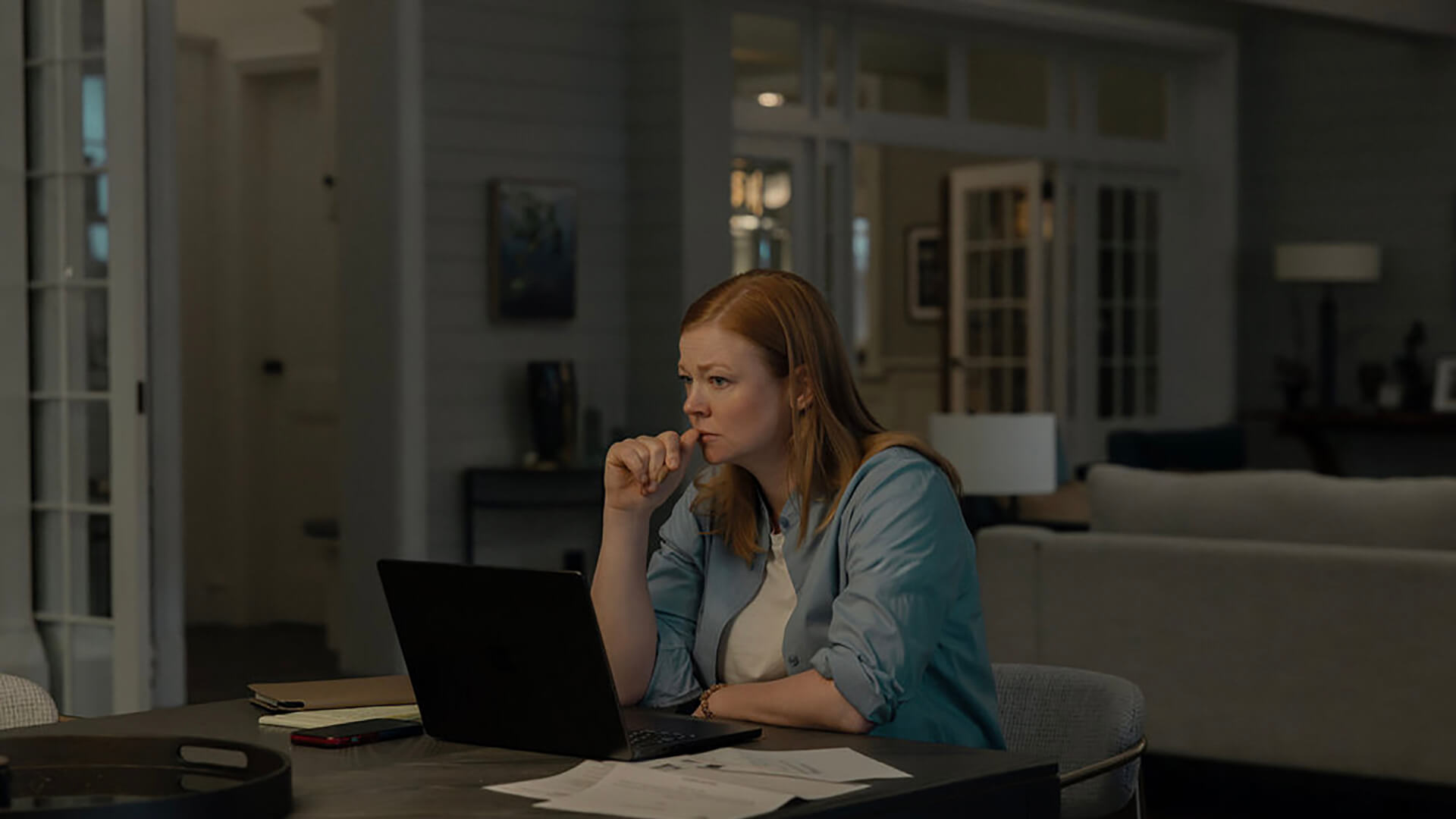
This leads to a bigger part of the plot, which is not only moms carrying a heavy load no one rarely sees, but also carrying all the weight of the blame when something goes wrong. In the scene when the police are asking Marissa and her husband Peter (Jake Lacy) about the events that led up to Milo going missing, Marissa is made to feel like it was all her fault. Of course, since the nanny was off for a few days, it was automatically up to Marissa to figure out after-school pick-ups. Jack was nowhere to be found, never considered to be the one to handle that, and thus never at fault.
In other scenes, school parent representative Sarah (Melanie Vallejo) constantly tries to twist Jenny’s (Dakota Fanning) arm to join the volunteer committee, minimizing the importance of her job and neglecting to care how stretched her schedule already is. Jenny is the mom, after all, and she should be more involved with school activities and fundraisers like Sarah is as a stay-at-home mom. Where’s dad? He’s busy.
Should You Watch All Her Fault?

If you like mystery thrillers, All Her Fault will be worth watching, but wait until you have a significant chunk of time to carve out in your schedule because you’ll want to immerse yourself in the entire thing at once. It’s not an Emmy-worthy show, though Snook delivers an Emmy-worthy performance (Peña is worth calling out as well, especially in the scenes of tender moments shared with his son). But it will keep you gripped from start to finish. Bear in mind that the subject matter might be too much to handle, especially for those with young kids.

More than anything, All Her Fault will appeal to working mothers, especially those in demanding careers who try to balance it all. Those self-professed progressive dads who claim to help but don’t realize they aren’t making the same sacrifices nor putting in the same effort may find various moments and conversations enlightening. “Whenever you’re left in charge, you always want to know when it will end,” one character asks her husband when he questions when she’ll be home. “I’m the default parent.” It doesn’t matter that she’s a working mom. She’s still the mom.
In the end, All Her Fault is a campy story about a missing child and a salacious plot surrounding his abduction. But it’s also an ode to working moms. Further, it’s a story about the lengths we’ll all go, moms and dads, to protect our children. In the end, it’s not all her fault. But somehow, it still is.
Stream All Her Fault on Peacock in the U.S. and Showcase in Canada.