

Pros
- Useful camera features like Center Stage auto-rotate, dual capture
- Sleek and durable form factor
- Great trio of 48MP cameras
- Ultra-bright screen
- eSIM only design
Cons
- Not a massive leap in feature set
- Expensive
The Apple iPhone 17 Pro isn’t a huge leap over the last few generations in every respect, but there are some notable upgrades that some will appreciate. These mainly pertain to durability, the cameras, battery life, and screen. I had the chance to test the phone to bring you my thoughts on the Pro model. I’ll also help you choose which 2025 model to get. Should you grab the iPhone 17 Pro, or the iPhone 17, 17 Pro Max, or Air? Spoiler alert: I think most should choose the 17 Pro, and here’s why.
About the Apple iPhone 17 Pro

The Apple iPhone 17 Pro has a Ceramic Shield 2 cover on both the front and back that offers better scratch resistance along with a brushed aluminum unibody design crafted with lightweight aerospace-grade 7000-series aluminum alloy to deliver improved thermal performance. The new internal architecture features an Apple-designed vapour chamber to enhance heat dissipation and performance. Of course, it comes with all the features of iOS 26 including Apple Intelligence upgrades.
For the first time, there are three 48MP Fusion cameras: a main, ultra-wide, and a new telephoto with the longest optical-quality zoom ever on iPhone at 8x, along with an 18MP Center Stage front camera with exciting new feature like the ability to auto-adjust the frame to get everyone in a selfie while still holding the phone vertically. It also allows for dual capture mode, recording both you and what’s in front of you. There are also video features for pro filmmakers and content creators like ProRes RAW, Apple Log 2, and genlock.

Equipped with a 6.3-inch Super Retina XDR display with ProMotion up to 120Hz and up to 3,000 nits peak brightness, it has improved battery life of up to 33 hours of continuous video viewing. It can charge to 50% in just 20 minutes with an optional high-wattage USB-C power adapter like Apple’s new 40W Dynamic Power Adapter with 60W Max.
It’s worth noting that the phone is eSIM only, so you’ll have to convert a physical SIM to eSIM if you’re upgrading from a much older phone. It comes in 256GB, 512GB, and 1TB capacities in Cosmic Orange, Deep Blue, and Silver, starting at $1,599. Depending on the region, you should get three free months of Apple Arcade, Apple Fitness+, Apple Music, Apple News+, and Apple TV+ with a new subscription.
Apple iPhone 17 Pro Review

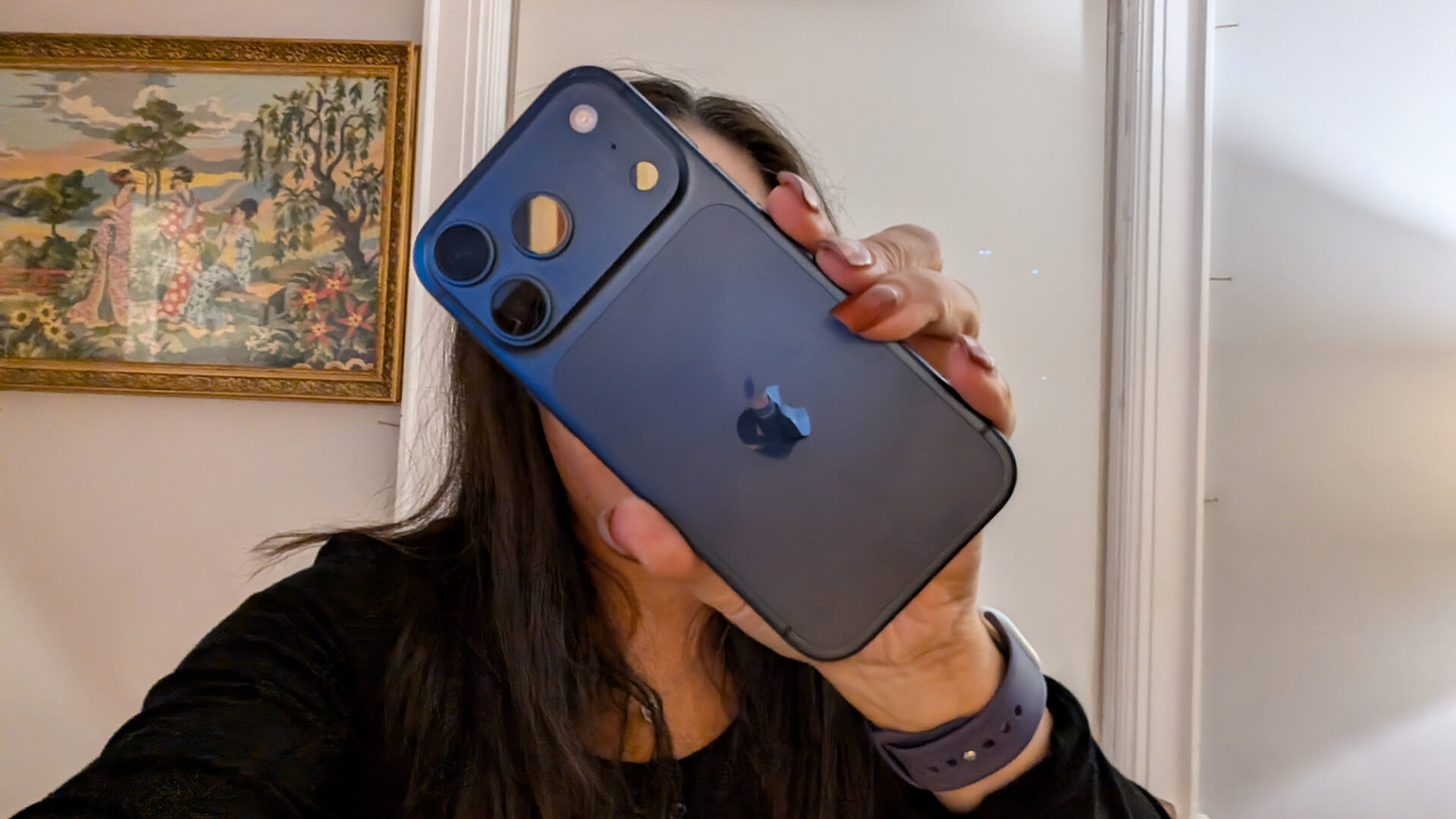
Upgrading from an Apple iPhone 15 Pro, there are some notable visual differences, including the camera arrangement on the back as well as the back design. The iPhone 17 Pro cameras take up the entire top quarter of the back of the phone, and protrude out as much as the 15 Pro. The screen is pleasantly larger, however, even though the phone itself doesn’t seem much bigger. The phone feels more durable in the hand, with a smooth back and textured sides. You’d be confident using it without a case, though I’d still recommend getting one, as I do for any phone.

Since both are updateable to iOS 26, operation is much the same. You get a nice, fluid experience navigating through menus and apps thanks to ProMotion (this feature is in the 15 Pro as well). I haven’t noticed any major differences in battery life. If you’re a heavy user, still be prepared to recharge daily. Adaptive Power, new to iOS 26, takes usage patterns into account over time to help conserve battery life. It supposedly learns when you’re likely to run low and adjusts settings accordingly to extend it. I’ll have to spend more time with the device to gauge how well this works.
Better Camera, Cool Camera Features

The real magic comes with some of the defining features, like the cameras. For the first time, all three are 48MP, allowing you to get improved photos with better zoom thanks to the 8x telephoto lens, the longest-ever for an iPhone.

I took some shots at Adam Sandler’s Your My Best Friend Tour in Toronto. Sitting from way up in the 300s section, I was still able to get decent shots by leveraging the 40x digital zooming all the way into the stage. While it’s not crisp and clear, it’s impressive considering how far away I actually was.

I also tried taking a few photos at the default 24MP resolution then 48MP to see the difference. In this close-up of a neighbourhood tree, you’ll notice slightly more depth and crispness in the 48MP shot.

The 18MP Center Stage front camera has some useful tools. Most notably the ability to auto rotate so you can get everyone in a group selfie in the frame without having to physically turn your phone sideways. Hold it vertically as you normally do with this feature on, centre the photo, and it will zoom out to capture people on the sides. It’s a feature I can see myself using often, and in fact already have. It also works with video calls, keeping your face centred in the frame, regardless of how you move.

There’s also dual capture mode, which content creators will love. While filming what’s in front of you, turn this mode on to capture yourself in a smaller frame in the corner. It might be your reactions at your child’s game or filming your video game while commenting on what’s going on. There are no extra cameras needed, no third-party software. It just works. Add AirPods Pro 2 to the equation and they can serve as your enhanced mics, instantly connecting as the audio source.


I also did some tests with Macro photography, getting up close to especially textured subjects to see how much detail would be captured. Here are some results.
Apple Intelligence is Making Headway

Apple Intelligence is baked right in, and you get access to all the same features to which you have become accustomed since Apple launched its own AI. A standout is Visual Intelligence. Press the side button at any time to get details about things around you, like plants and animals, or to summarize details on a poster or article, even have it read something aloud.

I tried its capabilities in a variety of situations, including pointing the camera at some herbs I have growing in the backyard, a shell in the living room to learn more about where it came from, and snapping a photo of this very article on my computer to have it summarized. Everything happens so instantaneously, it’s mind-blowing. Many of these features leverage ChatGPT, and while I still find Gemini to be a leader in this space, you can still achieve a lot using Apple Intelligence.
Should You Get the iPhone 17, 17 Pro, 17 Pro Max, or Air?

If you’re ready to upgrade, the big question is which of the four new models should you get? I find that the Pro model in any iPhone series is always the Goldilocks option. It has boosted features without the larger size of the Pro Max. The iPhone 17 Pro and 17 Pro Max are virtually identical but for the screen size and battery life. The latter phone also has a 2TB option. If you prefer bigger-screened phones, you get a few additional benefits with the Pro Max. But most people will prefer the Pro, especially since it’s a bit larger than older Pro models.
What about the iPhone 17 versus 17 Pro? Aside from different colours, you’ll make some concessions if you choose the 17 versus 17 Pro. It has the same sized screen and same exterior design, but it’s powered by the A19 versus A19 Pro chip, with a 5-core versus 6-core GPU. Battery life is rated at three hours less, but you still get the 18MP Center Stage front camera and dual capture. The iPhone 17 has a 48MP Dual Fusion camera system but it’s missing the telephoto lens. For video, you can capture 4K video at 120fps with the Pro and only 60 fps with the standard iPhone 17. The iPhone 17 Pro also supports USB 3 for faster transfers with an optional USB 3 cable, and the iPhone 17 does not have a 1TB option: it maxes out at 512GB. If the boosted specs would make a difference for you, it’s worth the extra $470 to go Pro. This will also futureproof the investment. You might not be doing things like creating content right now, but your needs could change in the near future.
The wrench thrown into the mix this year is the new concept iPhone Air. This one is a bit of an enigma because it’s a departure from Apple’s usual three-product line-up. The addition is ultra-slim yet durable. But it’s tough to determine to whom it might be catered. Maybe businessmen and women who want to show off the slim and sleek design? Women who want something ultra-lightweight in their clutch purse or the side pocket of their running pants? The design aspect comes down entirely to personal preference. But the slim design comes at the expensive of many features. Specs-wise, it’s a step down you might not be willing to make.
The iPhone Air screen is slightly larger than the iPhone 17 Pro at 6.5 inches, so it might be worthwhile for those who find the Pro screen too small but the Max too big. You get a sleek titanium frame as standard, the same A19 Pro chip but the 5-core GPU. Because of the incredibly slim size, battery life is lessened to just 27 hours of video playback, which means you’re losing a whole six hours when compared to the 17 Pro. That’s a big deal for power users. While Apple offers a super-slim snap-on battery pack, if you need to use it most of the time, that defeats the purpose of getting this phone in the first place. Thus, it might not be the best option for heavy power users.
You’re also losing out on the cameras with a single 48MP main camera. The 18MP front camera, however, does support Center Stage and dual capture modes. There’s no Macro photography capability and optical zoom taps out at 2x, almost not even worth using. There is a 1TB option, so that’s a plus. This phone is best for business users who don’t do anything crazy on the device except use it as their lifeline to the office and family. With that said, if your needs aren’t top-end, this is the sleekest, sexiest iPhone around.
Should You Buy the iPhone 17 Pro?
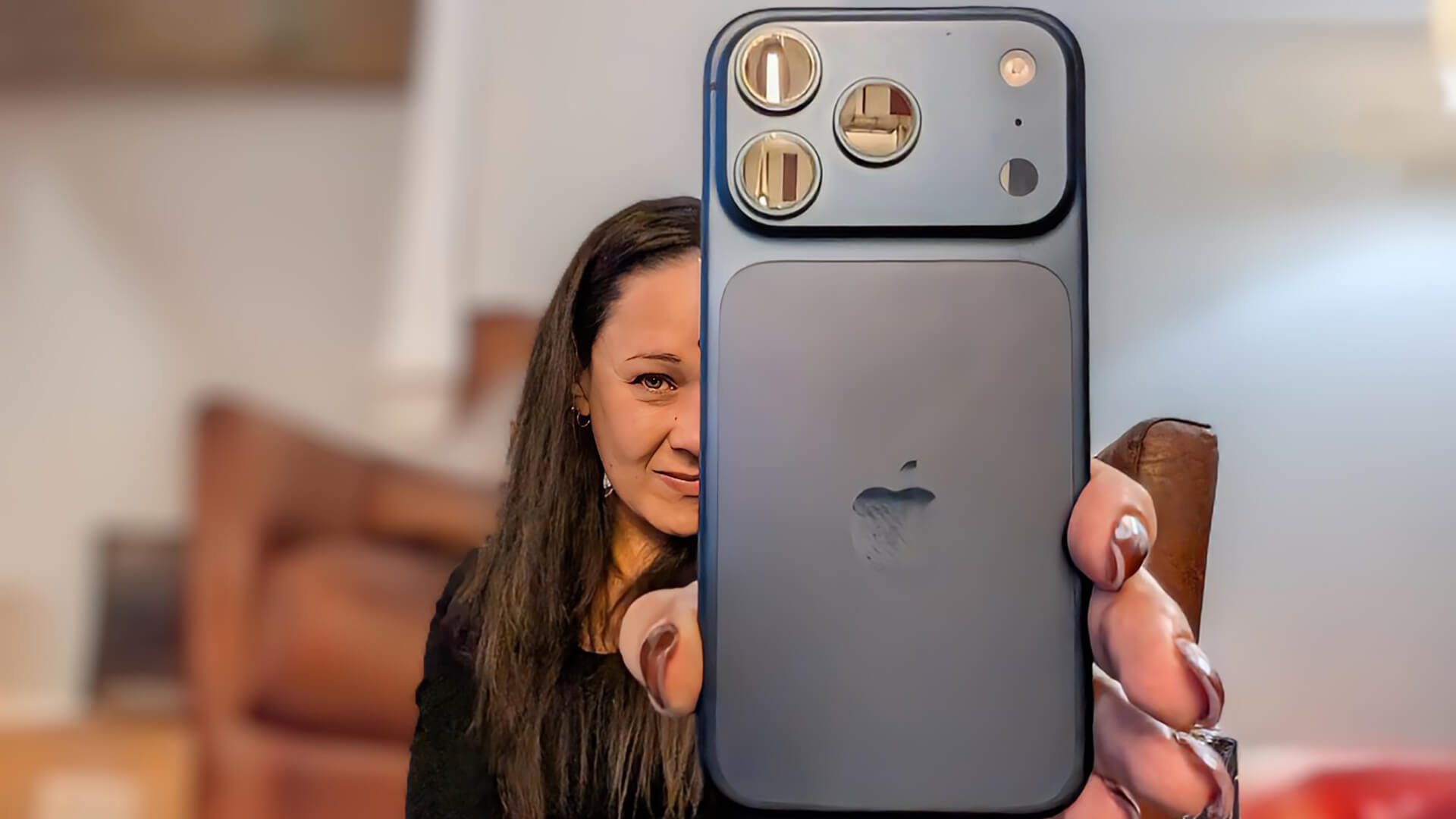
If you’re coming up on phone upgrade season, the iPhone 17 Pro is the model in the line I would recommend. Go with the 17 Pro Max if you like bigger phones. It has the most power and performance, the best cameras, plenty of storage, and great battery life. But the 17 Pro is probably the best option for most, with a nice balance of features, size, and price.
In terms of AI intelligence, when it comes to all four phones, Apple has some work to do to catch up to Gemini. But the intelligence features, many powered by ChatGPT, are still cool nice-to-haves. I love seeing summaries of messages, for example, instead of the entire message, and being able to use cool features like Genmoji. iOS 26 boasts fantastic features that incorporate AI, which you get with older-model phones, too, once you update them to the new OS (it’s compatible with iPhone 11 and newer models).
Still, if you’re on an upgrade path and have a phone older than the iPhone 15 Pro, which was the first model to support Apple Intelligence, I’d recommend jumping right to the iPhone 17 Pro. If you have a 15 Pro or later, the decision depends on how much you value upgrades like the more durable design, brighter screen, improved performance for things like gaming, new camera features, and slightly improved battery life. If you find a great deal through a carrier to trade up, you’ll probably find you use a lot of these features more than you anticipated.