
We’re well into the throes of the holiday season, and for those who work in the industry, that means CES is already on the mind. Whether you attend in person or follow the announcements via virtual briefings and news updates from home, it’s the most exciting time of year for the technology industry.
This year will see some changes to the newly upgraded main venue, the Las Vegas Convention Center, along with a refreshed list of trends to watch. Some of these have been recurring themes over the last several years, like mobility tech, health tech, and of course, that buzz term AI. During a virtual CES briefing earlier this month, members from the Consumer Technology Association (CTA), producers of the event, shed some light on what we can expect.
Highlights of What’s to Come

This year, CTA CEO and Vice Chair Gary Shapiro notes that we can once again expect to see thousands of exhibitors across all industry verticals showcasing products, software, concepts, and technology in emerging and established areas like AI, digital health, mobility, immersive entertainment, and accessories. New exhibitors this year include IKEA, Mobilus, and Art Fusion.
A new set-up called CES Foundry will take place January 7 and 8, 2026 with dynamic programming, demos, and networking opportunities across two stages. We can learn about AI use cases for companies like AMD, AWS, NVIDIA, and Bosch. The executive vice president of Walmart will also be on hand to talk about how AI is revolutionizing retail.
The Innovations Awards are back, and this year, there were 3,600 submissions, which Shapiro says is the most they have ever received. There are also new awards categories exploring and emphasizing how technology is shaping every sector of the global community.
Along with the digital health summit, which has been an integral part of the show for the last several years, there will also be a new accessibility stage. Oura is one of the latest companies to join the show to deliver a keynote address.
Emerging Categories to Watch

Every year, CES highlights emerging categories in tech. While we don’t know until we arrive which categories are really dominating the show floor, there are a few ones that stand out as likely being big.
Mobility: How we get around is so different, says Shapiro, who notes that the show will highlight innovations across air, land, and sea.
Robotics: From humanoid robots to smart robots that help with tasks in the home, even smart pets, and industrial robots for manufacturing, expect to see lots of ways that companies are brining machines to life.
Digital Health: As this category continues to grow and evolve, we’ll see more in this space, including products that leverage AI-powered diagnostics, from wearables and telehealth. These products are designed to be proactive versus reactive, helping to manage chronic conditions and track wellness in real time. Think everything from smart rings to blood glucose monitors, smart toilets that analyze your urine, and more.
Smart Glasses: We went through the wave of fitness trackers, then it was smartwatches. This shifted to more feature-rich smartwatches, then smart rings. The next evolution we’ll see at the show are smart glasses, which are poised to be a dominant category this year.
AI in Video: While video and audio entertainment have been taking a backseat the last few years, this year, they’ll still have a massive presence with a focus on AI features and software integration once again.
Smart Appliances: These are no longer just refrigerators with built-in touchscreens. The latest smart appliances work cohesively within your entire smart home ecosystem. This means the stove talks to the TV, which talks to the security camera. Expect to see some pie in the sky concepts for both large and small appliances.
Qi2 25W Charging: While the number of mobile devices that support 25W Qi2 charging is limited, this is the next evolution in wireless charging. Last year, brands were showing off innovations in Qi2 charging, the faster, more efficient version of Qi wireless. Now, we’ll see Qi2 25W chargers that increase the speed of wireless charging for devices that support it.
Navigating the Show
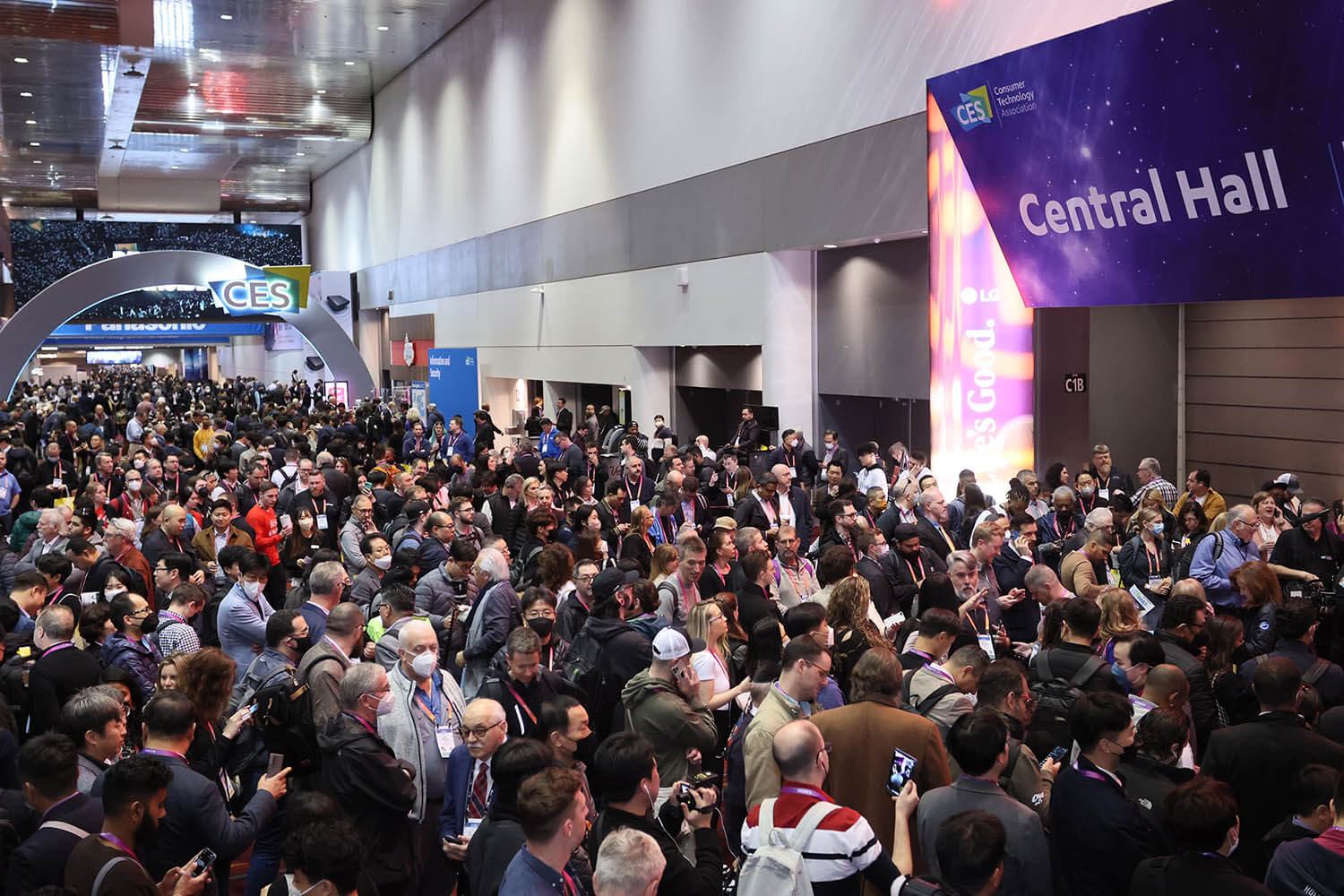
Any CES veteran will tell you the usual tips
- Wear comfortable shoes.
- Leave lots of time to get around (nothing is quick and every place is farther away than it appears).
- Plan meetings and booth tours in the same venue for each day. Going back and forth is near impossible.
- Leverage the free shuttles when you can as well as the Monorail.
- Pack hand sanitizer and use it often.
- Always bring water and stay hydrated.
- Bring snacks in case you don’t have time to eat (line-ups are long).
- Download the official CES app as it will come in handy when you’re looking for a booth or meeting room.
The CES Venues

Navigating the show is the biggest challenge because CES is not only massive, but events are held across a dozen official venues along with other private suites. Here’s a brief breakdown.
Las Vegas Convention Center: It’s broken up into four halls.
- West Hall – Mobility, where you’ll see everything from cars to tractors.
- North Hall – Robotics, energy, smart communities, and industrial AI.
- Central Hall – All the top tech brands offering immersive entertainment, gaming, audio, and video. The Creator Space is also located there this year.
- South Hall – Reopened last year, it’s where you’ll find designer sourcing and accessories. Think chargers, cell phone cases, and other nick knacks.
Fontainebleau: This is where the CES Foundry is as well as quantum innovations.
Venetian: You’ll find health and better living tech, smart homes, fitness, lifestyle, food tech, and Eureka Park for startups.
Other locations: Several events take place at other locations, like CSpace at various hotels and the Lenovo keynote at the Sphere.
AI, AI, AI

Shapiro along with Kinsey Fabrizio, President of CTA, discussed how AI will be prominent throughout the show. In terms of overall trends, this includes the way AI is transforming digital health, hardware, and software for mobility. Brands will showcase how AI is turning devices we love into platforms to change the individual experience. This includes everything from smartphones to computers and TVs from top brands like Samsung, Lenovo, and LG.
Smart glasses and spatial computing are being used not just for fun consumer purposes like gaming and content creation, but also business use cases, like surgery and warehouse optimization. Industrial AI, meanwhile, is being leveraged in areas like logistics, manufacturing, and infrastructure.
Building on the overarching theme of AI, this year will look at agentic AI, the shift from AI responding to our prompts to taking initiative. This means everything from your smart home knowing you’re cold and raising the heat for you or smartly adding ingredients to your shopping list when you create a dinner menu for your Sunday gathering, to computers being able to simplify workflows when you need to call up data and create a graph, even an entire presentation.
More About the Software

So, once again, this year, the show will be more about the software and the technology than about the hardware that uses it, or at least both will receive equal weight. For wellness, it will be about proactive treatment. For mobile, it will be about cars as software ecosystems with their own operating systems. For smart glasses, it will be about the applications, not the eyewear.

Overall, it’s poised to be another great show. WiFi HiFi will be reporting live from the show floor. Bookmark our CES news page and follow me on Instagram @christineTechCA for glimpses of cool products, events, people, and venues as I navigate the event.
CES 2026 takes place January 6-9, 2026 with media events beginning as early as January 4, 2026.