
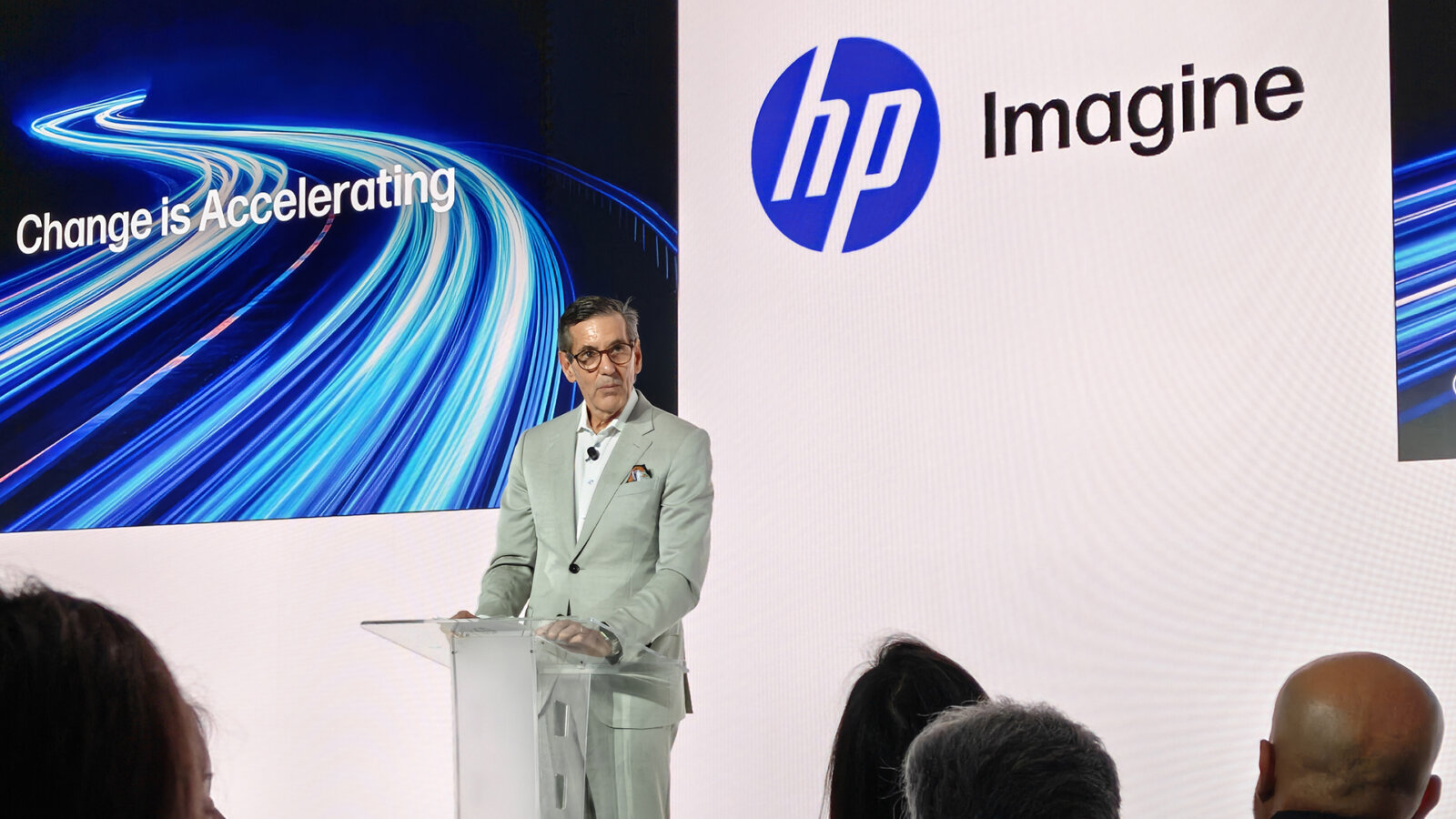
The annual HP Imagine conference took place in New York City this week, introducing a slew of new products and innovations for business users. The key highlights include the launch of the company’s connected, intelligent ecosystem called HP IQ, new high-powered laptops and desktops, and HP TPM Guard, a hardware solution for laptops designed as another layer of security preventing physical access attacks that can defeat BitLocker drive encryption. While HP Dimension with Google Beam isn’t new, launched at Infocomm last summer, I also had the chance to demo it for the first time at the event.
HP IQ Offers On-Device AI
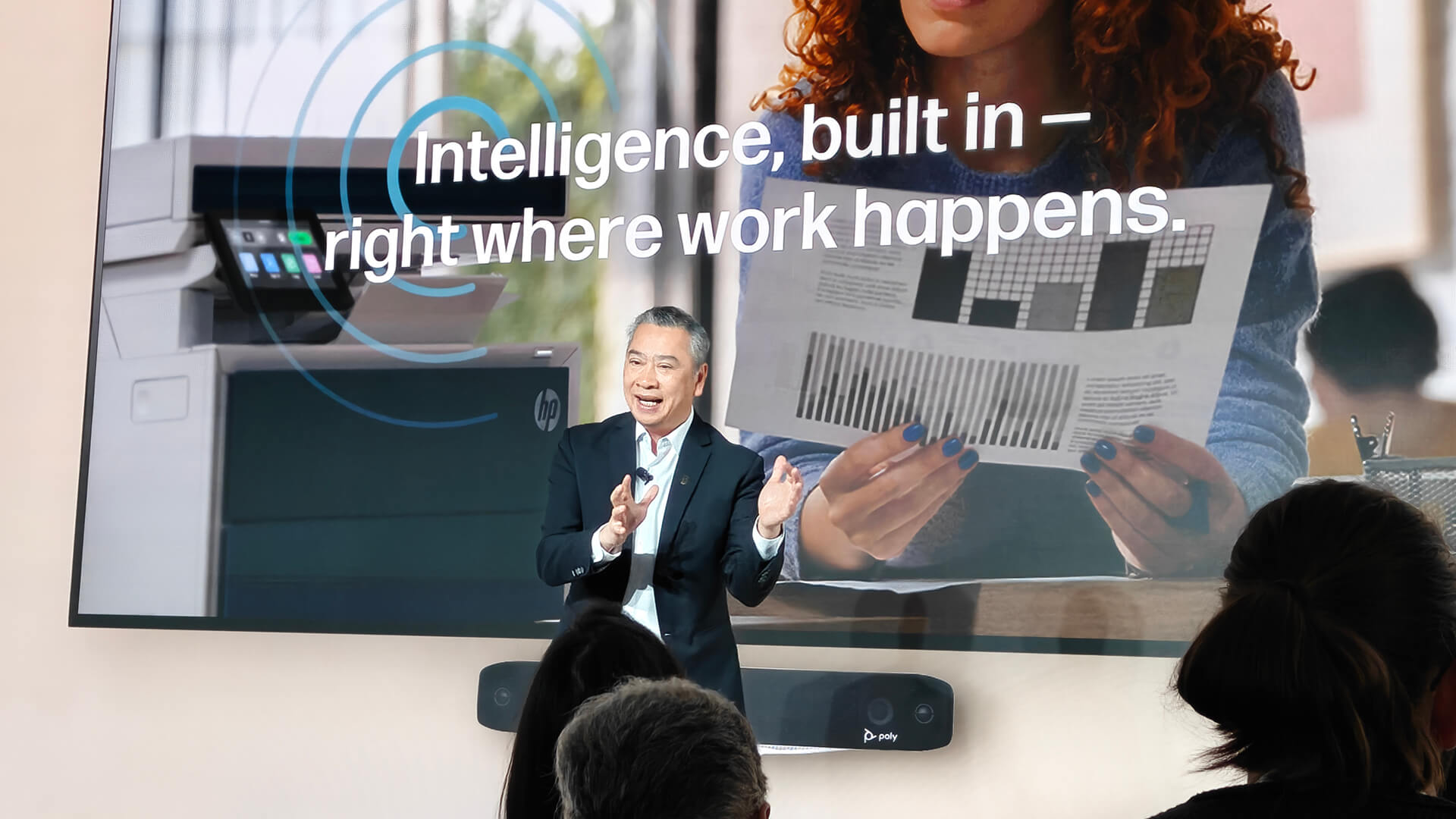
AI is available across virtually every new, premium laptop through services like Microsoft Copilot and Google Gemini. Many brands are offering their own versions of AI assistants as well. HP already has AI Companion, and at Imagine, HP introduced HP IQ, a local, on-device AP that also offers proximity-based connectivity for enterprises. Based on a local LLM, it’s an intelligence layer and AI orchestrator that decides where to send what query.
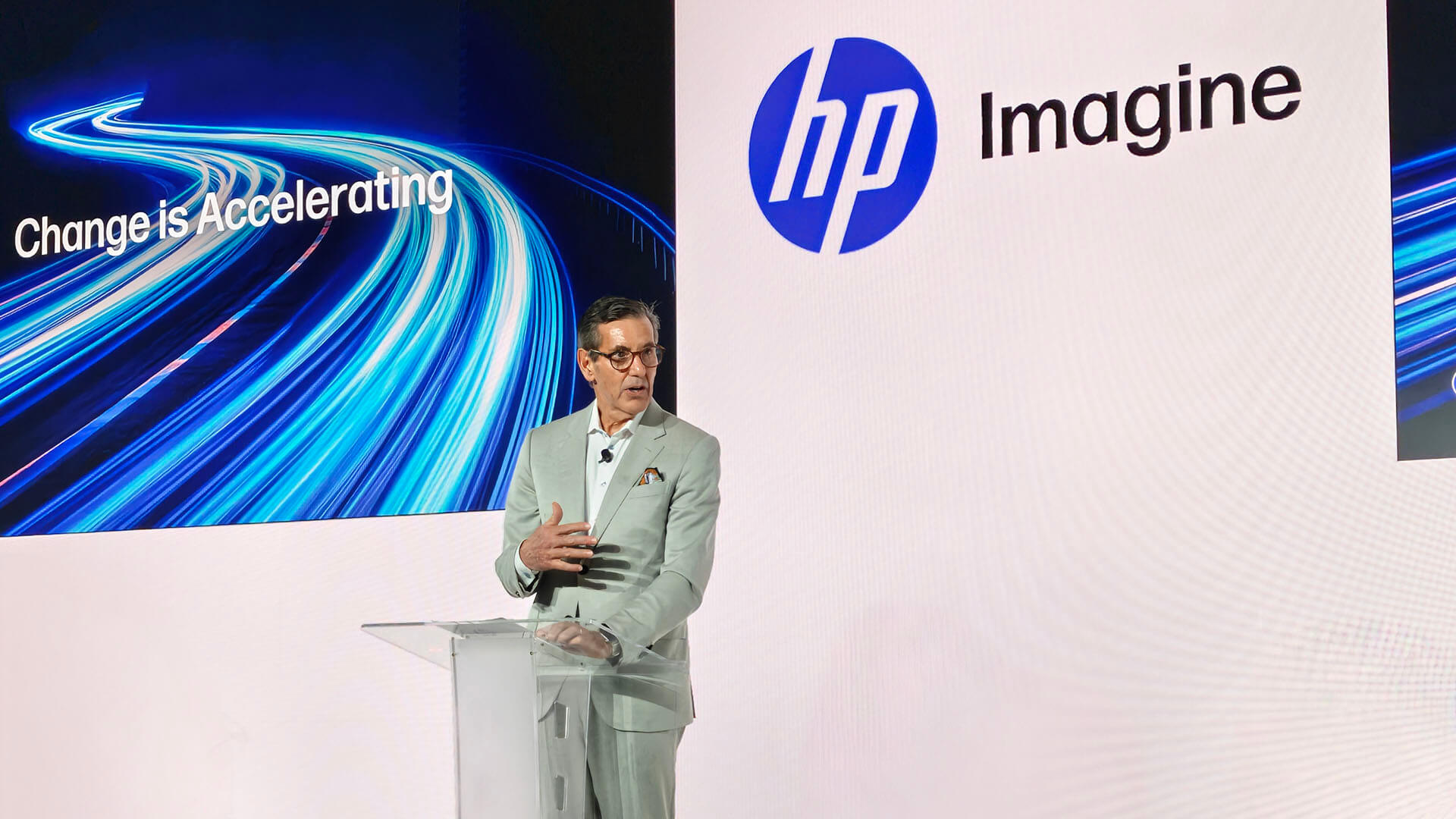
“As we think about our history,” said Bruce Broussard, interim CEO of HP Inc. during his opening remarks, “the industrial age brought us machines, digital brought us transformation of information, mobile put it in our hands. And now, AI augments, analyzes, it helps us in deciding, it creates in real time, and expands what we thought possible and how work gets done.”
Designed for enterprise users and debuting on the next-gen HP EliteBook X G2 PCs, HP IQ’s on-device intelligence and proximity-based connectivity is designed to enhance productivity. Accessed through a new Visor interface, Ask IQ responds to text and voice inputs, surfacing intelligent, contextual answers and guidance. It can do things like help you interact with personal files, from text documents to PDFs and even PowerPoint presentations, providing summaries and actionable insights. Keep a record of interaction to help organize notes so they’re more easily shared and searched. You can also use it to quickly capture ideas or record notes during a meeting.
There’s also NearSense, a spatial intelligence features that can detect nearby computers for real-time sharing. You can do things like drag and drop documents, images, and presentations to colleagues, as well as join a conference room meeting in a single click. Over time, HP NearSense will be expanded across the HP ecosystem to HP Poly video conferencing solutions, print devices, desktops, workstations, peripherals and more to assist with pairing, casting, printing, and scanning without the need to install drivers.
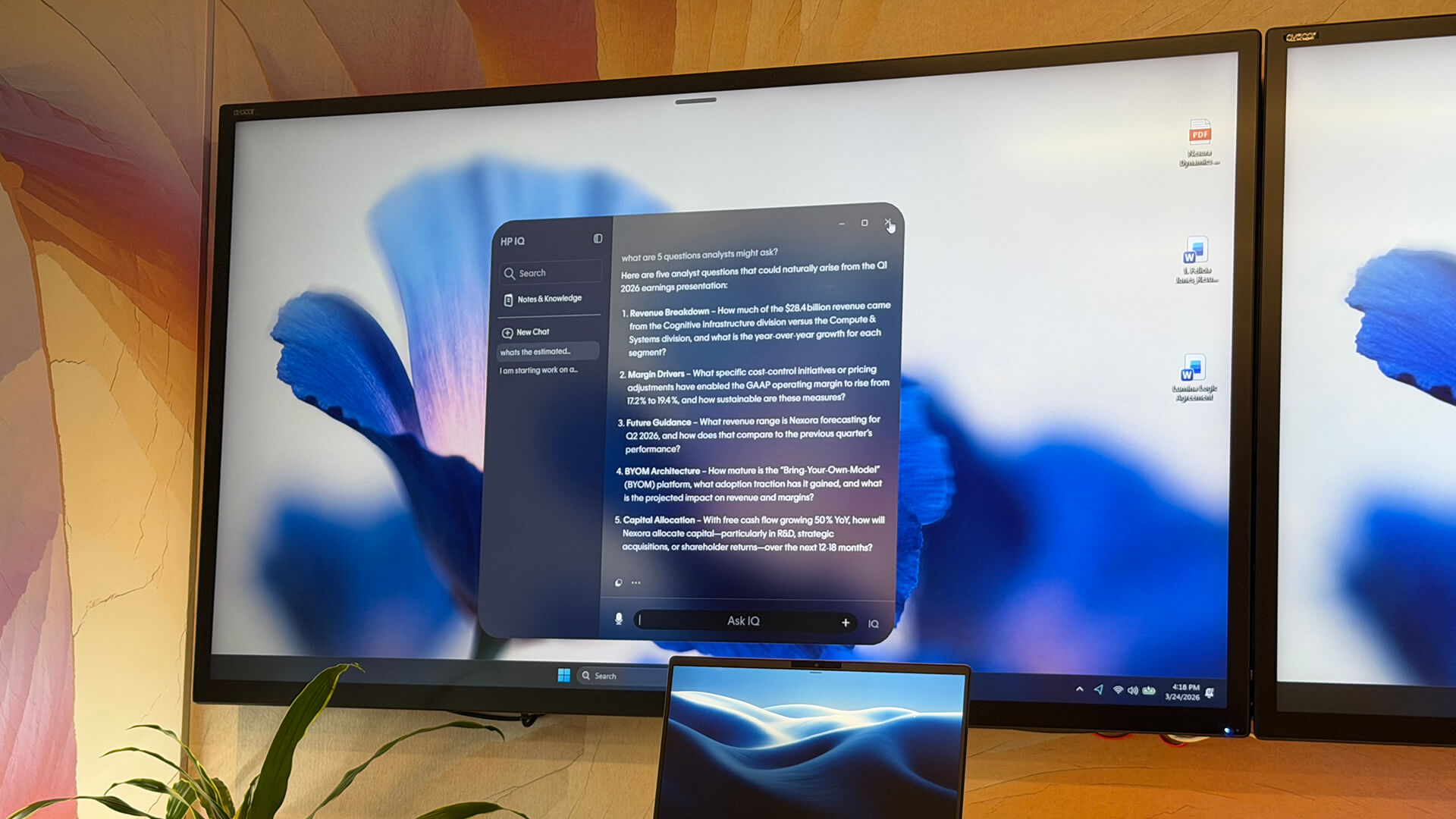
HP IQ is designed to run most experiences on-device, only routing select tasks to the cloud when permitted by enterprise policy and user permissions. This prioritizes keeping data on-device, reducing exposure risk and ensuring sensitive information, proprietary IP, and enterprise knowledge remain within IT’s control.
“[AI] is helping people move faster from ideas to insight to action,” adds Broussard. “It’s also…making devices faster, more secure, more effective. Devices are personal AI platforms that are intelligent, adaptive to the individual.” For the enterprise space, this includes everyone from retailers to healthcare workers and even TSA agents.
HP IQ will be available via early access starting on select HP AI PCs in Spring 2026. It is planned to expand to additional select HP notebooks, desktops, and Poly Studio Video Bars as part of a limited Summer 2026 release, with AI capabilities continuing to evolve through ongoing software updates. New HP IQ-enabled devices are expected to begin shipping in Fall 2026, with broader availability rolling out to more products across the HP portfolio starting in the second half of 2026.
HP Dimension with Google Beam is the Future of Meetings
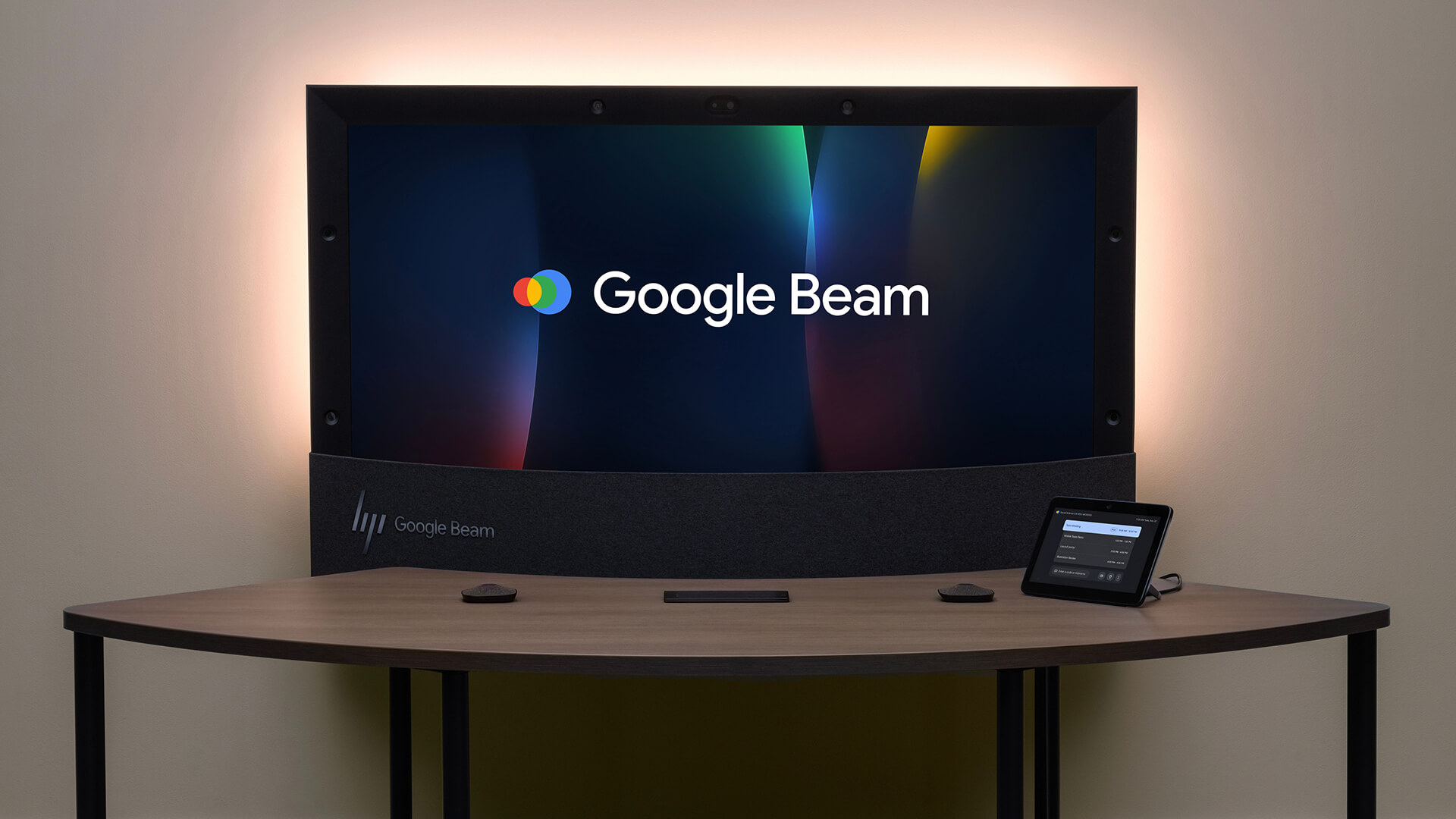
Google announced Google Beam in May 2024, and HP announced its HP Dimension with Google Beam setup at Infocomm 2025. The 3D video communications solution is designed for offices, allowing two people to communicate as if they were in the same room, even if they’re in two different locations, even countries. The AI-powered set-up is unique in that it doesn’t require any additional equipment like headsets, glasses, or other wearables.
Developed in partnership with Google, HP Dimension with Google Beam offers 3D imaging with natural eye contact via six-camera capture, spatial audio, and adaptive lighting. I tried it in a closed room at the HP Customer Experience Center in New York, talking with a woman located in Texas, and it was a trippy experience. She held up an apple, and it appeared to be floating through the screen, almost as if I could touch it.
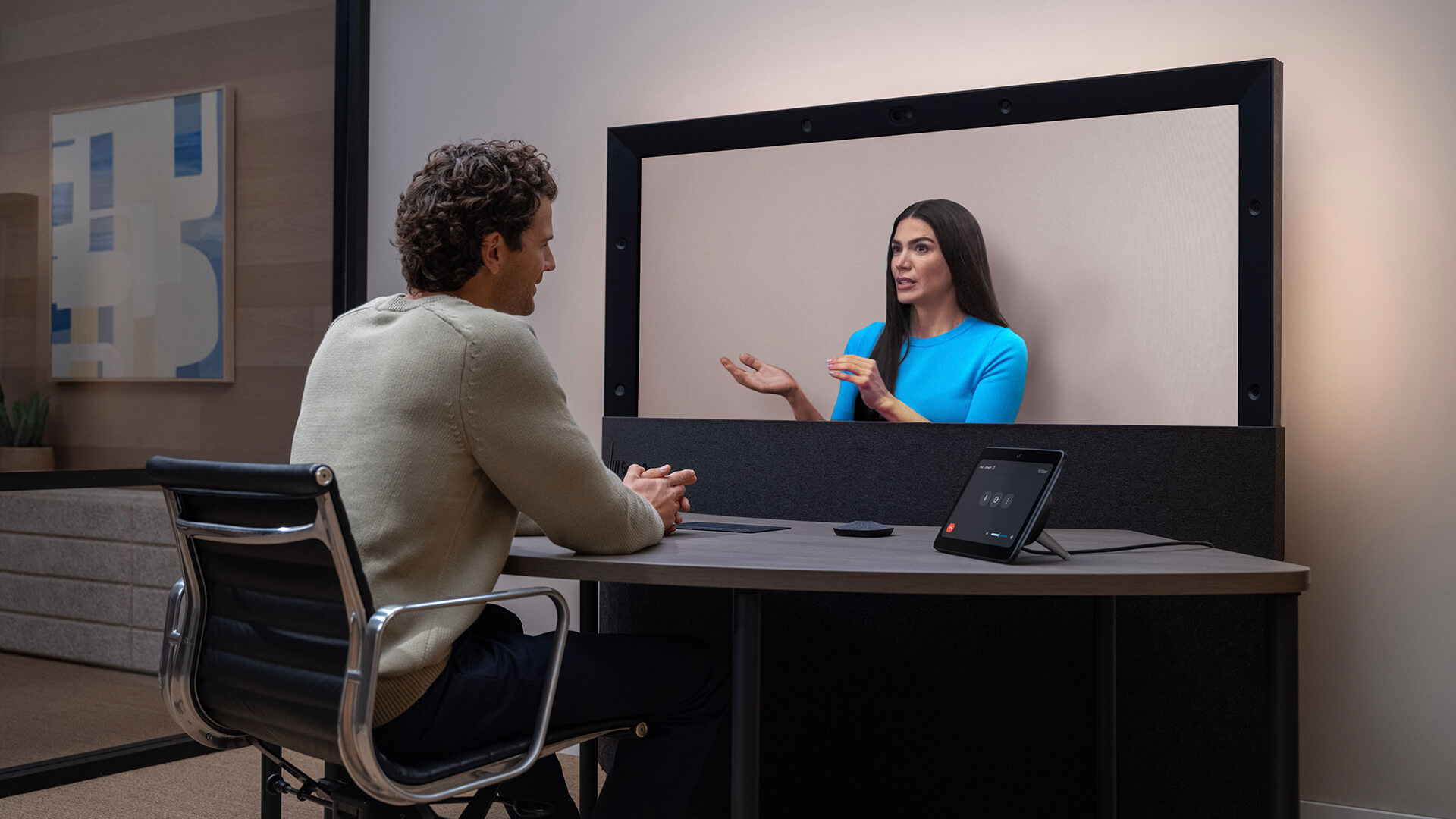
Resolution isn’t totally lifelike: you know you’re talking to a virtual 3D image of someone. There were some lip sync issues as well, though this could have been attributed to slow or impeded connectivity. Still, this reinforces the necessity for high bandwidth internet and the right cables to ensure a totally realistic experience. Nonetheless, it’s a glimpse into the future of business collaborations. Imagine talking to potential clients or colleagues in China while you’re in Canada, without ever having to step on a flight or rely on a traditional 2D video chat with Zoom Room or Google Meet. While you can technically do group conversations as well, doing so would switch to a 2D experience. For now, the 3D conversational experience is limited to one-on-one meetings. But it’s pretty mind blowing.
While a video of the actual conversation was not permitted, and would not translate well on camera, I captured the set-up to give you an idea of how it works.
HP Dimension with Google Beam will set you back US$25,000 plus a Google Beam license, making this an option limited to large, tech-savvy corporations for now.
HP TPM Guard Blocks Physical Attacks
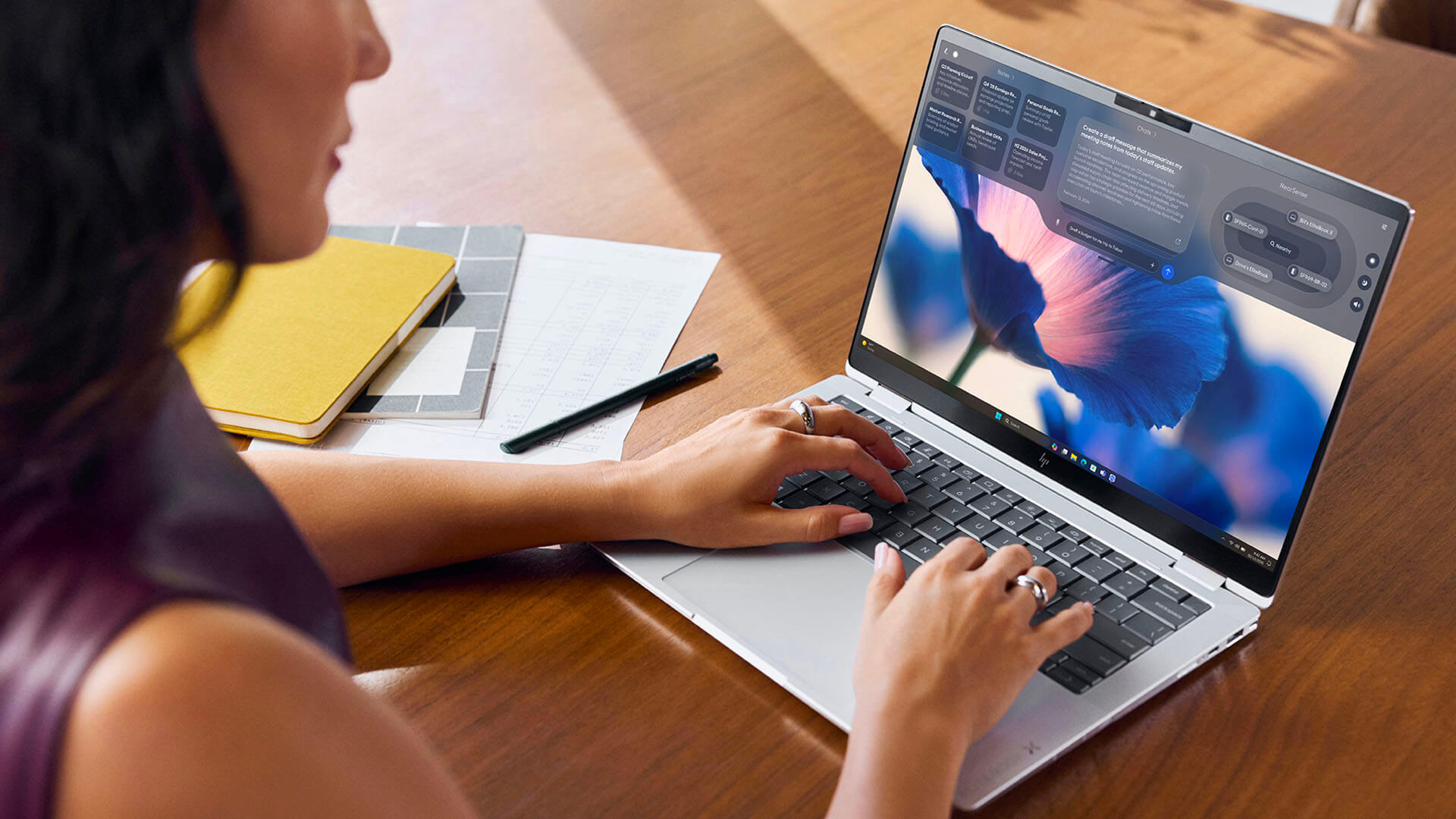
Laptops have tons of security features to prevent cyberattacks or stop them in their tracks. But as quickly as the systems advance, hackers catch up and figure out how to circumvent them. HP developed TPM Guard, a hardware solution to combat physical attacks and address a gap that currently exists with BitLocker security, the full-disk encryption feature that’s built into Windows.
HP developed TPM Guard is response to vulnerabilities that have been discovered with BitLocker if a PC is lost or stolen. Once an attacker has physical access to a computer, they can bypass BitLocker to extract sensitive data in an act known as a TPM bus attack. The attacker intercepts communication between the certified Trusted Platform Module (TPM) and CPU. It takes under a minute to do and requires minimal training and an easily acquired $20 piece of hardware. With HP TPM Guard, an encrypted link exists between the TPM and CPU, preventing interception and probing attacks. The TPM is cryptographically bound to the device, rendering it inoperable if removed or tampered with.
“This solves an industry-wide problem and will be relevant for all businesses,” says Dr. Ian Pratt, Vice President, Security & Commercial Systems CTO, Personal Systems, HP Inc., “particularly those in regulated industries, government, and other organizations that manage highly sensitive information on their PCs and need to take every precaution to safeguard their data.”
HP High-Performance PCs
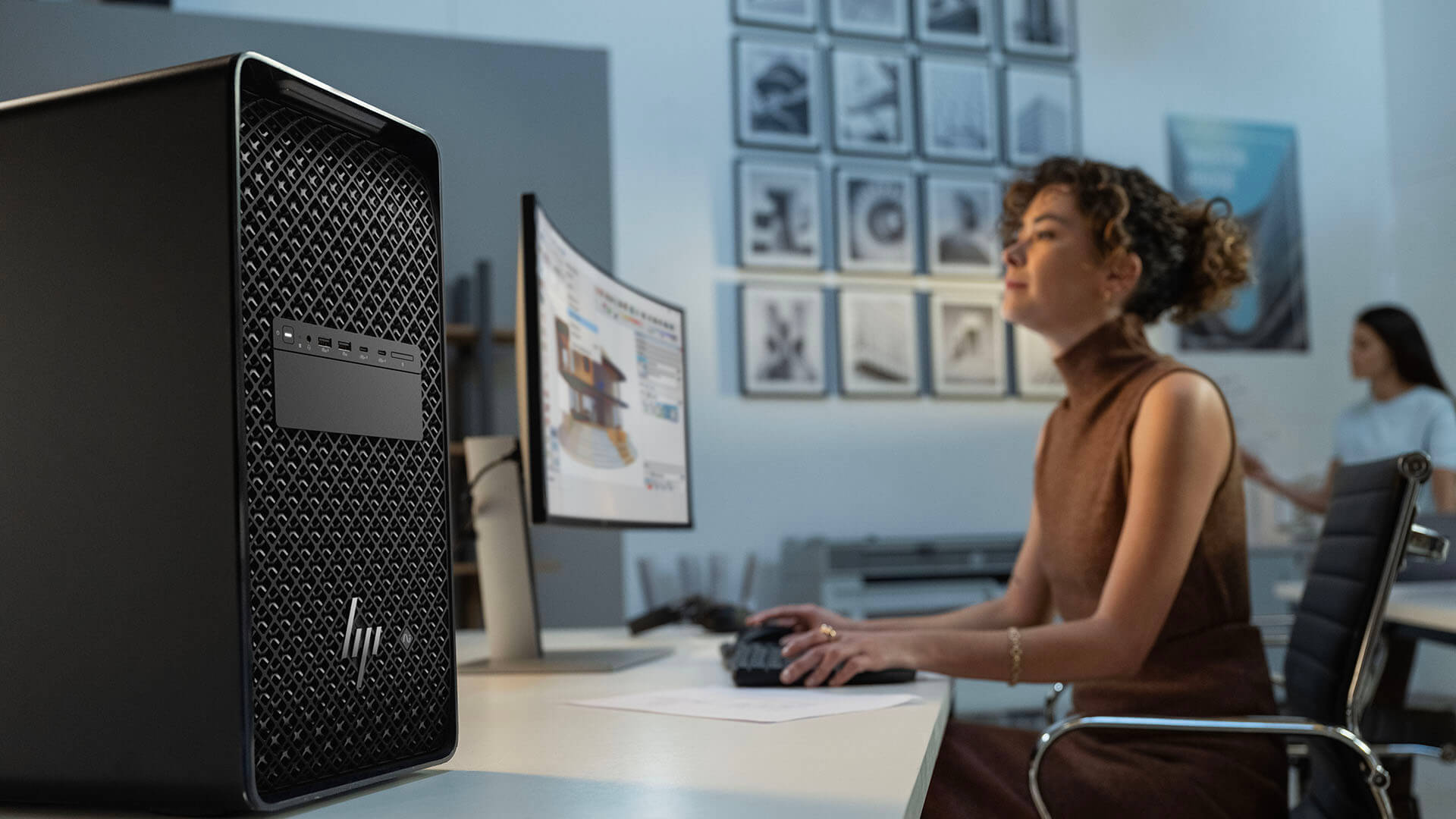
At the event, HP also announced several new high-powered enterprise PCs for workers like engineers, architects, product designers, AI developers, and professional creators.
The HP Z8 Fury G6i is designed to meet demanding compute and AI workloads. With support for up to four NVIDIA RTX PROTM 6000 Blackwell Max-Q Workstation Edition GPUs and next-generation workstation Intel processors, it is built for advanced AI development, visual effects, and simulation workloads, an ideal host for sharing scarce GPU resources with HP ZBoost.
HP is also introducing the HP Max Side Panel for Z8 Fury and Z4 workstations, a chassis expander that increases internal volume by 15%. Easily remove the side panel and IT staff can add larger graphics cards without the need for tools, while also maintaining thermal performance and serviceability.
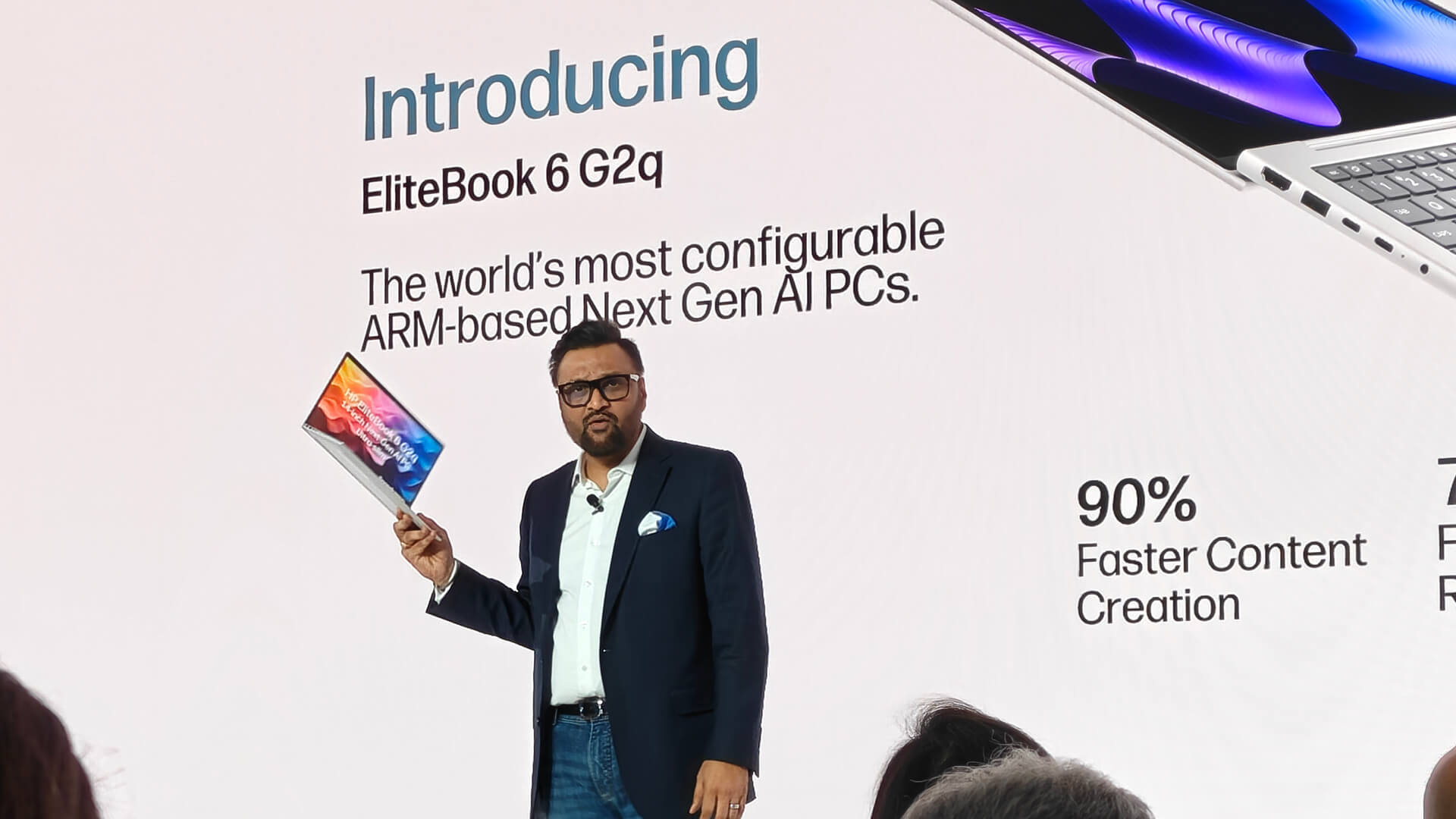
For professionals who need workstation class performance on the move, HP announced the ZBook X G2i, ZBook 8 G2i, and ZBook 8G2a. These powerful mobile workstations deliver next-generation AI workstation performance and include AMD and Intel options, integrated or discrete graphics, scalable memory, and improved portability without sacrificing battery life.
The HP ZBook X is a 16″ mainstream mobile workstation that features 3000-level graphics and 128GB RAM. These specs can help shorten project timelines for architects, engineers, and designers, says HP. A mobile engineer using Autodesk Inventor on a ZBook 8 G2i, meanwhile, can render designs 3.3 times faster. The ZBook 8‘s fast 3D design capabilities and a compact form factor is enhanced by a new GaN adapter that’s up to 40% smaller and 50% lighter.
HP is also bringing updates to HP Z Boost, a GPU sharing solution that turns workstations into on demand, shared resources, removing the limits of local devices. Initially introduced for AI workloads, HP Z Boost is now expanding to rendering, helping increase GPU use and accelerate productivity without moving files or disrupting creative flow.
The HP ZBook 8 G2i and G2a devices are expected to be available starting in April, with pricing TBA; while the HP ZBook X G2i is expected to be available in Spring 2026, with pricing also TBA. The HP Z4 G6i Desktop and HP Z8 Fury G6i will both be available in April as well, with pricing TBA.
HP announced plenty more for enterprise businesses at the event, from innovations in printing to the construction trades, Wolf Security and more.
“[We] have a track record of delivering products and experiences that work,” Broussard concludes, “understand enterprise security, data governance, and how work gets done. [Our] combination of durability and dependability really positions us for the future of work.”