
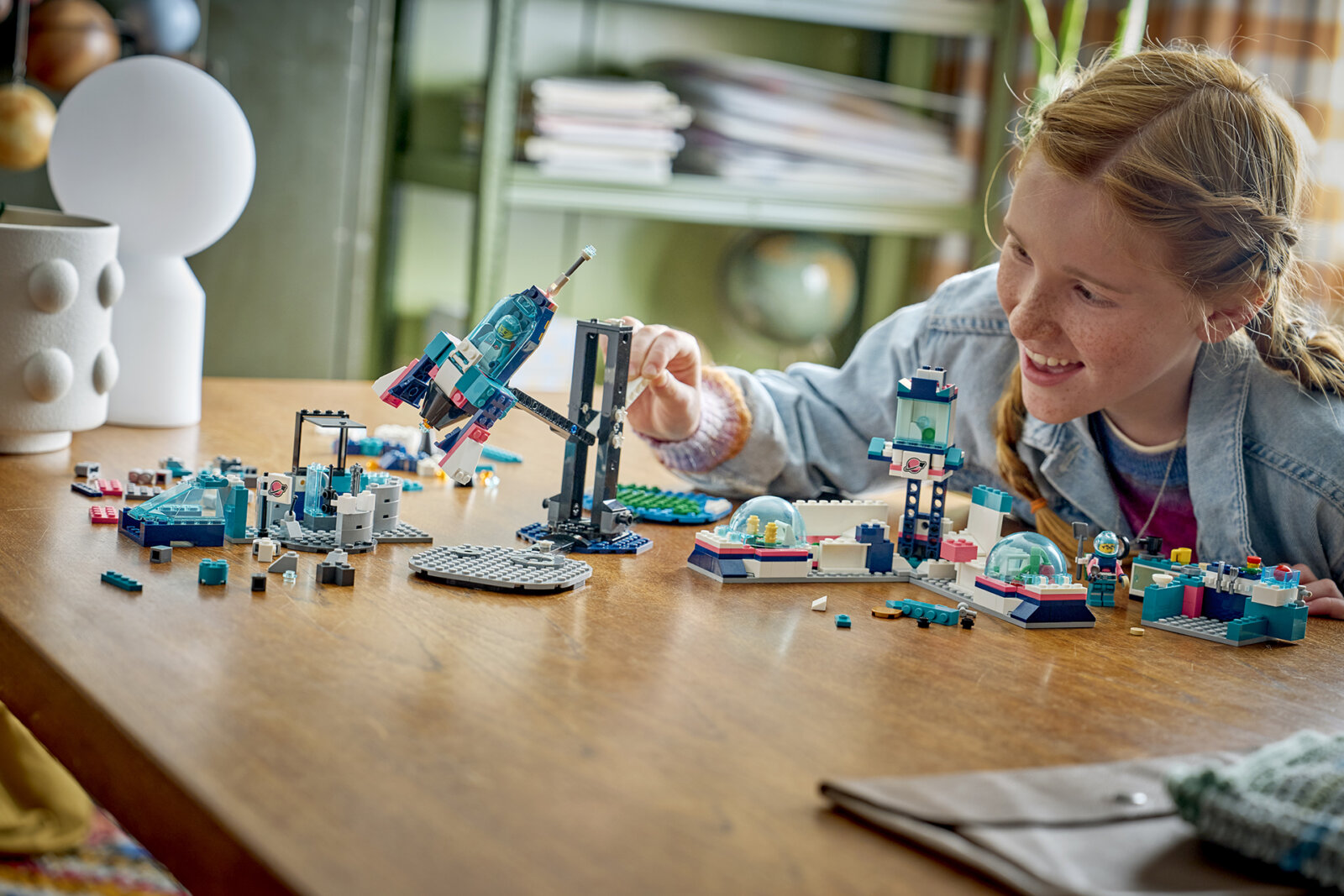
The Lego Group and Lego Education have launched four new STEM sets designed to inspire curiosity, exploration, and scientific discovery at home. Designed for children aged seven and up, they were all developed in collaboration with educators and inspired by real-world challenges.
The Lego Education sets are designed to offer a three-prong play experience. First, kids build them using the included instructions. Then, the solve by actively testing, tweaking, and applying their knowledge to conquer challenges. After, kids can invent by applying learned concepts to devise their own solutions for new, open-ended challenges, fostering continuous experimentation and sustained curiosity, says the company.

There are four sets from which kids can choose. The Lego Education Moon Mission Science Kit (45200) is for kids aged 8+. It has 519 pieces and creates a launchpad model that measures over 5.5 x 15 x 3.5 inches. Create a rocket launchpad and spacecraft to explore physics, engineering, and orbital science, experiment with launching mini rockets and testing angles, distances, and trajectories to solve hands-on challenges. The set is designed to encourage problem-solving and critical thinking with open-ended “what if?” experiments. This set will sell in Canada for $65.
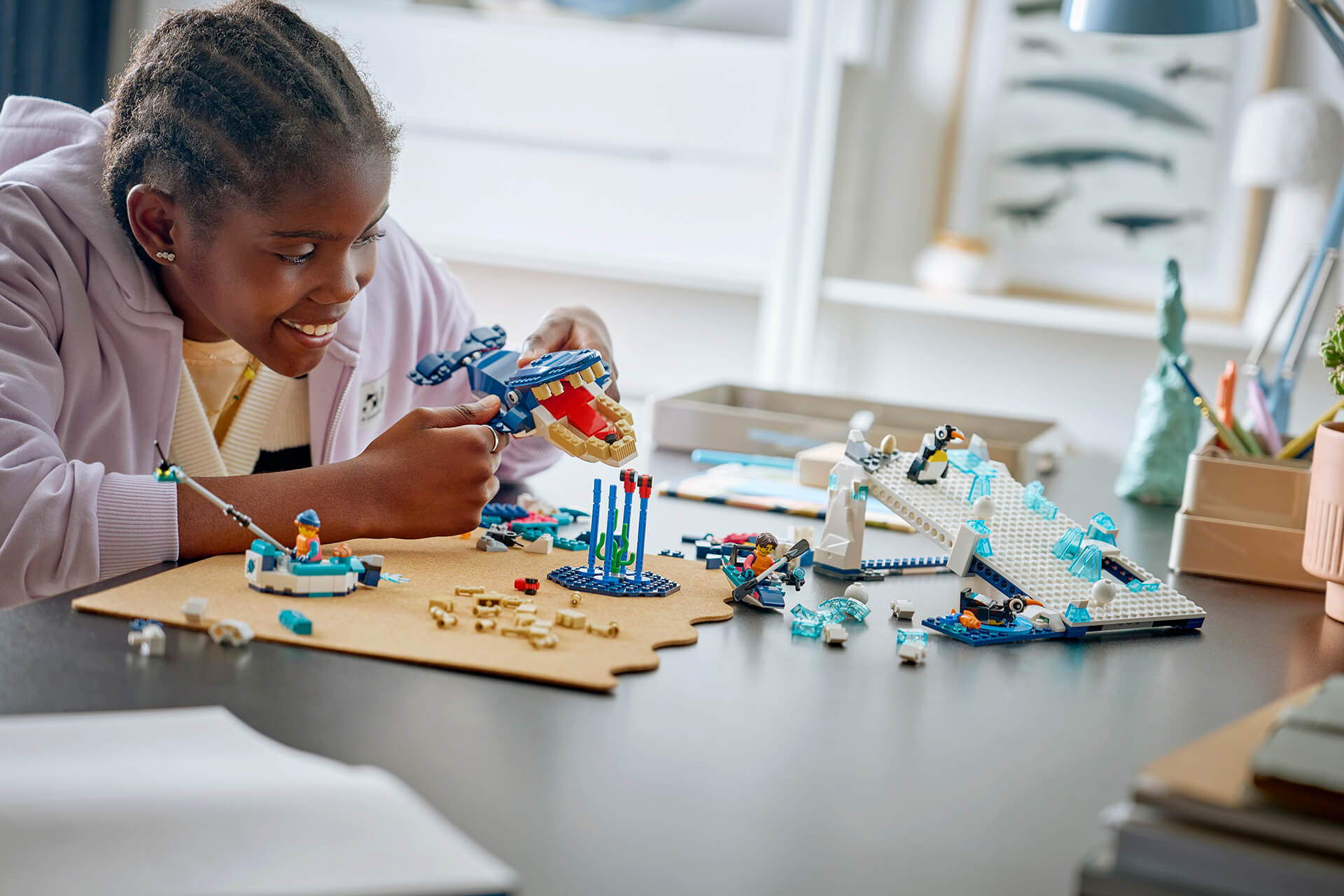
The Lego Education Antarctic Animals Science Kit (45201; $65) is for kids aged 7+, has 461 pieces, and includes an icy slope model that measures over 4 x 10 x 10 inches. Builders can recreate Antarctic habitats with Lego animals like penguins and seals, explore ecosystems, adaptations, and environmental science through hands-on play, and engage in open-ended challenges by designing their own habitat experiments and problem-solving scenarios.
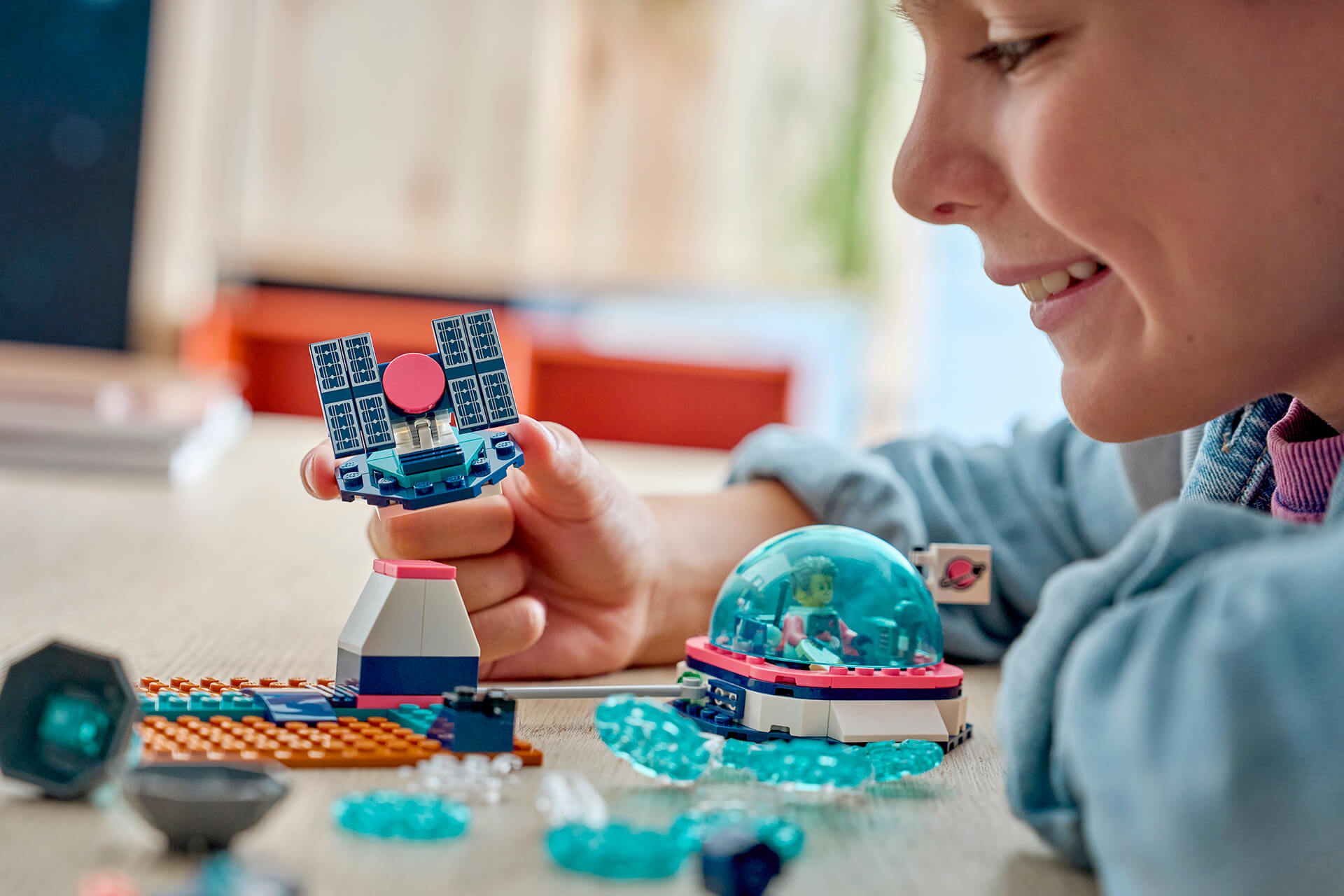
For kids a bit older at 9+, there’s the Lego Education Mars Mission Science Kit (45202; $130), a drop-tower experiment model that is over 19 x 5 x 7 inches and comes with 933 pieces. Builders can design and test Mars rovers, drop towers, and planetary exploration experiments. It encourages children to investigate gravity, energy, and physics and includes guided and open-ended experiments to spark creativity and iterative problem-solving.
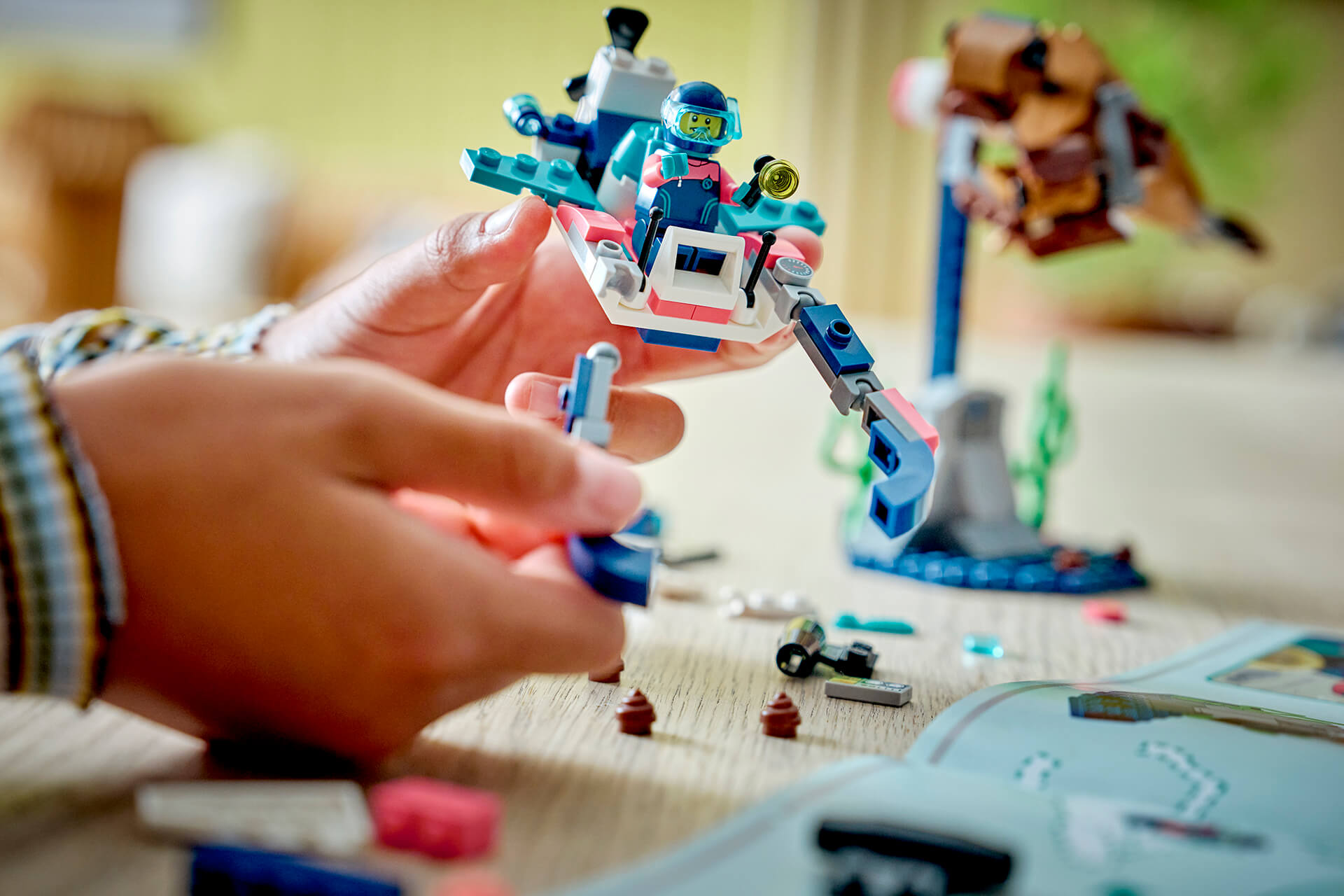
For the same age group is the Lego Education Arctic Animals Science Kit (45203; $130) with 1,134 pieces. It’s an arctic slope and camp model that measures over 2.5 x 7.5 x 3 inches. Builders can explore Arctic ecosystems with Lego animals like polar bears and seals and investigate environmental science, habitats, and adaptations through interactive experiments. The open-ended challenges let children apply scientific thinking to their own creative Arctic missions.