
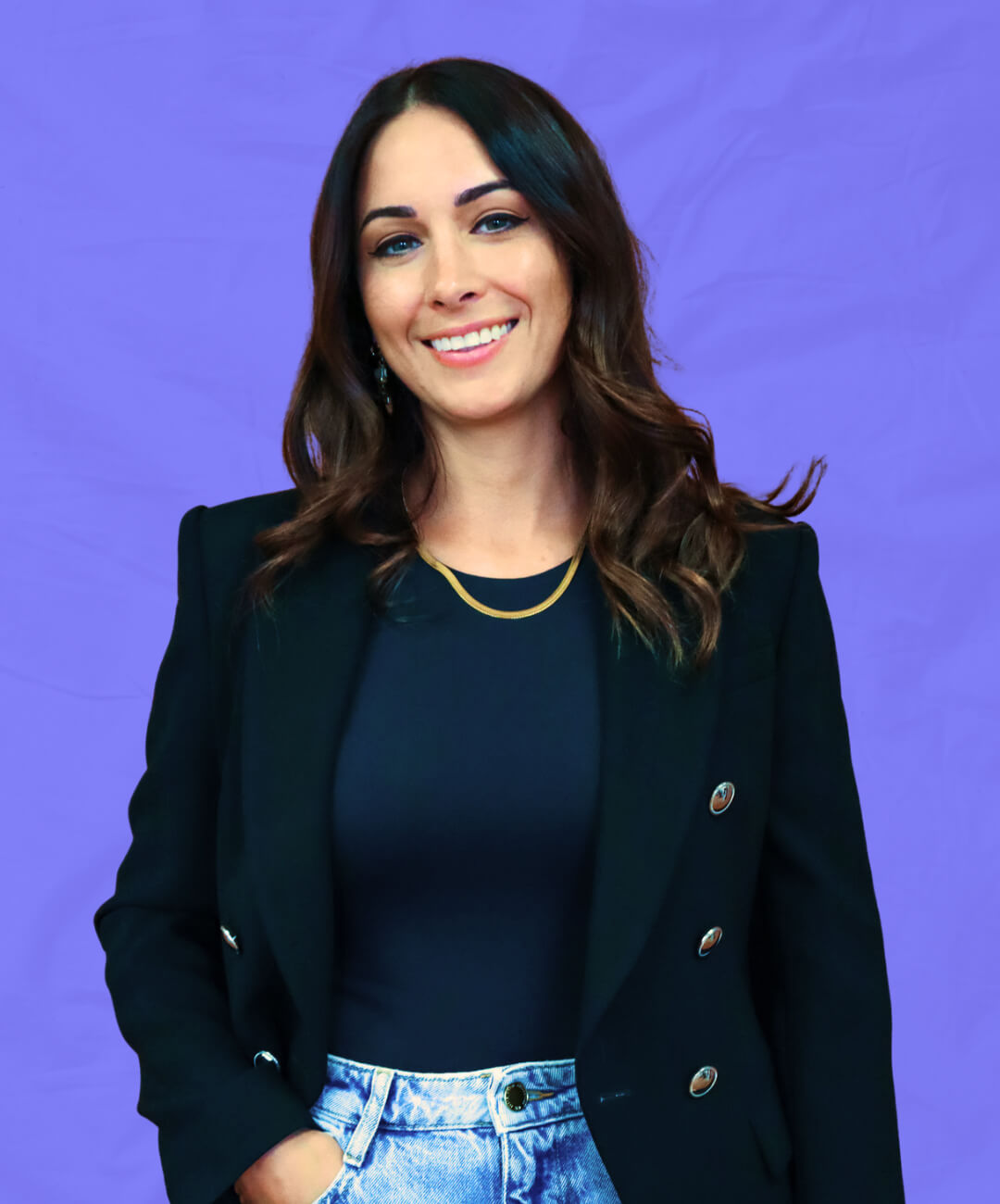
The latest candidate in our series of Q&As with influential women in the technology business is Jessica Chalk, Founder & CEO, myStoria, a reproductive health platform that gives people the tools, language, and confidence to advocate for themselves and get the care they need.
Name: Jessica Chalk
Job Title & Company: Founder & CEO, myStoria
Years in the Industry: 3 Years
The Quote That Most Inspires You: “You can choose courage, or you can choose comfort, but you cannot have both.” (- Brene Brown)
What drew you to a career in the consumer and/or business technology industry?
I really didn’t start with a technology vision. I started with a problem. One I lived for years before I could even name it clearly. I was navigating endometriosis and a long, unsuccessful infertility journey and at every turn, I kept running into a system that wasn’t built for people like me.
At the time, I was running a digital marketing company. I understood how to build things. But this problem didn’t have a solution I could find anywhere. And when I finally made the decision to walk away from my fertility journey, I expected some kind of relief. But instead, all I felt was a void.
I sat with that for a while, and I talked to a mentor who agreed that there was a real problem to be solved. That conversation changed everything, and I decided to sell my business and get started building what didn’t exist.
Have you encountered any roadblocks along the way that were related to your gender?
I could tell you about the inappropriate men along the way. There were enough of them. But what I’d rather say is that I never walked into a room thinking about my gender, and yet I’ve felt it mattered anyway.
What I built along the way was a backbone. And a lot of that came from the people I chose to surround myself with: men and women who showed me what good actually looks like. I’ve been through hard things, from which I took the lessons and kept moving.
What unique characteristics or perspective do you feel you bring to your organization as a woman?
Spending years navigating a system that wasn’t built for me taught me how to ask harder questions and refuse to accept ‘good enough’ as an answer. I didn’t come to this through a market opportunity. I came through my own experience as a patient who spent years being dismissed and left without answers. That shaped me as a founder in ways that business alone never could. It gave me a kind of credibility that can’t be faked.
When I sit across from an investor or a clinician, I’m not theorizing about what people need when they’re navigating the health system. I’ve lived it. I know what it feels like to not be heard, and that stays with me in every product decision we make.
It means we hold a high bar because I understand what’s actually at stake when we get it wrong. I know firsthand what it costs someone when the system falls short, and I refuse to be another version of that.
If you had to sum up what it is like being a woman in this male-dominated technology industry in just a few words, what would you say?
I’m not sure I can answer that, because it hasn’t been my experience. I’ve chosen carefully who I build with and who I take money from. My founding team is entirely women. My first investors are accomplished female tech founders. The room I’m in every day doesn’t feel male-dominated because I built the room.
You don’t wait for the industry to change. You decide who’s in your orbit and you build accordingly.
Are there women in the tech industry who inspire you?
Carol Leaman and Christine Tutssel. Both have built incredibly successful companies more than once. What sets them apart isn’t just the track record, it’s what they do with it. The time they give back to other entrepreneurs, specifically other women building companies, is genuinely rare. They show up, they champion, and they make success more possible for the people coming up behind them. That matters more than most people realize when you’re in the early days and the path isn’t clear.
And then there’s Carly Malo, our Head of Concierge at myStoria, and honestly one of the most inspiring people I know. Carly was my nurse during the hardest parts of my own fertility journey. She always gave me the time of day. She’d explain options, flag the things worth asking about, and actually answer my e-mails. In a system that routinely makes patients feel invisible, she made me feel seen.
I was honoured when she chose to join this mission. And what she’s done since has blown me away. She came from a nursing background and has just taken on whatever needed to be done. She went from leading patient conversations to being in the depths of regulatory and compliance, to working alongside our medical directors to build out our clinical knowledge base in fertility and reproductive health, to product testing and team culture building. She is a force. And she is an amazing human.
What are some of the misconceptions/myths about women working in the technology space that you’d like to dispel?
Honestly? I’m not sure the myth exists. The women I work with, the ones building this company, don’t walk around feeling limited by their gender in tech. We collectively believe that we’re solving real problems for real people.
The misconception I’d actually push back on is a different one. It’s the belief that complex health care is someone else’s problem, that it only affects a specific group, a specific demographic, a specific condition. It doesn’t. Hormonal health, chronic illness, reproductive journeys, these touch people of every gender, at almost every age, at some point in their lives. The myth worth dispelling is that this is a niche, or worse, specific to women. It’s not. It’s just been treated like one because the people deciding what was worth solving kept drawing the wrong boundaries around who it belonged to.
What’s one thing you wish was done differently in the industry, and why?
I wish we’d stop calling it women’s health. Not because the experiences aren’t real, they are, but because the label has become a cage. The moment you say, “women’s health,” you’ve already told half the industry it doesn’t apply to them. You’ve made it a niche. And you’ve made it someone else’s problem.
Reproductive health affects people of every gender, across almost every stage of life. Hormones don’t check a binary. Infertility doesn’t affect only women. Chronic conditions are felt by all. By forcing it into a gendered box, we’ve given decision-makers in tech, in medicine, and in funding a convenient reason to look away. “That’s not for us to solve.”
The data gaps, the diagnostic delays, the decades of underinvestment, yes, those are failures. But the deeper failure is the framing. We built walls around who this problem belongs to and then acted surprised when it stayed unsolved. The industry doesn’t need to do more for women. It needs to stop pretending that human health fits neatly in a box.
How do you feel the latest shift to AI will impact the way you do your job and opportunities for women in the industry?
The opportunity isn’t just that AI exists, it’s who’s now in the room deciding what it’s allowed to do.
The default assumption in tech has been that data is a resource to be harvested. The more access, the better. That logic has never served patients well, and it’s served people navigating complex health journeys least of all. Your reproductive history, your hormone data, your fertility journey, that’s yours. And the reason we’re finally having serious conversations about data consent and what AI should and shouldn’t be permitted to do with health information is largely because women are at the table demanding them.
AI as a responsibility is the shift I care about. Big tech will keep pushing for uncontrolled access. The question is whether we let them have it. I don’t think we should. And I think more women in these decisions is exactly why that conversation is finally happening.
Are you optimistic for the future in general and for the industry?
I’m a founder, and blind optimism doesn’t get you very far. What I have is conviction that the problems myStoria is solving are real, that the demand is massive, and that the window to get this right is open right now. I’m not optimistic because things are easy. I’m building because the alternative, leaving people without the information they need to navigate their own health, isn’t acceptable.