
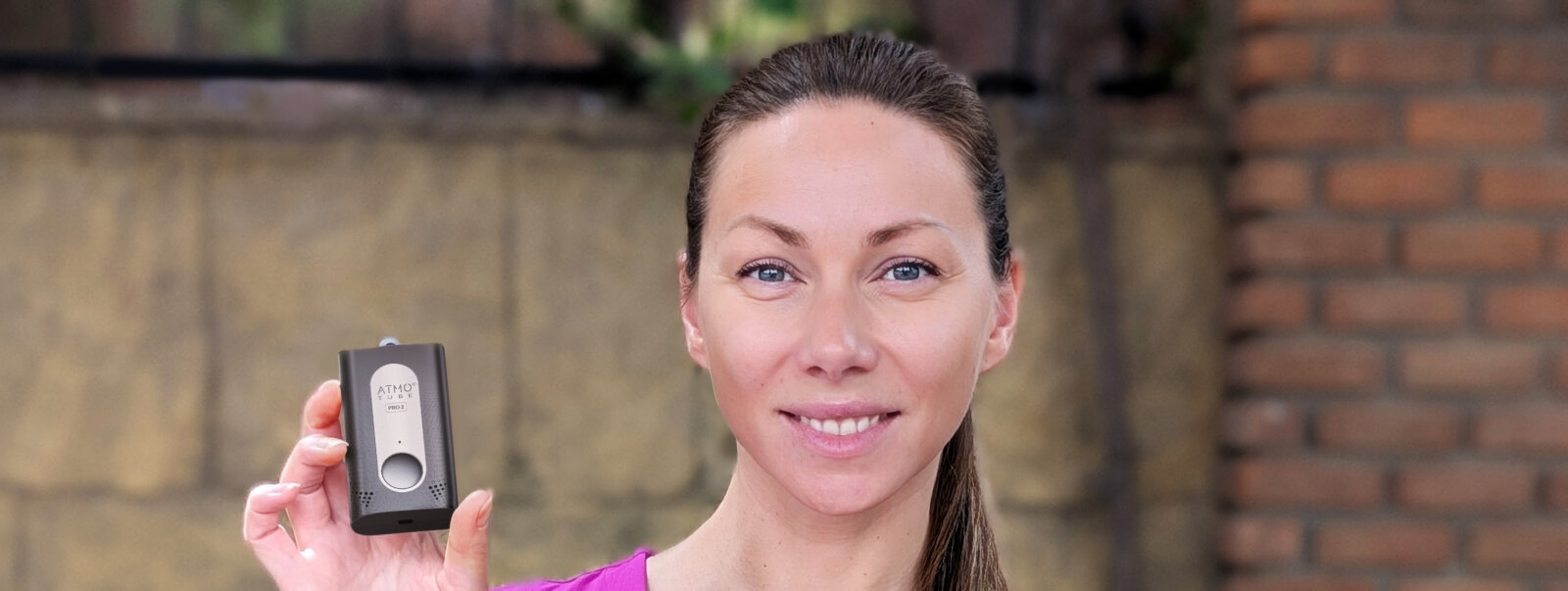
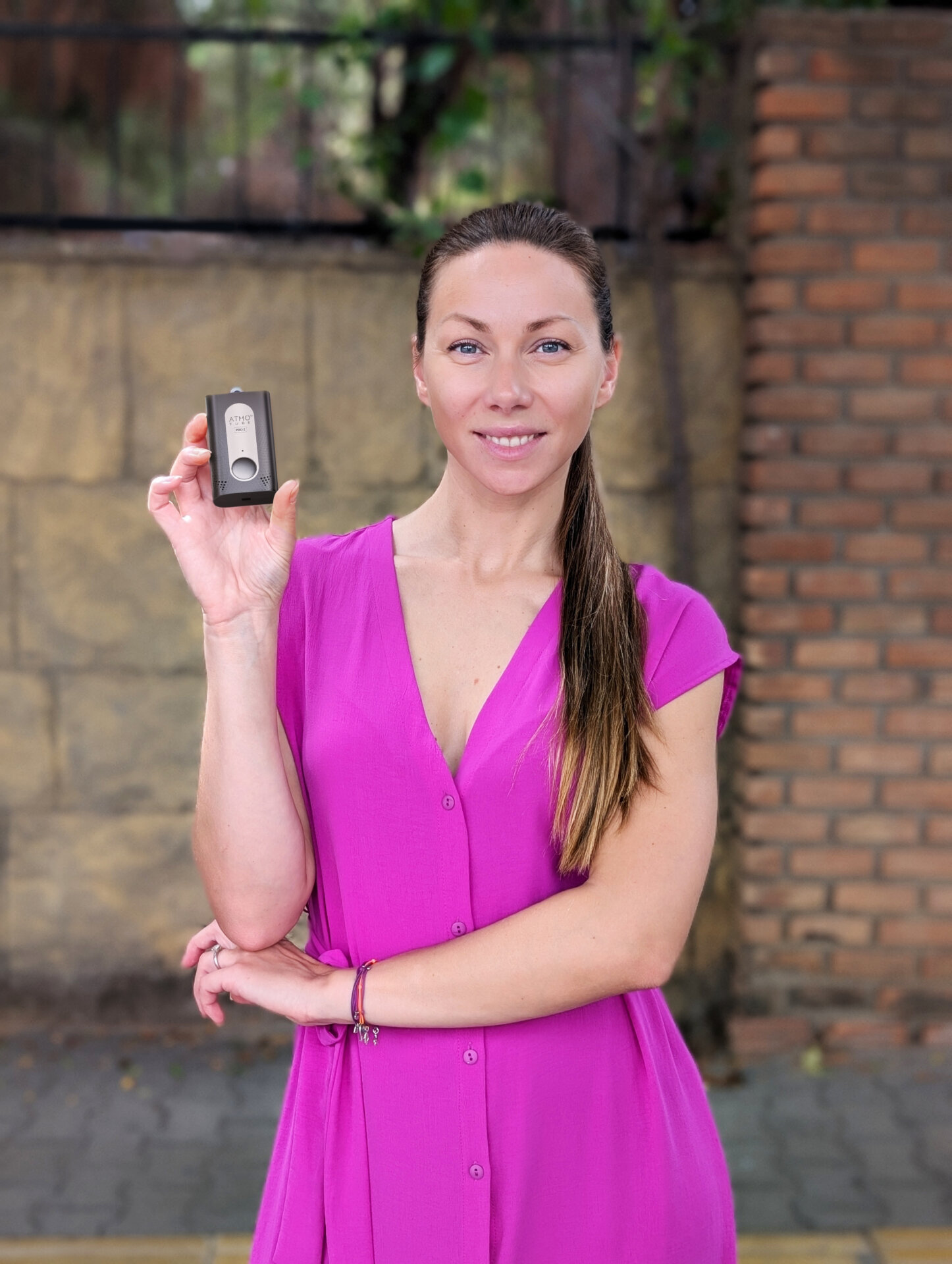
The latest candidate in our series of Q&As with influential women in the technology business is Vera Kozyr, Co-Founder & CEO, ATMO, which develops lab-tested personal air quality monitors.
Name: Vera Kozyr
Job Title & Company: Co-Founder and CEO, ATMO
Years in the Industry: 15+ Years
The Quote That Most Inspires You: “The most effective way to do it is to do it.” (— Amelia Earhart)
What drew you to a career in the consumer and/or business technology industry?
I have always been drawn to building products that improve wellbeing. With ATMO, the idea came from a simple truth. We track everything from sleep to fitness, yet ignore the air we breathe, the one thing our body needs every second.
I also saw how often official reports downplay pollution, leaving people unaware of what they actually inhale near busy roads or factories. That gap between data and daily life is what pulled me into consumer tech.
Have you encountered any roadblocks along the way that were related to your gender?
Yes, although I would not describe all those experiences as roadblocks. In a male-dominated hardware industry, there was often a brief moment of surprise when people realized that the person leading the company and the conversation was a woman. Sometimes, that surprise carried an unspoken question: what can she really bring to this?
I never found that discouraging. If anything, it motivated me to perform at an even higher level, and to show just how much a woman can bring to a technical business. That initial surprise also meant I had people’s attention. And in business, attention can be an advantage.
There were also negotiations where people initially tried to push harder, perhaps expecting me to give ground. But strength in negotiation is not always about pushing back with equal force. Often, it is about reading the room, understanding what really drives the other side, and having the wisdom to turn the conversation in the direction you need while holding your position firmly.
So gender sometimes changed the dynamic. But over time, I learned that my strongest advantage was leading in my own way: with confidence, clarity, and the ability to turn even a difficult conversation toward the outcome I believed was right.
What unique characteristics or perspective do you feel you bring to your organization as a woman?
I am not sure I can separate what I bring as a woman from what I bring as a founder, designer, and product leader. I have a strong focus on how technology fits into real human lives. Building a technically accurate sensor is only part of the job. The product must also be understandable, trustworthy, and useful enough to change someone’s behaviour.
I tend to connect engineering decisions with the emotional and practical experience of the person using the product, while still being rigorous about performance and evidence.
Technology is historically a male-dominated industry, yet the use of tech is fully embraced by women, and many studies even suggest that females are the primary buyers of tech in the home. What do you feel the technology industry needs to attract more women, particularly into high-level positions?
The industry needs to make advancement more visible and more practical. That means women seeing other women leading engineering teams, hardware companies, and investment decisions. But it also means fair access to capital, mentorship, influential networks, and roles with real decision-making authority.
Companies should not focus only on hiring more women at entry level. They need to examine who receives the most important projects, who gets promoted, and who is being prepared to lead.
If you had to sum up what it is like being a woman in this male-dominated technology industry in just a few words, what would you say?
Demanding, occasionally underestimated, but ultimately empowering.
Are there women in the tech industry who inspire you?
I am especially inspired by women who build technically difficult products while staying focused on meaningful human problems. That includes founders, scientists, and engineers working in health technology, climate technology, and hardware, often without receiving the same visibility as their male peers.
I admire women who combine technical depth with resilience and prove that leadership does not need to follow one conventional model.

What are some of the misconceptions/myths about women working in the technology space that you’d like to dispel?
That women in tech gravitate toward “soft” roles. I run a hardware company. We design sensors, firmware, and manufacturing processes. Nothing about that is soft, and I know many women doing the same deeply technical work without it being remarked upon.
What’s one thing you wish was done differently in the industry, and why?
I wish the industry celebrated sustainable, customer-funded companies as much as it celebrates funding rounds. We built ATMO bootstrapped, growing through product quality and research partnerships rather than venture capital. That path deserves more recognition, and it is often a more accessible one for underrepresented founders.
How do you feel the latest shift to AI will impact the way you do your job and opportunities for women in the industry?
For us, AI is already core to the product. Our Air Balance index uses AI to fuse real-time air quality data with lifestyle metrics, turning raw sensor readings into personalized health insights. AI moves air monitoring from a single number to genuine understanding.
As for opportunities, AI lowers the technical barrier to building. You no longer need a large engineering team to prototype an idea. That levels the field for anyone historically outside the traditional pipeline, including women.
Are you optimistic for the future in general and for the industry?
Yes. Our own story makes it hard not to be. Our first device did not work as we had hoped, and we had to rebuild it almost from scratch into a product now trusted by leading research institutions and used in over 40 countries.
The industry rewards persistence more than pedigree, and both technology and the people building it keep getting more diverse. That makes me optimistic on both counts.