
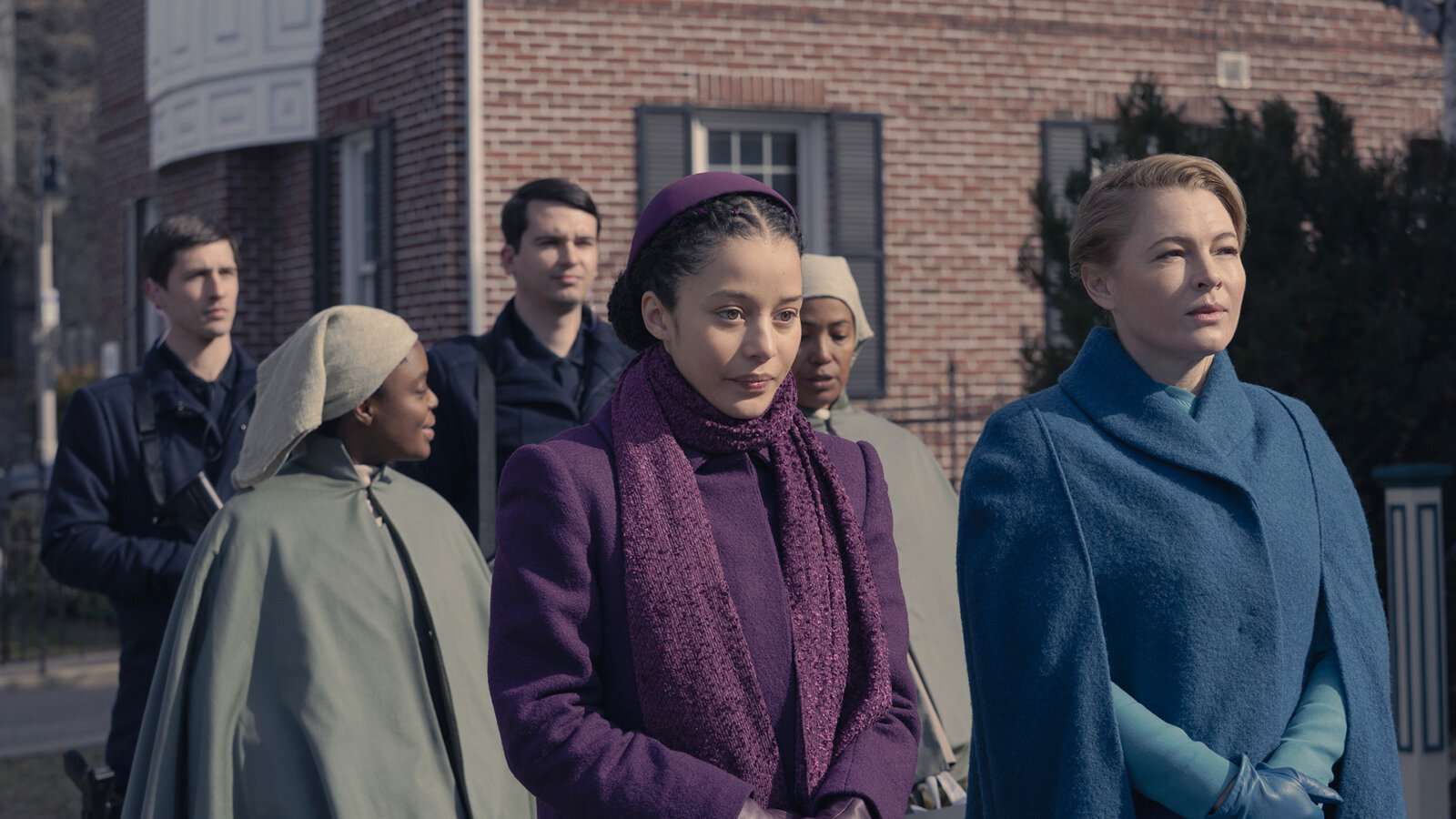
Taking down an entire oppressive totalitarian regime isn’t easy. It doesn’t happen overnight. The Handmaid’s Tale made this clear when, after years and six seasons, June (Elisabeth Moss) had only made a dent in her fight against Gilead. Thankfully, decades after penning the book on which the show is based, Canadian author Margaret Atwood wrote The Testaments, a recounting of the testimonies of women crucial to eventually bringing Gilead to its knees.
That story is told in the Hulu series of the same name, which stars Chase Infiniti as Agnes, June’s daughter formerly known as Hannah. Akin to The Handmaid’s Tale, this story is a slow burn, likely set to be told across multiple seasons. In this respect, don’t go in expecting a bang. It’s merely a spark. But it sets up what could be an even bigger, more impactful show than The Handmaid’s Tale at a time when such a story resonates more than ever.
The Testaments Shows Gilead From a Different Side
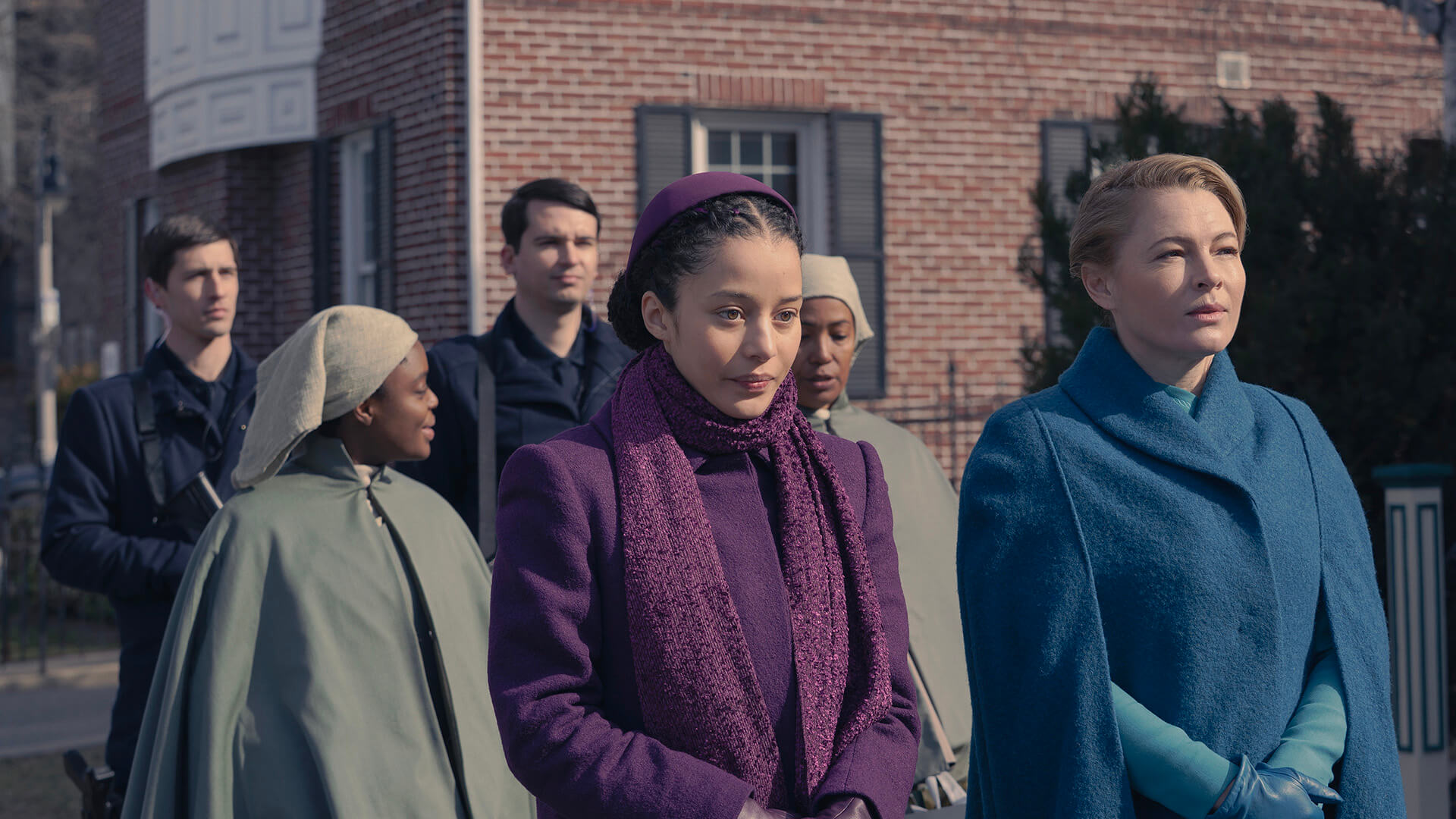
If you watched The Handmaid’s Tale and/or read the book, you already know everything you need to know about Gilead. But while that show focused on June’s fight to get herself and every other oppressed woman and child out of the patriarchal, theonomic society, this dystopian drama centers around teenage girls who have grown up in it. They don’t know any world other than Gilead, either having been born there or taken too young to recall what life was like on the outside, nor the existence of their biological parents. Among them is Agnes, who has no idea that June, the handmaid who wrote that scathing book about Gilead, is her mother.
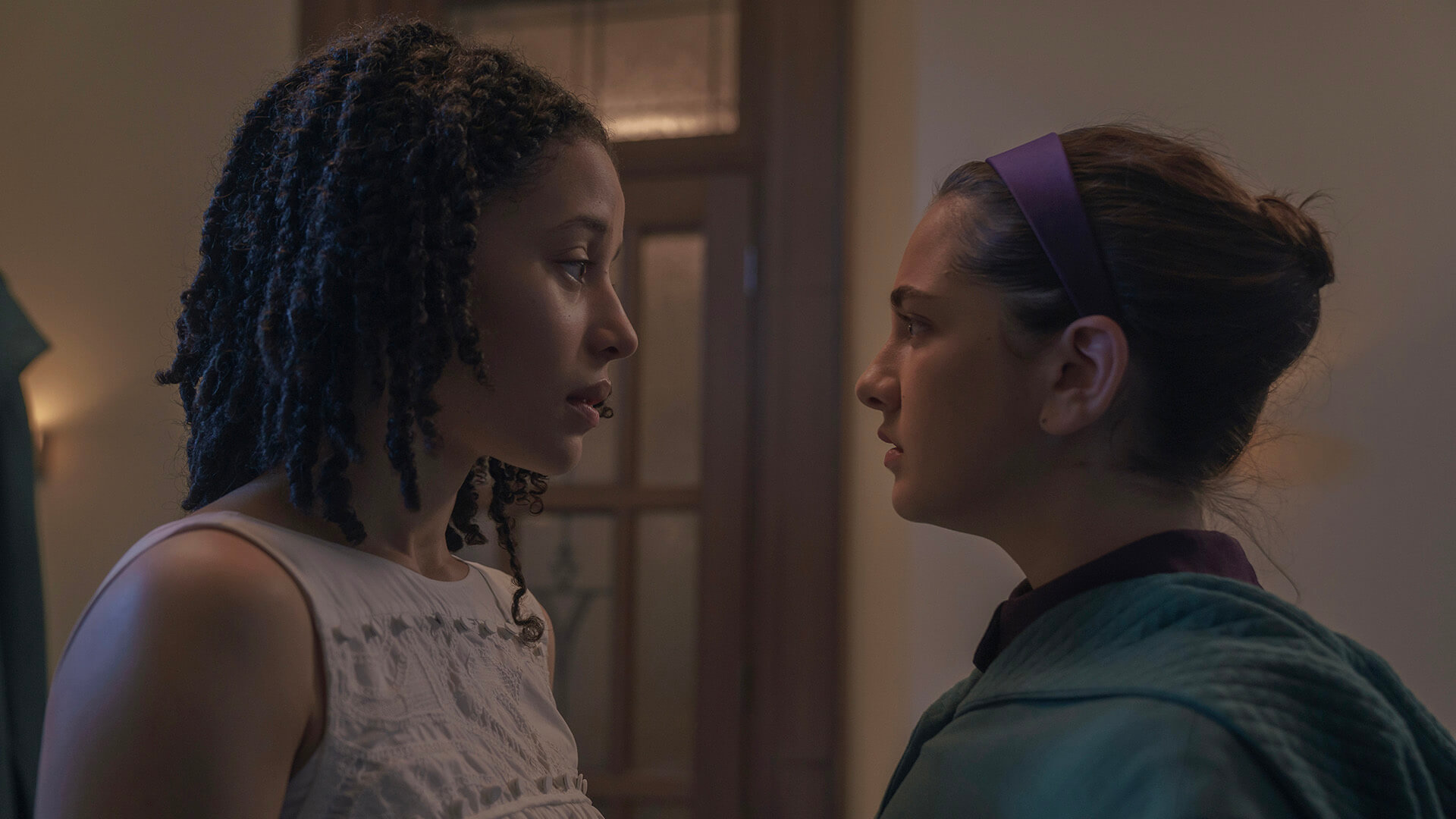
The story follows Agnes’ journey as a plum going through her daily routine with friends, and mysterious young woman named Daisy (Lucy Halliday). Daisy arrives as a recent convert, coming in from the outside, which instantly gives her a different perspective than the other girls. She’s the outsider among like-minded girls.
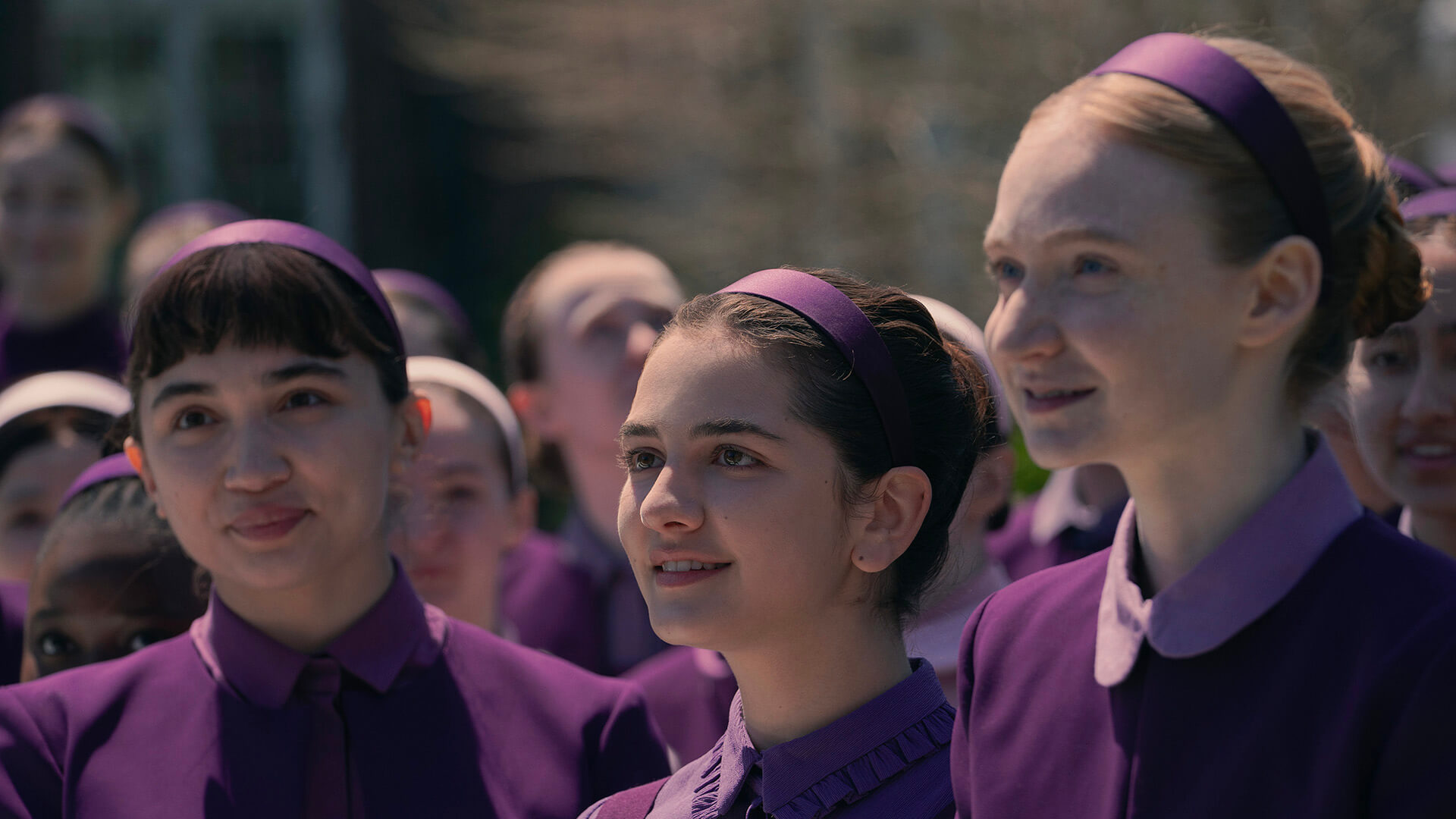
It’s lovely to see the show depict a traditional teenage girl dynamic, even if their lives are anything but. They still gossip, share secrets (albeit with much more worry about retribution beyond a simple slap on the wrist or their smartphone being taken away), have crushes, and even competitive tiffs. And there are still the usual stereotypes: the rebellious one, the rigid, studious one, the shy and quiet one, and so on. Girls will be girls, as they say, whether you put them in a modern-day suburban high school or an oppressive state.
Framed by Agnes’ narration of her testimonies in the future, we see the events described in the novel The Testaments play out. The novel takes place 15 years after the final events in The Handmaid’s Tale while the series is just four or five years later, which leaves room for a lot of story to tell. This builds anticipation for a multi-season run but also results in a season that is more like a prologue than the meat of a story. It’s slow moving and subtle, arguably intentionally so. But it’s disappointing if you went in ready to see a mini-June raise hell right away.
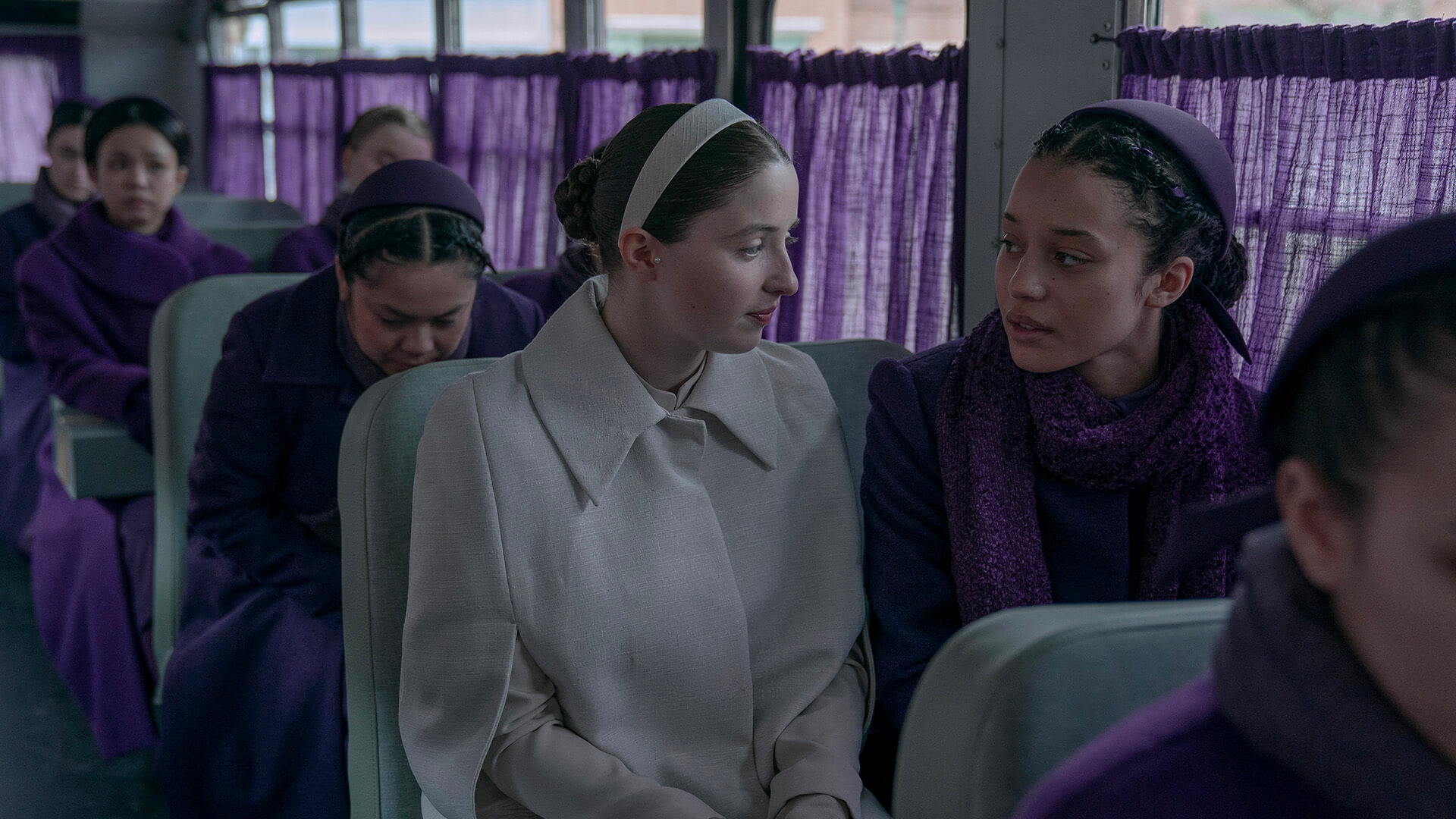
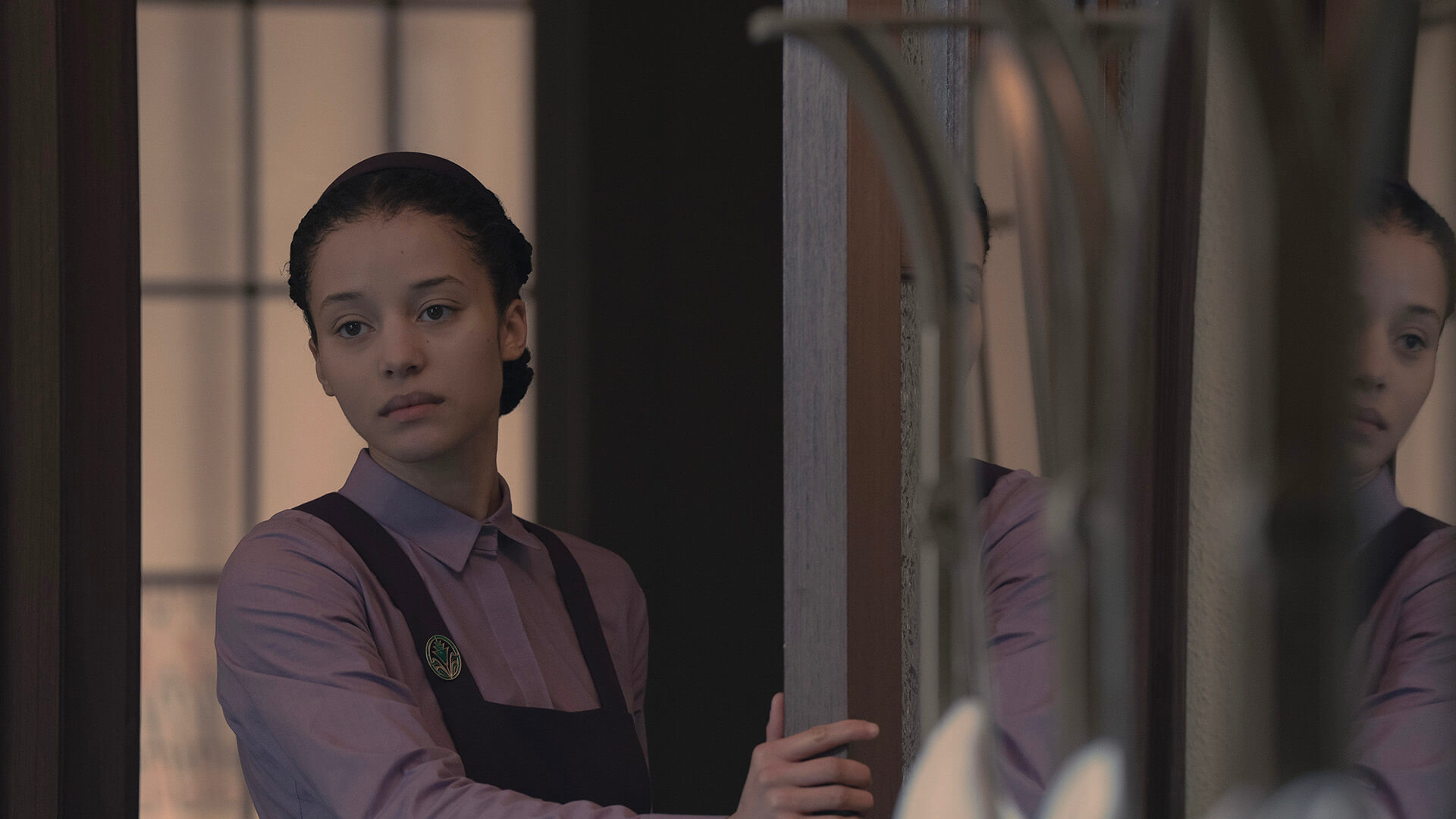
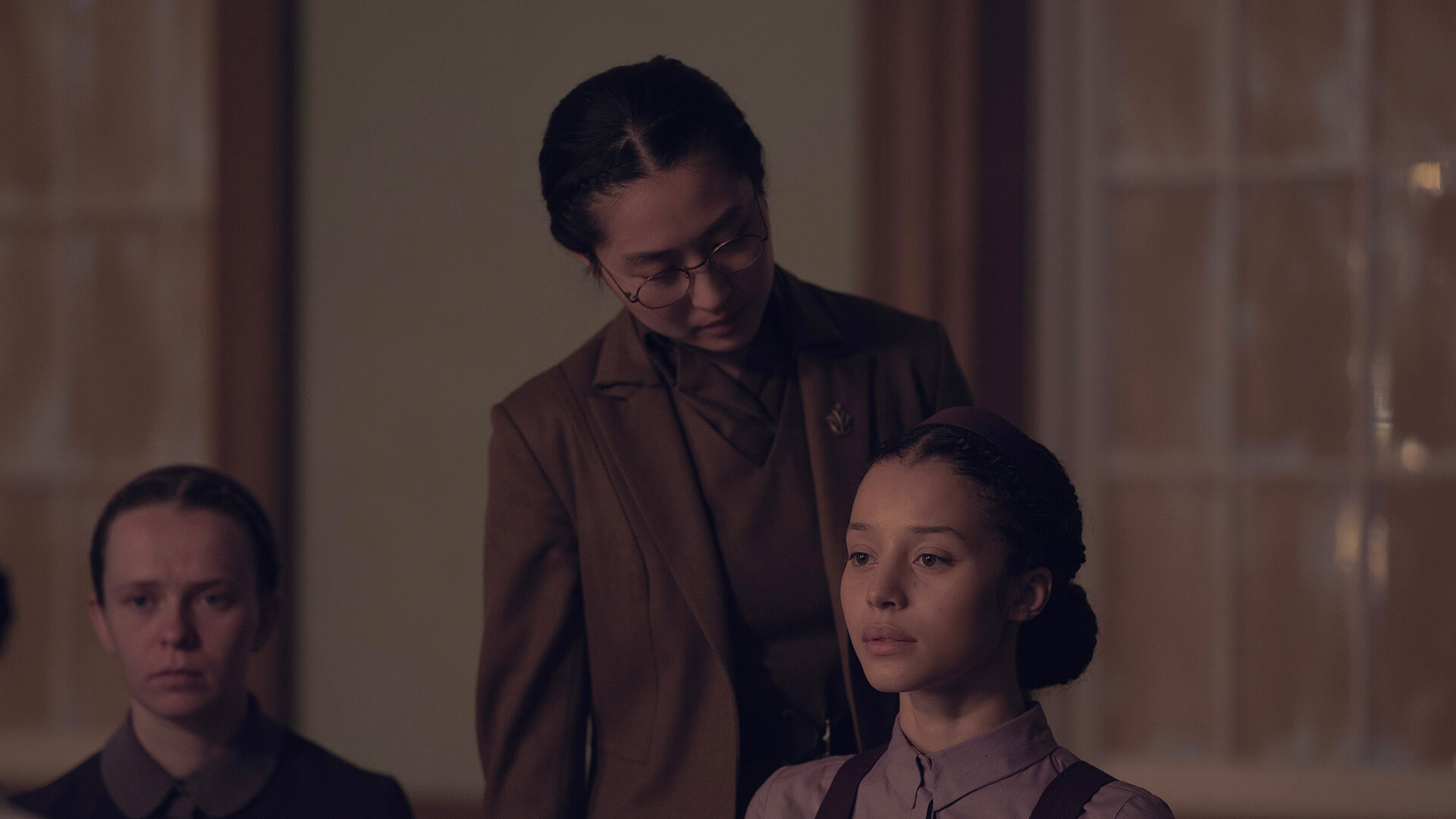
That said, this also makes the approach powerful. A revolution doesn’t happen overnight, especially when you’re dealing with young girls who are naïve of their own oppression versus the adult women in The Handmaid’s Tale who were fully aware of it. Like entering a cult and hoping to convince someone to leave, they have to figure it out on their own. They aren’t just going to walk away, abandoning everything they have been told is right. Even those who quietly and clearly feel some semblance of regret or doubt for what they have become part of are so riddled with fear that their true feelings are only noticed in a single tear, a passing glance, a masked expression.
The new characters shine in their roles, Infiniti doing an expectedly wonderful job as a young woman who has a good sense of right and wrong but can’t shake a feeling that something feels off. Halliday is great as well, sharing screen time equally such that she’s as much the star as Infiniti is. Others are magnetic, too, including Mattea Conforti as Agnes’ friend Becka, Mabel Li as Aunt Vidala, and Amy Seimetz as Paula. As disclosed ahead of the show’s filming, Ann Dowd returns as Aunt Lydia as well, and she’s as captivating as ever, slightly less hardened but with the same rigidity that hides a quieter softness we eventually saw come through in the original show.
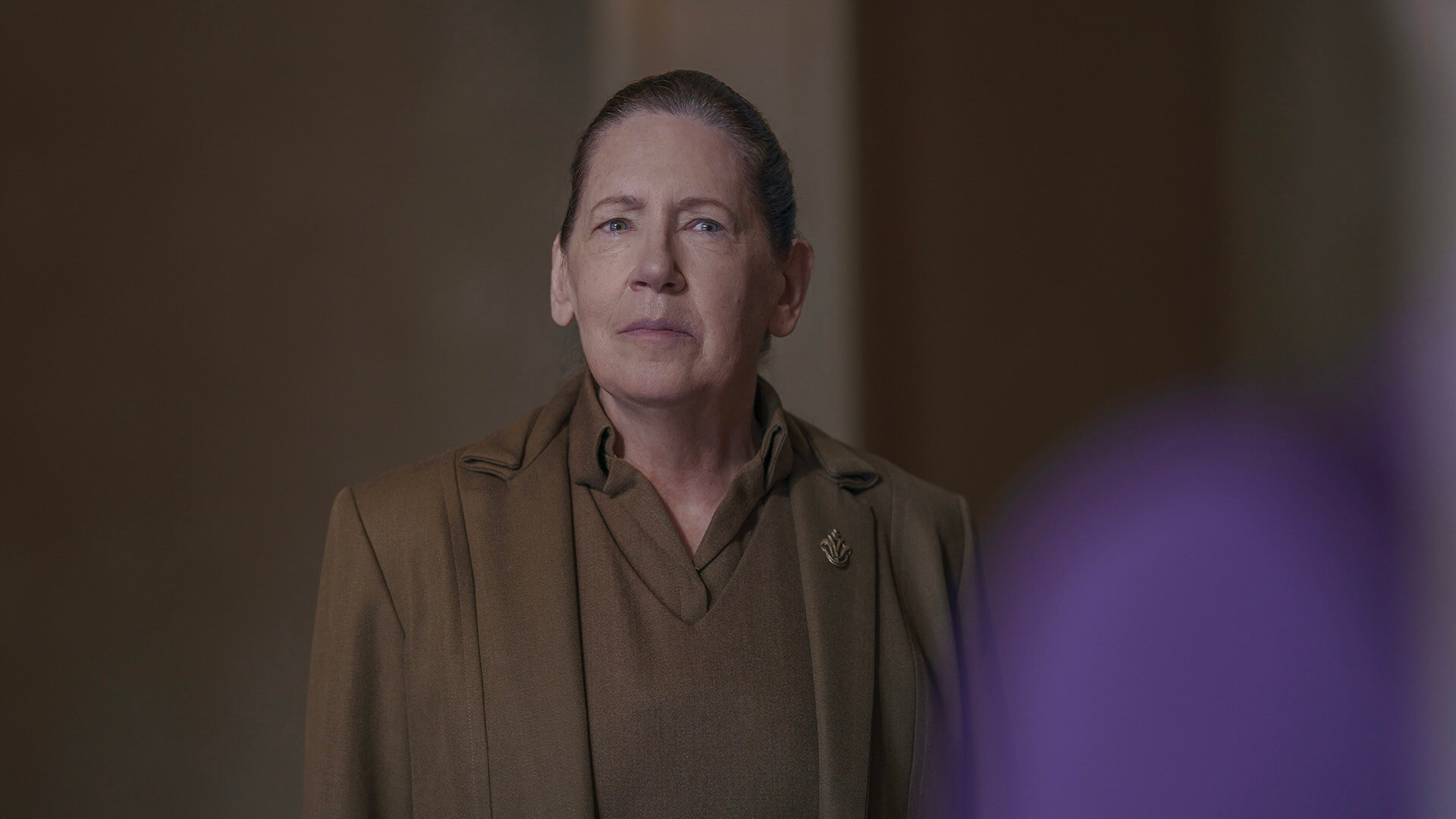
Those who read the book know that Aunt Lydia was integral to Gilead’s end, hinted in the finale of The Handmaid’s Tale when she finally goes against her better judgement to help “her girls.” You wouldn’t necessarily know it based on her actions and words. If you dig deeper beneath her every look, every carefully crafted statement, however, Aunt Lydia knows this isn’t a situation to navigate with so much as a slip of the tongue or even a slight pushback. You get the sense that she is playing a long game. But how good she is at doing so will make you question whether or not she truly has taken the stance we hope she has.
The Testaments Will Take Time to Blossom
I was somewhat disappointed with the pacing of The Testaments: the entire season could have been condensed into half of one. But I also understand the intentional purpose behind that. June and the rest of Mayday exercised tremendous patience in their fight in the latter seasons of The Handmaid’s Tale, knowing that they couldn’t achieve their goals quickly. Like an undercover officer who must take his time working his way through a criminal group to build trust before being confident enough that a plan to dismantle it will work, The Testaments is taking a measured approach, too.
The inaugural season has some shocking moments, but it lacks the same sense of urgency as The Handmaid’s Tale. It’s a quiet subversion, one that operates in the shadows of “praise bes” and “blessed be the fruits.” That said, it took The Handmaid’s Tale six seasons to get to its version of the “red wedding.” The difference is that June’s intensity from the jump, her honest and blunt voiceovers, gave that show a frantic, suspenseful feel anyway. The Testaments, by contrast, aims to show that oppression looks like normalcy when those who are being oppressed don’t realize they are.
That helps the The Testaments stand on its own, even if it sometimes feels like a remake of The Handmaid’s Tale with younger characters. But it also leaves you with a sense that the season should have been longer, more condensed, or delivered more aggressively. Without June’s fierce stares into the camera, which were admittedly overused in The Handmaid’s Tale, the doe-eyed Agnes only brings pity and sadness, not a sense of furious urgency.
The Testaments is slowly building to a crescendo, and that’s OK. Breaking Bad took half of its first season before reaching its turning point. It wasn’t until the end of Season 2 of Mr. Robot that the shocking reveal was made about Elliot (Rami Malek). Those who know the book understand what’s coming for The Testaments, which is no secret given Agnes’ testimonies heard throughout. Thus, Season 1 confirms that this is show you need to be with for the long-haul.
There’s no official renewal just yet, but it’s clear the intention is for The Testaments to run for multiple seasons. For now, Season 1 doesn’t necessarily build tension in the way you might hope. But it delivers subtle framing, a spark igniting a slow burn before a massive flame is lit.
Stream The Testaments on Disney+ starting with the first three episodes on April 8, 2026 followed by a new episode weekly through May 27 for a total of 10.