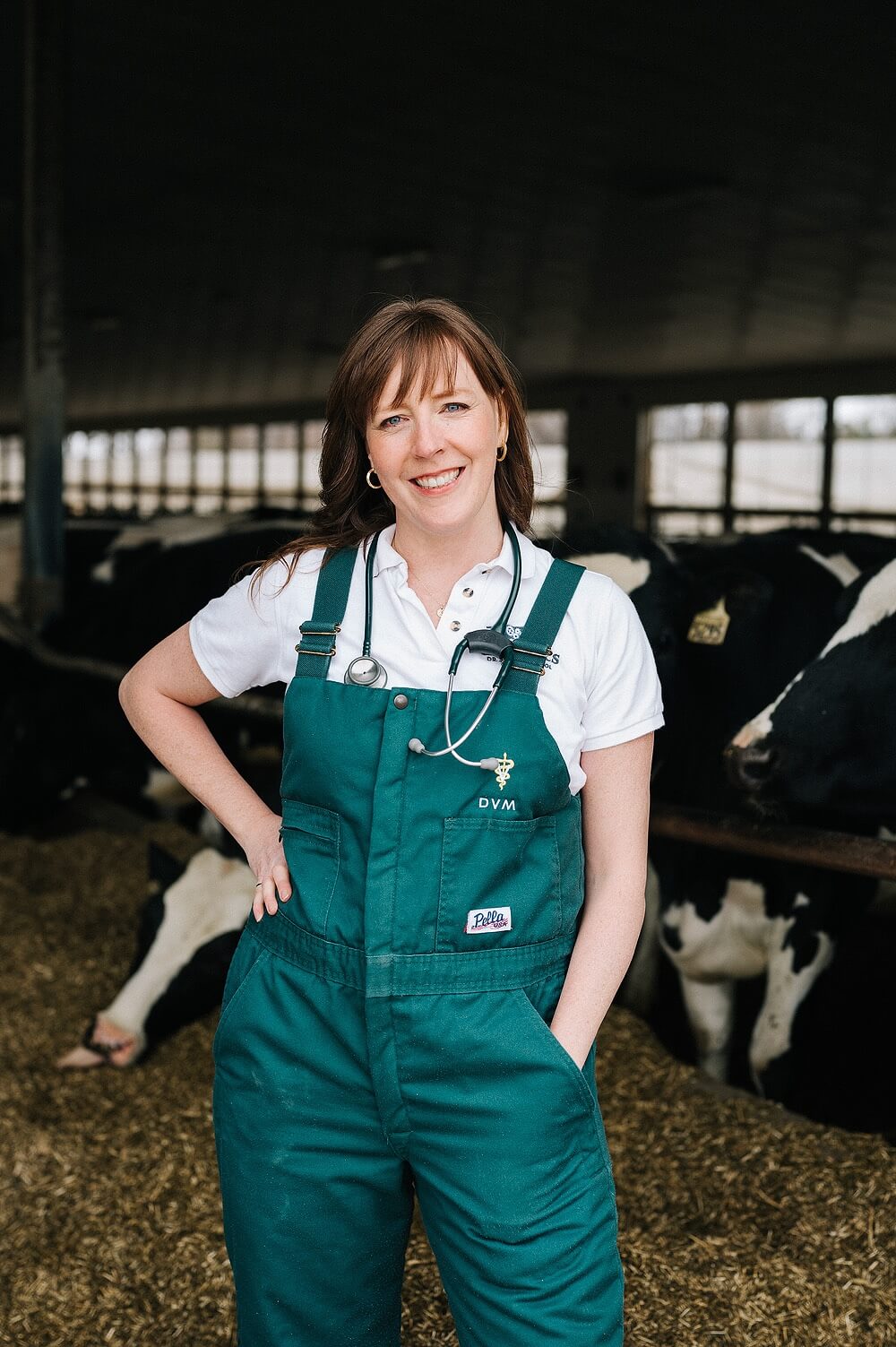
The latest candidate in our series of Q&As with influential women in the technology business is Dr. Shari van de Pol, B. Eng. D.V.M., Founder & CEO, CATTLEytics Inc., which helps dairy farms manage their herds, streamline team operations, and connect siloed dairy data to improve sustainability, animal health, and profitability using cutting-edge data tools, AI, and intuitive visual platforms.
Name: Dr. Shari van de Pol B. Eng. D.V.M.
Job Title & Company: Founder & CEO, CATTLEytics Inc.
Years in the Industry: Over 10 years in ag-tech and animal agriculture; 20+ years across software engineering. Film industry, two days. (First time filming with Dragon’s Den! Can’t believe it!)
The Quote That Most Inspires You: “La pupille se dilate dans l’obscurité et finit par y trouver la lumière, comme l’âme se dilate dans le malheur et finit par y trouver Dieu” (- Victor Hugo)
“The pupil dilates in darkness and in the end finds light, just as the soul dilates in misfortune and in the end finds God.” (- Victor Hugo)
“When things are hardest, that’s often when one’s true direction begins to reveal itself.”
What drew you to a career in the consumer and/or business technology industry?
I didn’t start out chasing tech for its own sake. I loved how quickly you could create solutions using software, and I started by solving problems for farmers – real, interesting, complex problems. At the crossroads of veterinary medicine and computer engineering, I realized I could build tools no one else could. That intersection became my superpower.
Have you encountered any roadblocks along the way that were related to your gender?
Yes. I’ve had original work taken at times. When you’re good at what you do, you’re often trusted with complex tasks and your input is heard, but it can still be difficult to be brought into decision-making or to receive credit, leadership roles, or recognition. While that’s frustrating, I’ve learned to find real joy in building amazing things independently, especially in contrast to situations where I felt my hands were tied.
That said, I was fortunate to work with so many great individuals, including an incredible manager at IBM, Ed Mischkot, who saw my potential early on. When I started creating innovative solutions, he leaned in and gave me the space to let them grow. I had a mentor named Berni Schiefer, now a leader at Snowflake, Berlin, who encouraged me to show up and bring my best. I carry that experience with me and trust that our pace of innovation and our team’s commitment to excellence will always keep us ahead.
What unique characteristics or perspective do you feel you bring to your organization as a woman?
I lead with transparency, empathy, and a refusal to separate creativity from science. I’m not trying to “act like a tech CEO,” I’m building a new kind of company that reflects both my values and the complexity of the agricultural systems we’re helping to improve. I think that will help us stand apart and will connect to farmers who are also incredibly multi-dimensional. They need to be nutritionists, vets, equipment specialists, agronomists, all while making a profit. I think that’s why we generally have a natural fit in the farming community.
What does the tech industry need to attract more women, particularly into high-level positions?
The tech industry needs to stop hiring women to fit into systems that were never built for them. We need to change the system itself, one that embraces care, collaboration, and flexibility as leadership qualities, not liabilities.
If you had to sum up what it is like being a woman in this male-dominated technology industry in just a few words, what would you say?
Overall, my experience has been really positive. On the whole, I’ve worked with some really top men and women who allow everyone to bring their best to the table. That said, I’ve often felt that the tech world wasn’t quite built for someone like me, even though I can operate within it. So, we’re building our own version, one that takes a more organic, human-centred approach to technology.
Are there women in the tech industry who inspire you?
Yes, but I’m also inspired by women in agriculture, law, music, education, like my sisters and my mother. Watching them forge careers whether or not they saw a lot of examples of women in those industries go there first made it seem silly to think of newness being a barrier.
What are some of the misconceptions/myths about women working in the technology space that you’d like to dispel?
I’m probably too deep in the technical space to see those barriers clearly because in my experience, they haven’t shown up in the work itself. The women I work with are incredibly bright, technical, and excellent problem solvers. I think the real misconceptions exist outside the industry.
Some people excel at coding, and some struggle with it, regardless of gender. I write code, design digital twins, and model biological systems with machine learning. But I also care deeply about people. Like most engineers, I believe my work should speak for itself. I look at hard proof to answer questions, and I expect people to look at the outcomes I’ve built if they want to understand what I’m capable of.
You can be technical, creative, and fully yourself at the same time. That’s exactly why CATTLEytics works.
What’s one thing you wish was done differently in the industry, and why?
I wish we celebrated originality more than we reward safe, familiar ideas. Innovation often comes from the fringe, cross-disciplinary thinkers, underrepresented voices, or “nontraditional” career paths. We need to make space for that. Also, we need to make space for trying new things with the expectation that a lot of them won’t work. That brings playfulness into innovation. Sometimes people want a sure winner and so they can’t conceptualize trying out things with unknown outcomes.
How do you feel the latest shift to AI will impact the way you do your job and opportunities for women in the industry?
AI can democratize access to complex tools if done right. At CATTLEytics, we’re already using it to generate multilingual farm protocols in seconds and are working on our usage of contextual AI to answer any question that pops into a farmer’s head. That opens doors not just for farmers, but for women balancing many roles whether at home, on a farm, or in a lab who now have better tools to lead and contribute meaningfully.
Are you optimistic for the future in general and for the industry?
Absolutely. The future is full of possibility, especially when technology is developed with the people who need it, not for them. Our work shows that even a few small changes, made with intention, can ripple across food systems, animal welfare, and the planet. We’re all about the win-wins here.