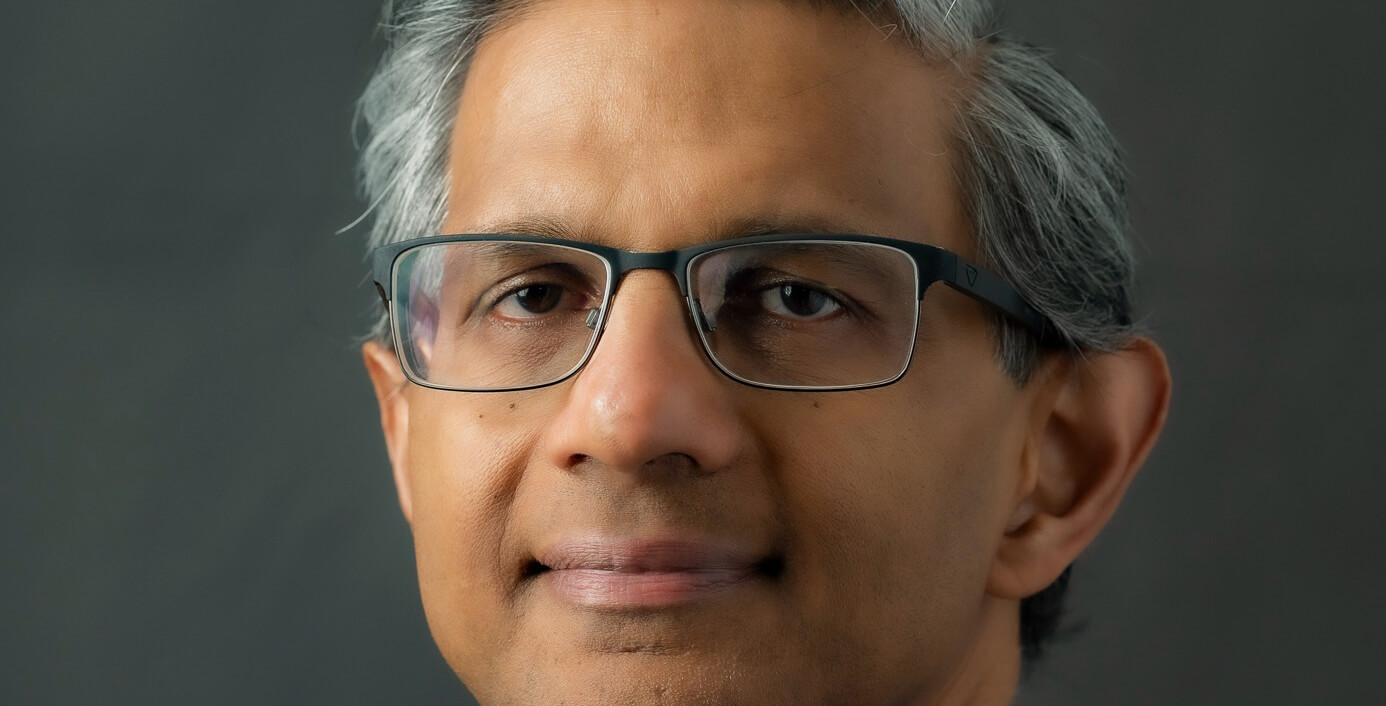
Ahead of Samsung Unpacked 2026, currently taking place in San Francisco, I had the chance to chat with Raj Doshi, Head of Mobile for Samsung Electronics Canada about the new S26 series devices and what makes Samsung phones different. Samsung has long been positioned as a top smartphone brand, a leader in the Android space thanks to the intuitive interfaces and sleek designs, along with, more recently, tons of AI features (and the power to support them) and smart integration with the entire ecosystem of Samsung products.
In our 30-minute talk, Doshi highlights some of the key features of these new phones and how they compare to older models, provides his thoughts on what makes Samsung stand out among competitors, and justifies why the latest Galaxy phones are called “AI phones.”
Hi Raj. Thank you for taking the time to chat with me today. I just want to get a feel from you about the new devices and the industry. The big launch event is tomorrow. Can you tell me what’s particularly exciting about these new phones and what features and functions you think are going to resonate most with users?
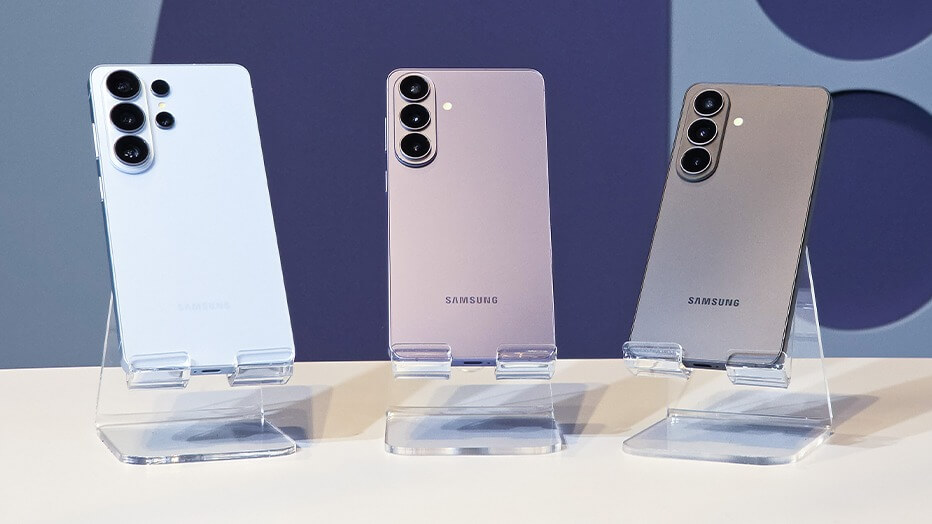
The Galaxy S26 family is an exciting set of products. But if I were to really focus in on what I think is going to be most useful and relevant for customers, first, obviously, the evolution of display continues to get better. But one of the strongest and most valuable features from a customer’s standpoint is the privacy screen, which is built into the phone. It’s a combination of the hardware as well as software innovation that deliver a practical use case for customers, especially if they’re in transit or environments where people are next to them.
Second, we continue to evolve AI. What we refer to technically as agentic AI is really proactive AI where, based on information that is relevant to the user, the phone is actually able to make recommendations. We have some examples where if you’ve booked something or messaged your friends about booking a lunch meeting, it can determine the best available time from your calendar. That’s powerful because it’s helpful, but more importantly, intuitive. It’s right there and seamlessly integrated with the other applications and information that you use. I think that evolution from more engaging AI to proactive AI is one of the other big features that customers will love.
Obviously, our camera continues to evolve. We’ve got physical improvements in terms of lenses, wide-angle lenses, and nightography capabilities. Tied into that is the ability to leverage AI within that camera feature. Things that we’ve done in the past to be able to remove and recreate or generate the picture without someone in it, we’re actually adding functionality to put something back in. Say you’re having a birthday party, someone ate half the cake, but you want to take that picture with the full birthday cake. You can ask AI to bring back the full cake, and you’ve got something added back in…the picture.
The last that I think is valuable from a consumer standpoint beyond some of the other features we’ve added is that our base model memory is now 256 gigabytes. Why that’s important is as people continue to use pictures, videos, and other applications, what we found was that the memory at 128 was not enough for most people. And so, all our base models for S26, S26 Plus, and Galaxy S26 Ultra have 256 gigabytes.
It sounds like there’s a lot of exciting features coming with the S26 series! But there are people who say that Samsung has been consistently delivering iterative updates to the phone hardware, at least with the baseline models. What would you say to that?
I think improving the hardware has got to be [balanced] with the capabilities and the needs of the customers and also with a price construct in mind as well. We’re trying to make sure that we’re providing solutions that customers want within the price propositions that they’re looking for. Having the hardware innovations without the software innovation I think is a miss. And what we’re focused on…is the integration of AI within those hardware components…that we think will benefit customers. So, it’s not always about hardware.
And if it is in terms of design, we do have other products in the portfolio, like foldables with the Z Flip and Z Fold. Those are available for design based on customer use as well as the other series of solutions that are in the affordable range, our A series of products.
When we’re talking about upgrading, because a lot of the features will be available to older model phones through software upgrades, would you say that the S26 is something that somebody with an S25 should upgrade to, or just those with an S24 and older?
I think the evolution from an upgrade standpoint, if we compare to the S25 series, there are definitely hardware as well as software improvements. Things like privacy screen are only available in the new Galaxy S26 Ultra, as well as improvements in terms of camera and, at this stage, the agentic AI solutions because of the hardware configuration requirements. So, there is a clear reason for moving up in terms of the capabilities on the devices.
What is also relevant is many customers are usually upgrading every two to two-and-a-half years. For those customers, the improvements compared to the devices that they have are much, much more substantial.

Looking at the industry right now and the competitive Android market, what sets Samsung apart from competitors? Google has deep Gemini integration, for example. OnePlus focuses on incredible battery life and durability. What’s at the top of the priority list for Samsung?
I think we have differentiation on a number of fronts. I started talking about the broadness of portfolio of devices. I think that amongst all the OEMs, we have lots of products that fit the needs of users. I think just in the mobile space, that’s true. But also, remember Samsung produces a lot of products beyond just the mobile business in terms of TVs, soundbars, monitors, PCs. There is strong integration into all of those as well that benefit the Samsung mobile user.
The other part that I would also point to is that as much as we leverage and partner with Google for a Google Gemini solution, we are also at the forefront in terms of AI. We have our own product, Bixby, that helps leverage a lot of the capabilities within the device. As you may be aware, we’re also launching with Perplexity. The idea is that we are enabling customers to access AI from whatever sources they need to achieve their search and discoverability and AI executions.
A stat that was interesting for me is that about eight out of 10 people use multiple AI solutions to actually serve their needs. Providing that through the mobile devices, I think, is very important for customers. Being able to enable that is a differentiator relative to others in the marketplace.
I guess it’s safe to say that AI has a big part in your vision going forward.
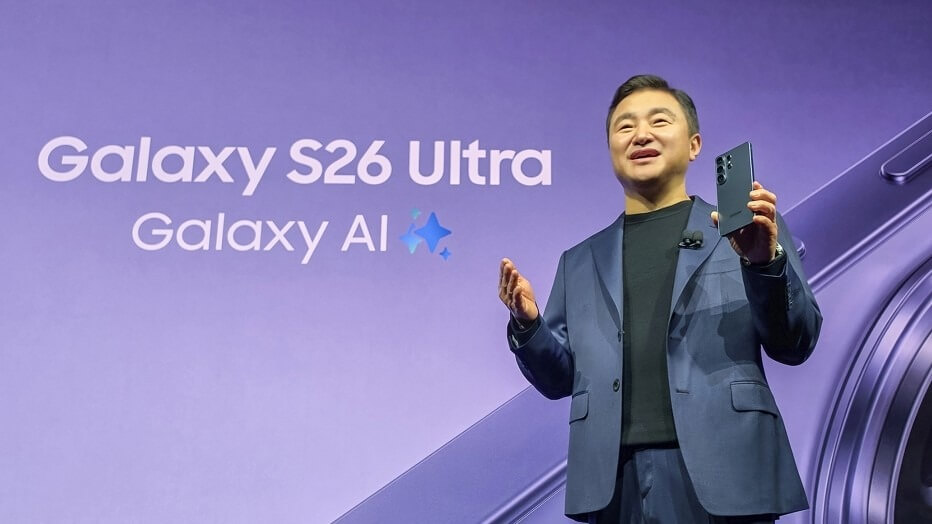
Very clearly. And if you kind of look at it, we call it the “AI phone” because I think that is what is going to be a key piece of the differentiation going forward.
I know they’re considered budget devices, but is there a roadmap to bring more AI features to the A-series phones at any point?
The A-series phones do have AI capabilities, which we refer to as Awesome AI. Obviously, given the hardware differentials between the S-series and the A-series, some capabilities are not enabled on those. But many, many are, like Circle to Search as well as some of the translation and other capabilities. A-series is not a non-capable AI solution. It is quite capable. The idea is that the phones are evolving, and we want to make sure that whatever is available and capable on those devices, we put across the broad portfolio that we have.
Let’s switch things up and talk about another phone that was announced late last year: the Galaxy TriFold phone. I did see it at CES and tried it out, and it’s really cool. Do you plan to continue to lean heavily into foldable phones going forward?
I think we continue to be leaders. The Z Flip 7 and the Z Fold 7 are seventh generation devices. We have been leaders and continue to be leaders in that arena. What product evolutions will happen, we’ll wait to see. But I think your question about are we going to lean in more, inversely, customers are receptive and accepting and wanting more capabilities and solutions. We are working to continue to broaden that availability and landscape of devices. So, the short answer is yes, it will continue to grow just based on consumer demand.
Is there a timeline or an idea of when/if the TriFold phone is coming to Canada?
At this juncture, we are not bringing the phone to Canada. As you know, it’s available in the U.S. and select markets around the world. When we did the reviews on market demand in the country, it just didn’t make sense at this point to bring it in based on volume. But as the demand in that category of foldables grows, obviously we would reconsider the portfolio of solutions that we bring into the country.
Outside of data relating to that phone, have you observed any market differences between Canada versus the U.S. in terms of what Canadians are looking for in their phones?
We do compare the adoption and utilization on the phones and there are a lot of similarities in terms of the Fold versus the Flip. The Fold with the redesign from last year has done extremely well…it has become more comparable to the Flip, which is great news because I think the larger screen and the smaller, thinner form factor has played a big part in the acceptability of a broader base of users. That is similar to what we’ve seen not just in the U.S., but globally.
I think as long as the phones can meet customer needs and they continue to benefit from thinner devices with just as strong capabilities, that’s really what’s resonating.
There’s clearly a healthy appetite for foldables. Onto the business end of things, how do you plan to keep pricing competitive, especially with the current state of the economy, rising costs, and shortages on materials like storage?
The S26 base model is enabled with 256 gigabytes, which is double the memory from the base model from last year. We have actually reduced the price on that model year-over-year. I know there’s the memory price increases, et cetera, that are impacting the industry. But we have been conscious of making sure that we provide value solutions to customers. And because of the popularity of the models, in terms of the S26 family, we work to make sure that pricing is, so to speak, in a good place relative to some of the capability enhancements we’ve put in. This includes both physical hardware and software improvements.
Looking more broadly, what are your thoughts on the direction of the smartphone industry? What do you think will be the next big development in phones?
For me, the focus is right now. But if you really look at some of the changes that we continue to see, it’s design in terms of thinness, better performance, better camera capabilities. More importantly than anything is the integration of software and hardware. What’s valuable is greater leverage of the ecosystem of products. So, things like Galaxy Buds, Galaxy Watch, Galaxy Ring, all those integrate with the smartphone as the hub, and it’s very powerful in terms of innovation. The information and the capabilities from those are enabling new capabilities in terms of hardware and software integration and solutions.
Samsung Health, for example, provides a lot of valuable information to the users based on tracking for sleep, for running, and other exercise. I think it’s the ecosystem integration that is valuable for future opportunities.
To wrap things up, in your mind, what does “innovation” actually mean in smartphones? Is it hardware? AI? Ecosystem? All of the above?
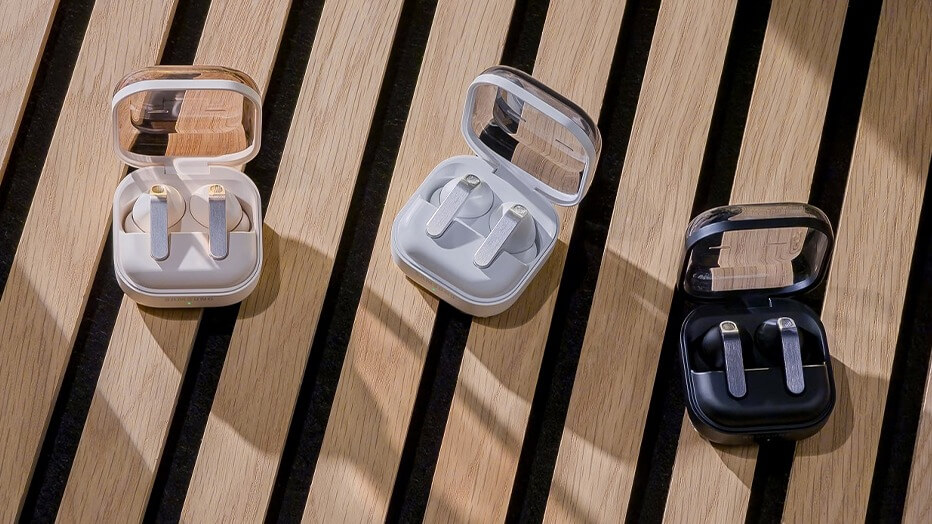
It is all of the above, and I think that’s where we believe we are providing customers with the best offering. A good example for you is that along with the S26 family, we are also launching two new Galaxy Buds. The Galaxy Buds 4 Pro and the Galaxy Buds 4 have redesigned form factors but also integrated AI capabilities. You can engage AI engines through the buds, and we’re also introducing things like gestures. When you want to accept a call, nod up and down, and when you want to reject it, shake your head sideways. It will do the relevant action based on your gestures. So, when you asked, ‘is it all of the above,’ that is an example of all of the above, where ecosystem integration, AI integration, and the phone capabilities are advancing forward. The advancements, I really think, are a set of solutions that, going forward, will serve our customers better.
Is there anything else you want to add or anything that you think I missed?
The one thing that I would maybe add is that with all these AI capabilities, there’s always concerns about privacy. Our data is secure on the device, and we’ve also got an industry-leading solution in Knox. This is important because as much as these capabilities are valuable to customers, they also want to ensure that their privacy is secure. And we’ve got that solution in place as well.
Thank you so much for taking the time to speak with me today, Raj.
It’s good talking to you. Thank you.