
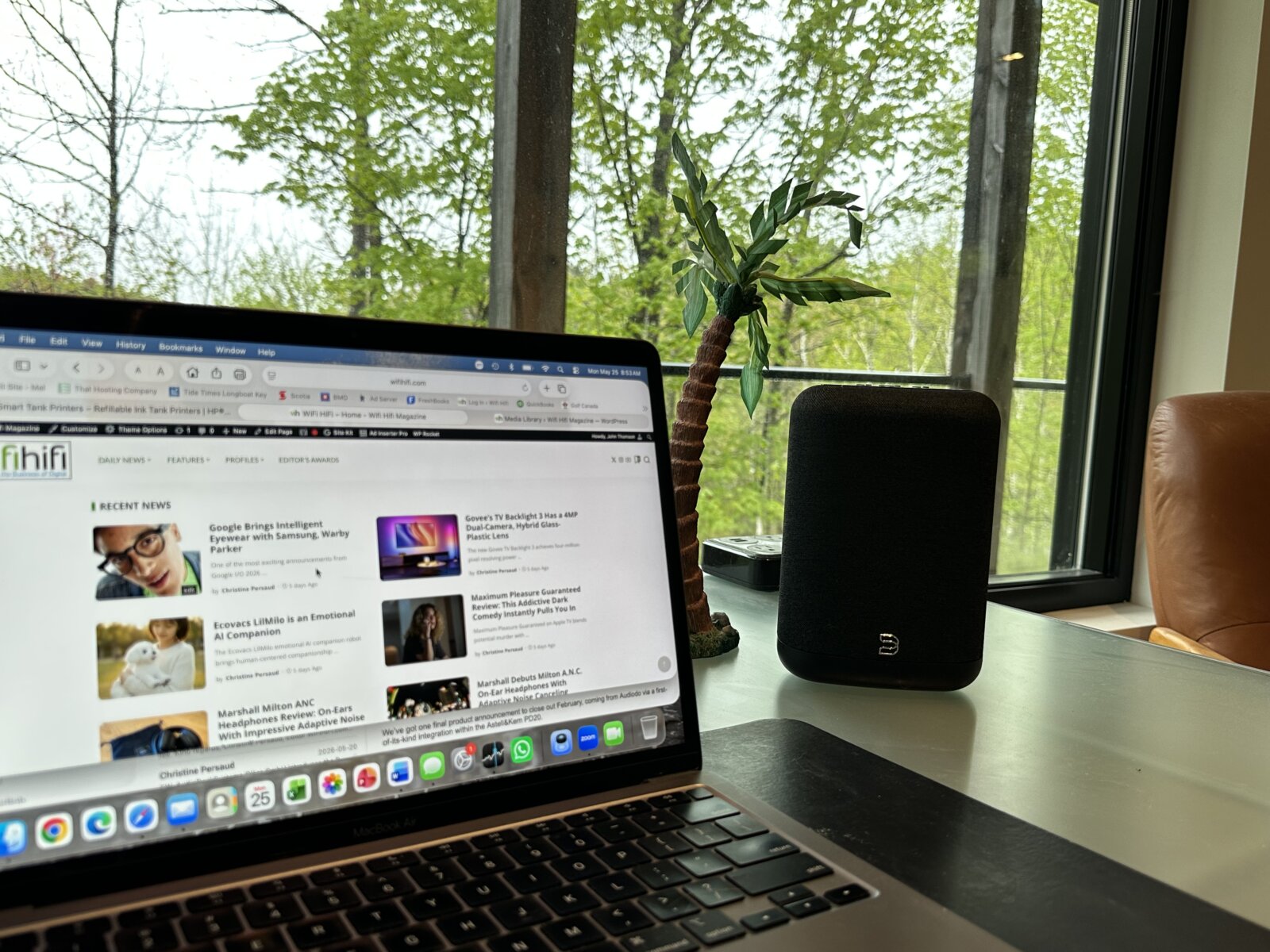
Bluesound is a Canadian audio company that specializes in high-resolution, multi-room streaming products built around its BluOS operating platform. Its lineup includes wireless streamers, streaming amplifiers, powered speakers, and soundbars that let you play synced music throughout the home or business, using Wi‑Fi and streaming music apps such as Spotify, Apple Music and Tidal. A key part of the appeal is that Bluesound can also modernize existing “legacy” hifi gear by adding network streaming and TV connectivity, while also supporting an all-wireless setup for listeners starting from scratch.

Bluesound offers five different powered speakers and two different soundbars with optional sub woofer to build out an ideal whole-home streaming audio experience. Bluesound also has seven high-resolution streamer options allowing a user to turn a legacy audio system into a wireless system and even a streaming amp if you just wish to attach legacy speakers. With so many options available to buy, what Bluesound components should you buy first when your goal is to hear music throughout your home?
A few years ago, I was pondering that very question. My end goal was to hear a song while I wandered throughout my house. From living room to bedroom to laundry room, I wanted to hear my music. This is the strategy that I followed, and two years on, I would not change a thing.
My first purchase: The Bluesound Node.
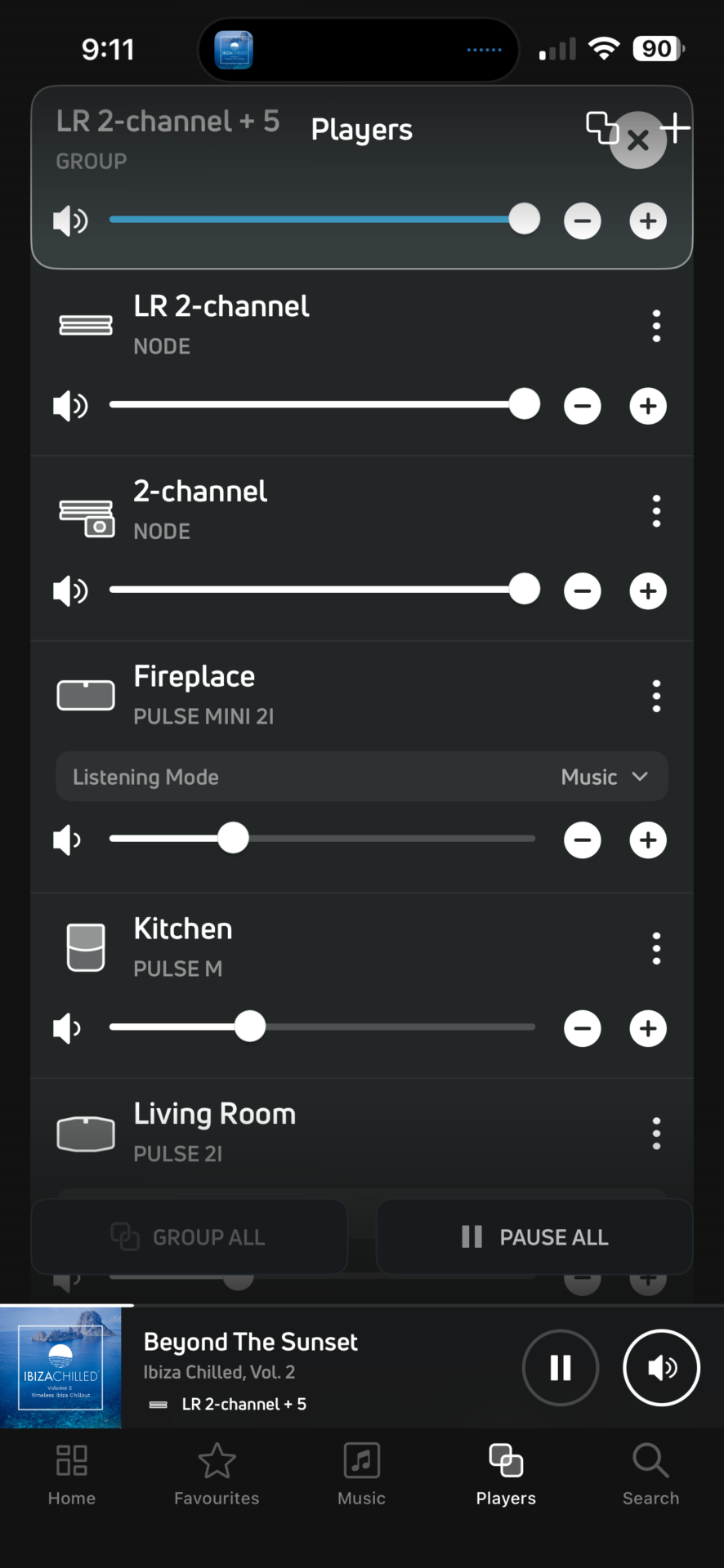
I have two legacy 2-channel audio systems in my home. One on each floor. I added a Bluesound Node wireless music streamer to each of these systems, allowing me to stream the same song simultaneously on each level of my house. The Bluesound Node is the easiest way to enter a streaming ecosystem if you already own audio equipment. The Node supports HDMI eARC, Dolby Digital decoding, Bluetooth streaming, Spotify Connect and Apple AirPlay 2 making it incredibly flexible for streaming at any desired resolution and with RCA and optical inputs, it guarantees that virtually any legacy amp of any age, can connect to the Node. If you are a vintage audio enthusiast but want some 21st century features, the Bluesound Node is the way to go.
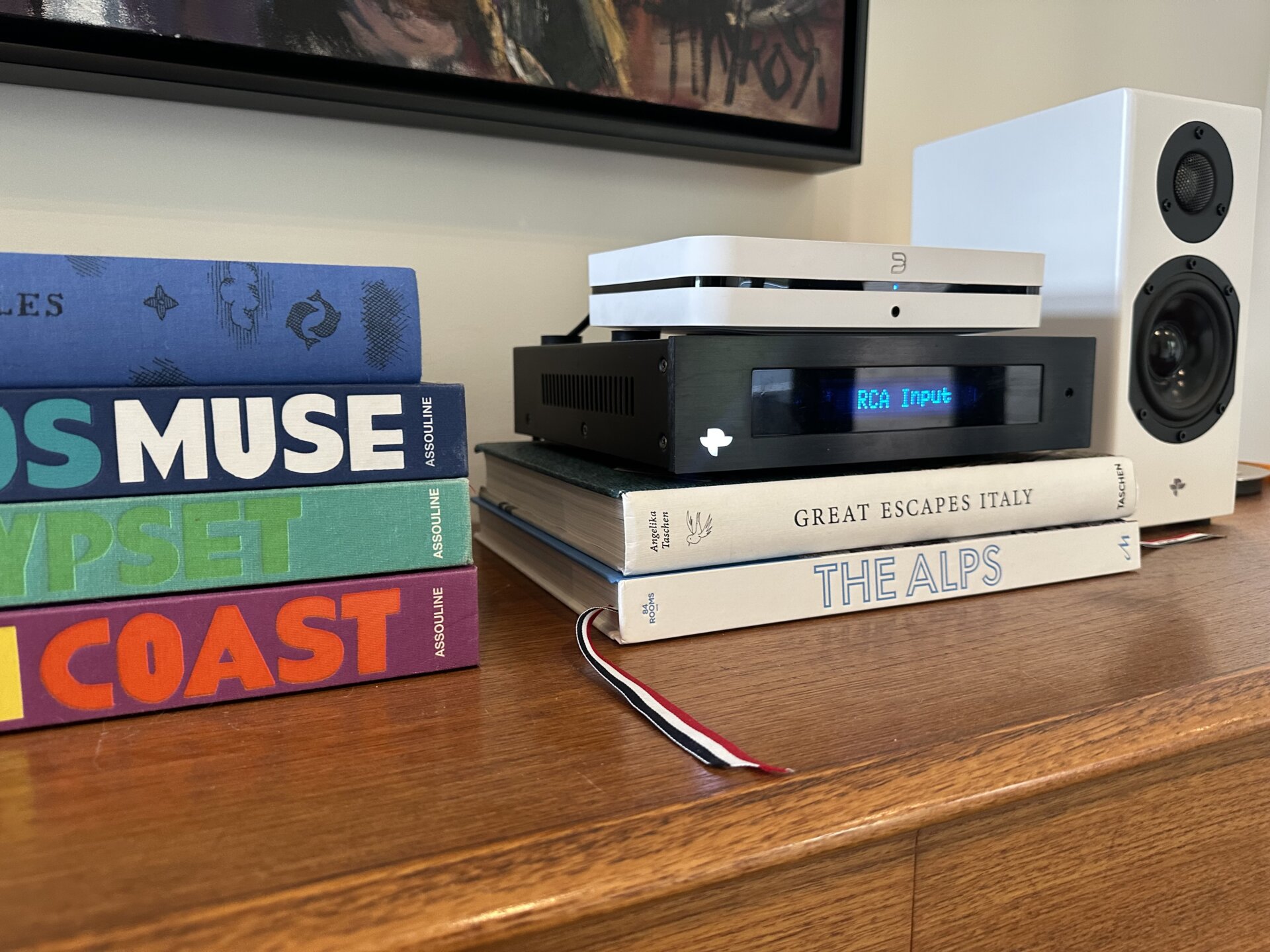
With the Node’s attached to my existing system, I can now control volume on both systems from my phone and switch songs and playlists effortlessly from the couch. Through the BluOS app, I can also decouple the two Nodes from each other so I can listen to one artist upstairs while my wife listens to something else like a podcast on the lower level. Just adding the Bluesound Node to my system was a monumental upgrade that turned my existing gear into streaming gear. Depending on the size of your home, your budget and existing audio equipment, some Bluesound buyers may stop right there. But not me. My mantra with streaming speakers is the more the better.
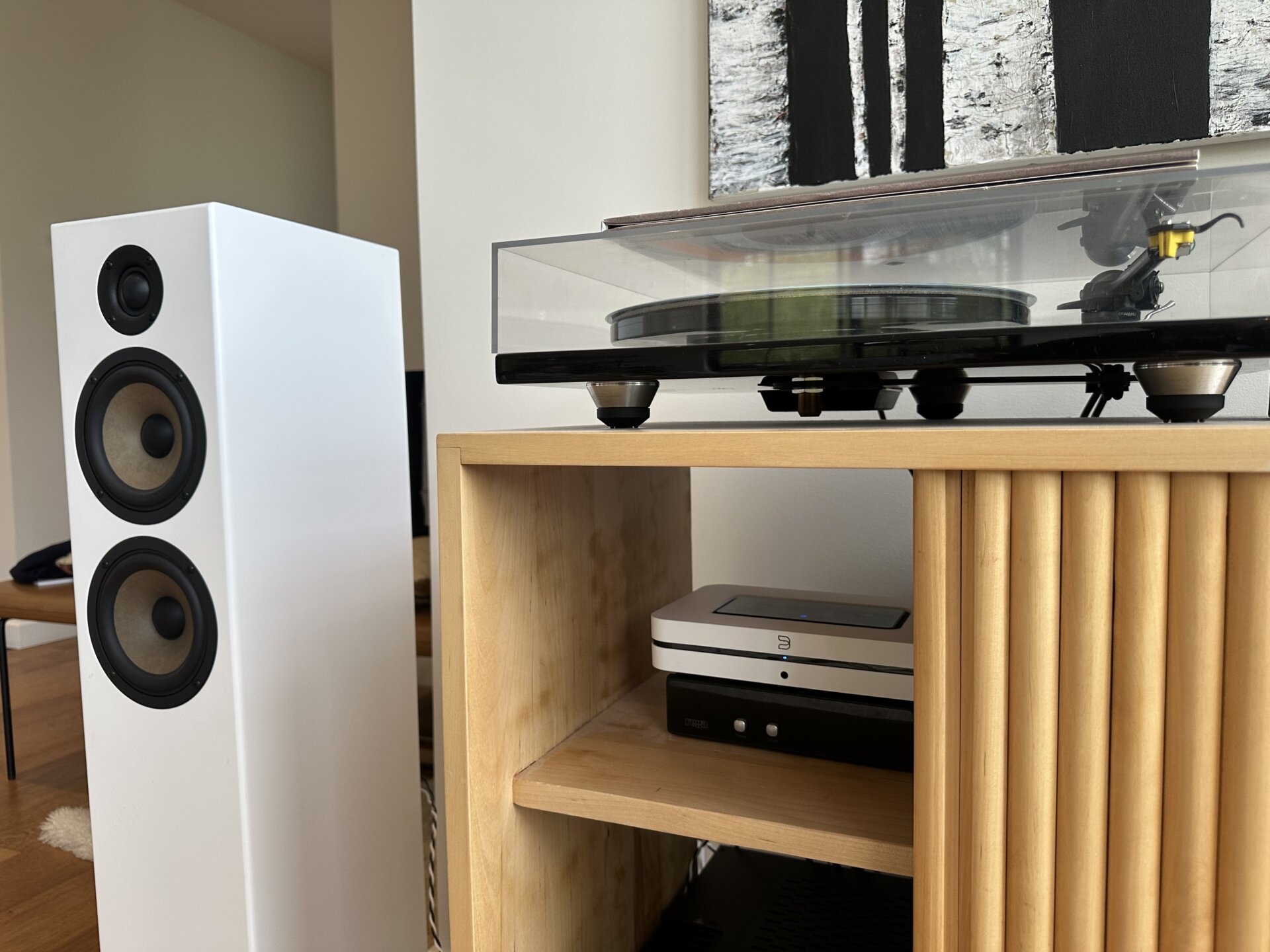
Pro Tip: the Node Icon, the newer version of the Node that I own uses 2 x ESS Sabre ES9039Q2M DACs and the one I use has a single ESS Sabre ES9039Q2M DAC. By using “RCA in” to your amp versus “optical in” you fully engage the Bluesound high-end DAC that is invariably a higher calibre DAC to the one in your amp.
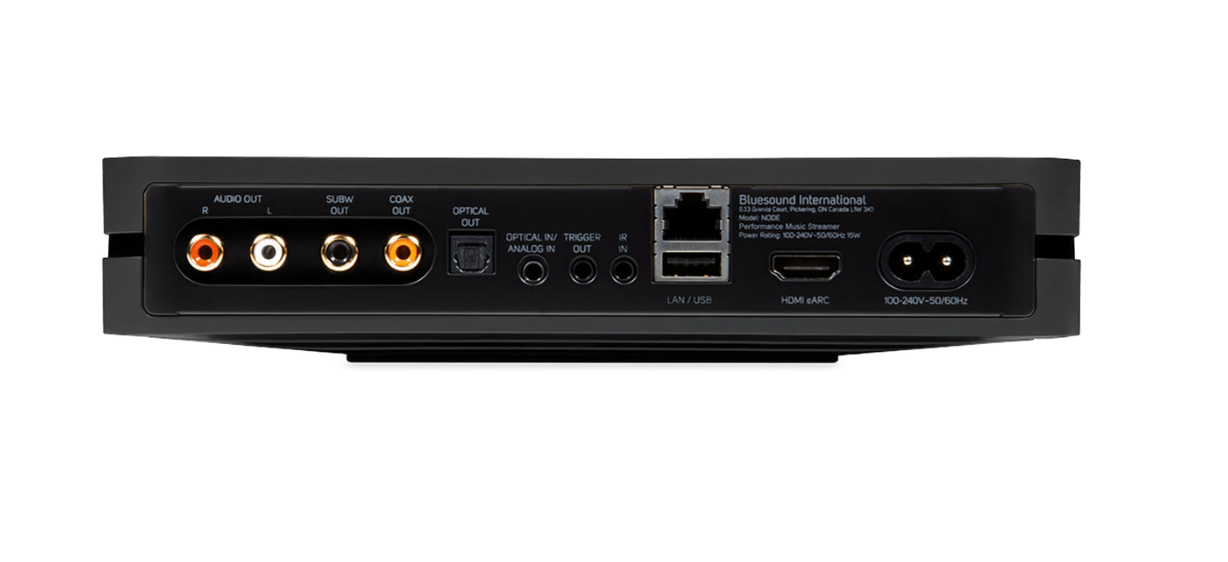
Second purchase: Two Bluesound Pulse M speakers
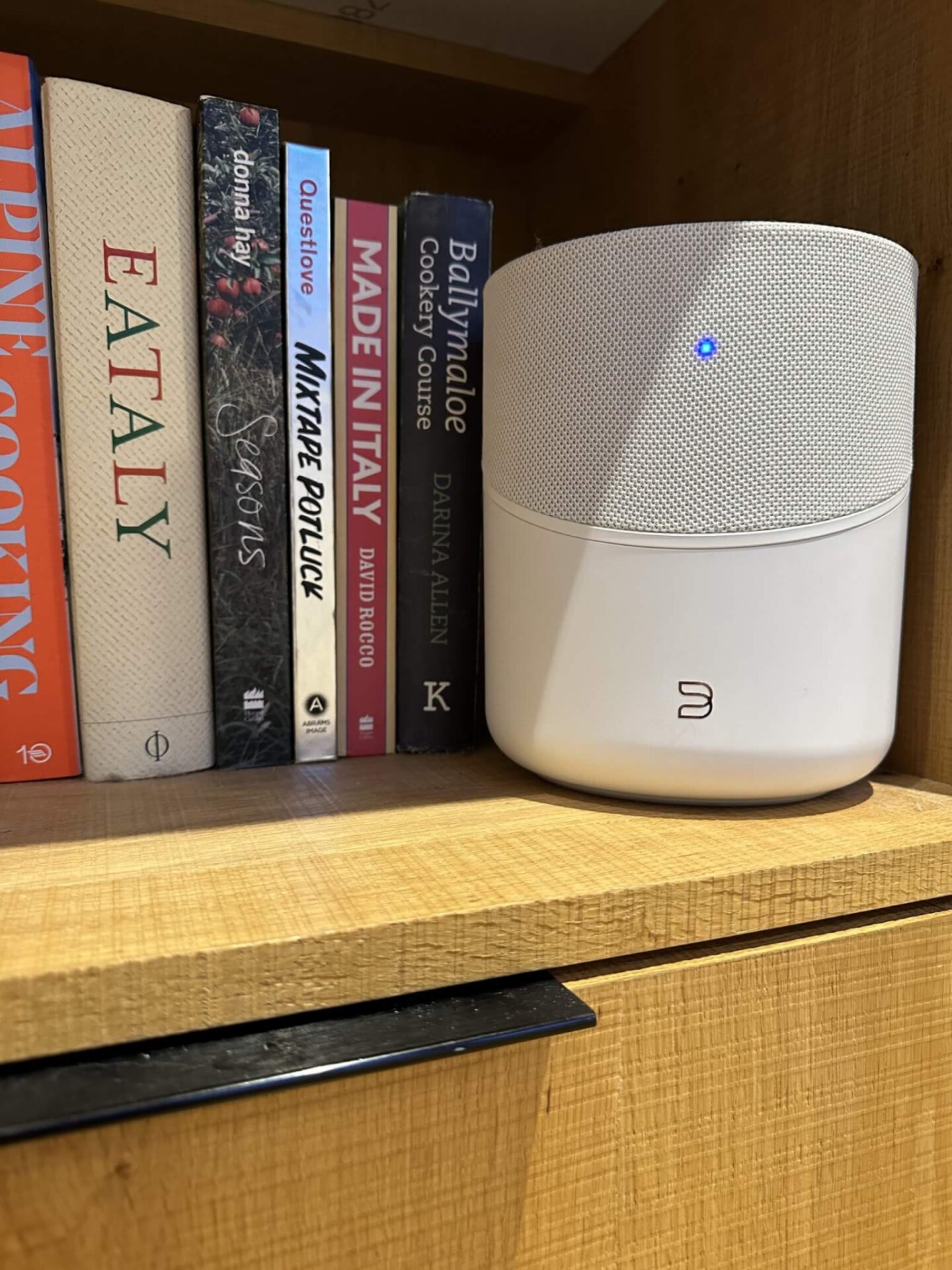
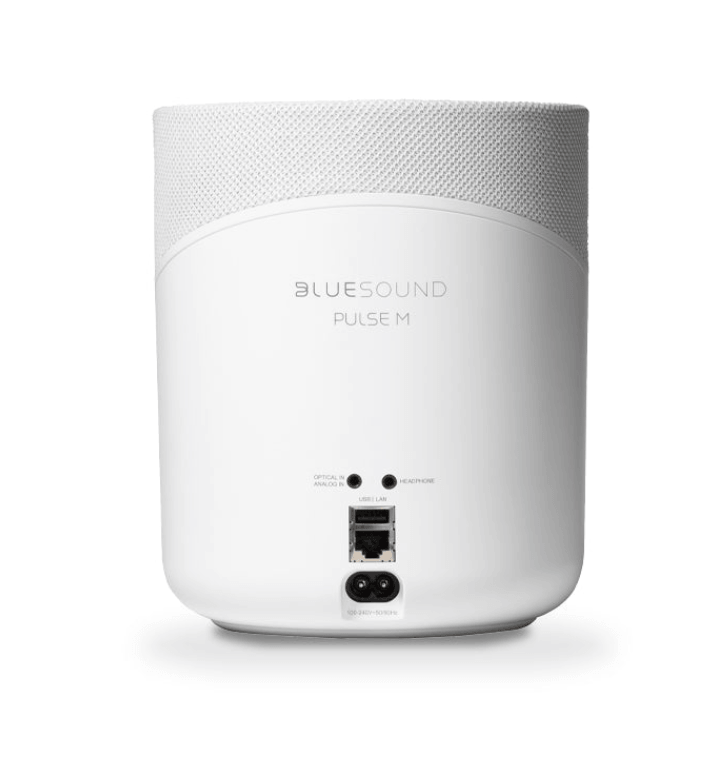
The Bluesound Pulse M is a compact wireless speaker engineered for high-resolution audio streaming, featuring immersive omni-directional sound, capable of filling a small room. Key features include 360-degree sound dispersion, rich bass performance, and of course seamless integration and pairing with the existing Nodes attached on my legacy audio systems. The Pulse M is an affordable speaker and a great option as a starting point if you don’t have existing audio gear, especially if you live in a smaller condo or apartment.
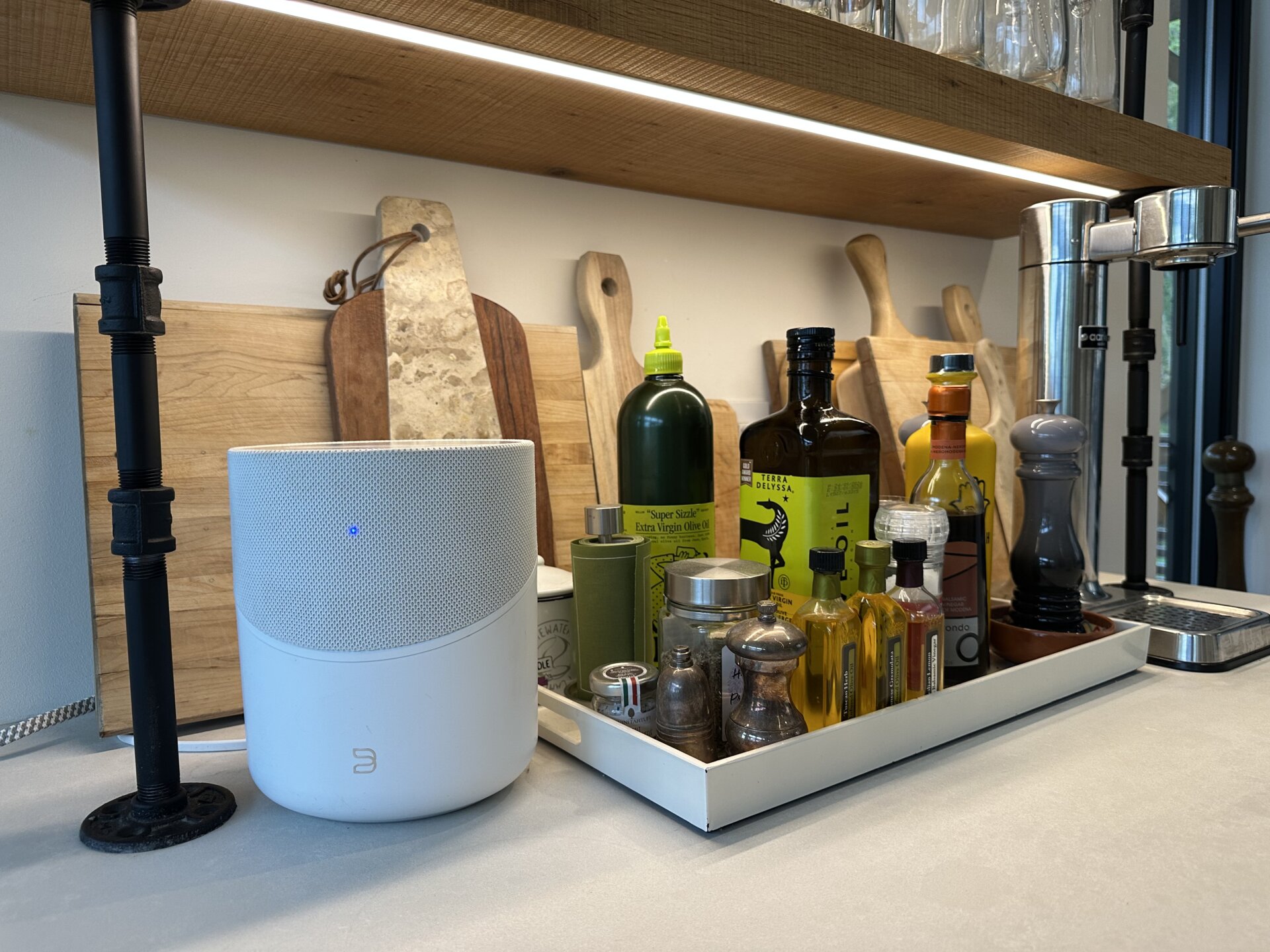
I use the Pulse M speakers in my kitchen and front hall as a way of filling sound gaps. My thinking is the more speakers in your house, the lower the volume that you can enjoy, since your distance to a speaker always remains close. My wife and I love entertaining and having music right in the front hall at a volume that doesn’t compete with our greetings tends to set the tone for a great night! The kitchen is always the hub for conversation and while the sound system in the living room can carry to the kitchen, having a dedicated speaker at a lower volume keeps the ambience without competing with conversation.
Third Purchase: Bluesound Pulse Mini 2i
The Bluesound Pulse Mini 2i is a compact all-in-one BluOS multi-room streaming speaker that delivers true stereo from a single cabinet, using four drivers (two 4-inch woofers and two 0.75-inch tweeters) powered by 100 watts of total amplification. Compared with the Pulse M (80 watts; one 5.25-inch up-firing woofer plus two 0.75-inch tweeters in an omni-directional design), the Mini 2i is more of a traditional stereo speaker, while the Pulse M is built to spread sound more evenly throughout a room. I chose the Pulse Mini 2i for our laundry room that does double duty as our ski room in the winter. This is where we open a few beers and tune skis during the season while predicting what the snow conditions will be like in the morning! Since this room is at the far end of the house and away from our main sound system, not to mention a hub of activity in the winter, I wanted a speaker that would deliver a bigger and deeper sound than the Pulse M speakers.
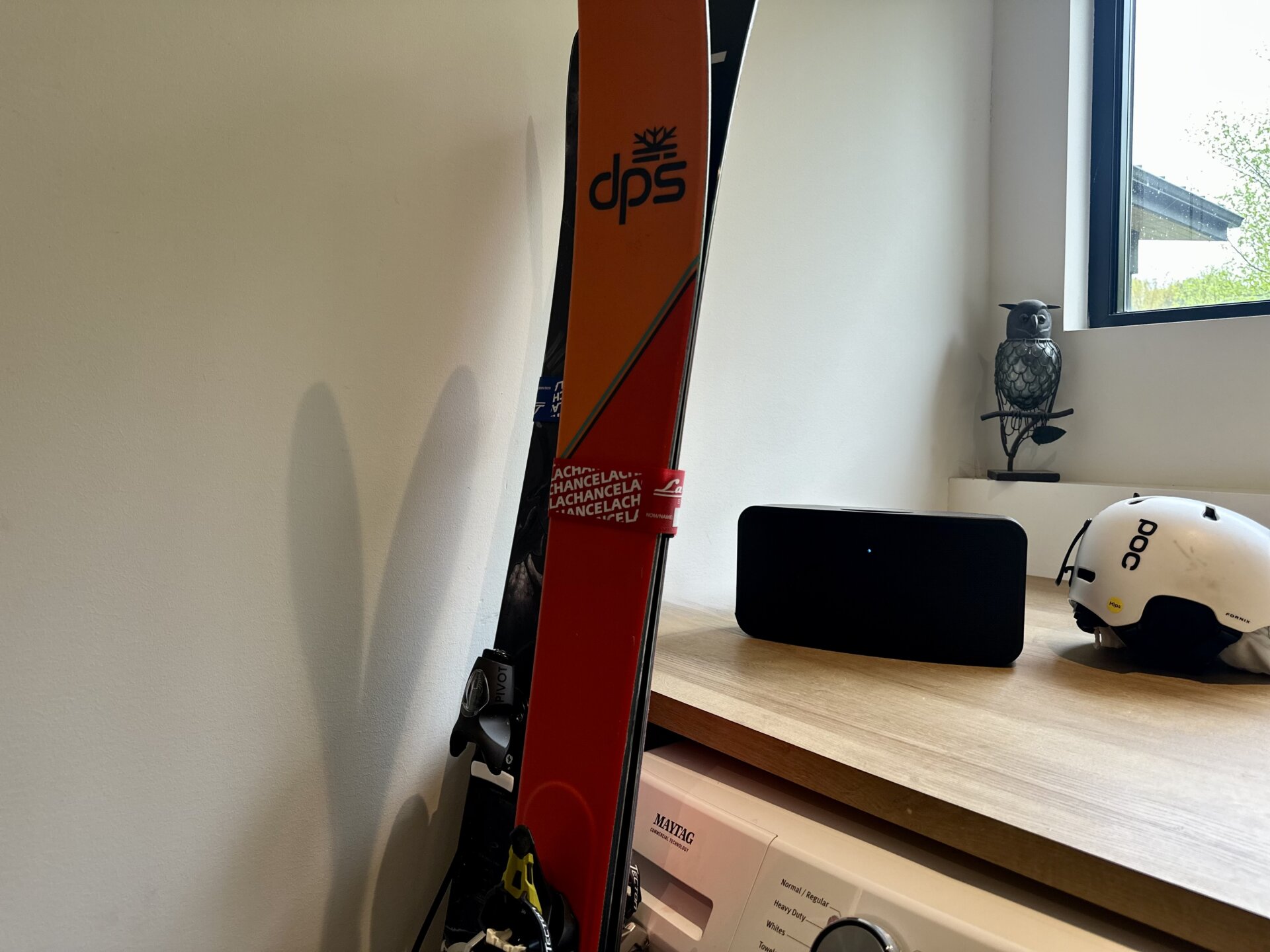
The Pulse Mini 2i could really be a stand-alone audio system for a smaller living room. Naturally, but worth mentioning, any two-of-a kind Bluesound speakers can be set up as dedicated right and left channel for stereo output. While the Pulse Mini already has right and left separation in the single speaker, it could be configured to only be a right channel, if you end up buying two with the second being a dedicated left channel. Same goes for the two Pulse M’s that I own. The Pulse M’s could also be used as rear channel speakers in a home theatre set up, if I were to add a Bluesound soundbar to my TV.
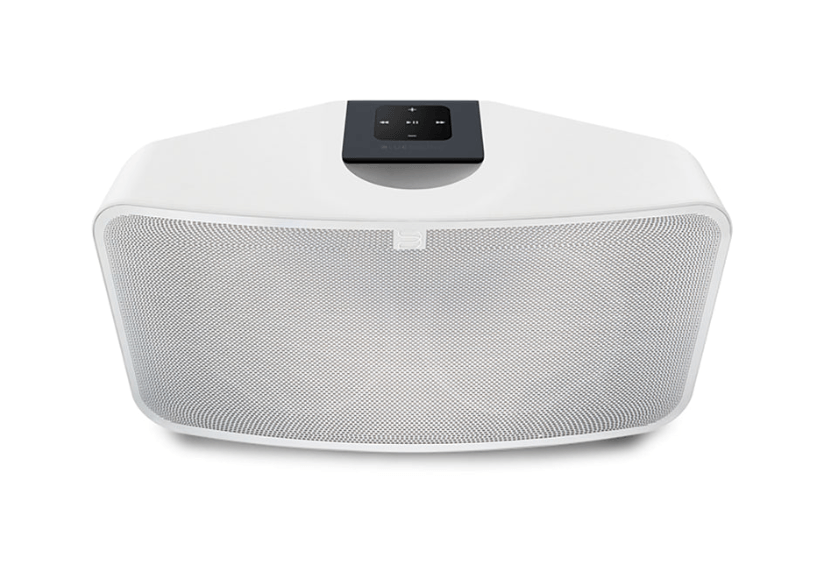
By now you should be picking up that the Bluesound configurations are endless and that there is a solution for every space and every budget. The other great thing is that you don’t need to buy every speaker at once. You can add speakers as budget allows. Bluesound regularly updates software through the BluOS app, keeping all speakers current with added features as they become available.
Fourth Purchase: Bluesound Pulse 2i
Ok, this speaker was a bit of an indulgence and I really didn’t need it, but on those rare nights (it’s always at night) when you are dancing and every speaker in the house is cranked, the Pulse 2i, the biggest of the Bluesound powered speakers, just adds that special fairy dust that keeps our guests entertained well past midnight.
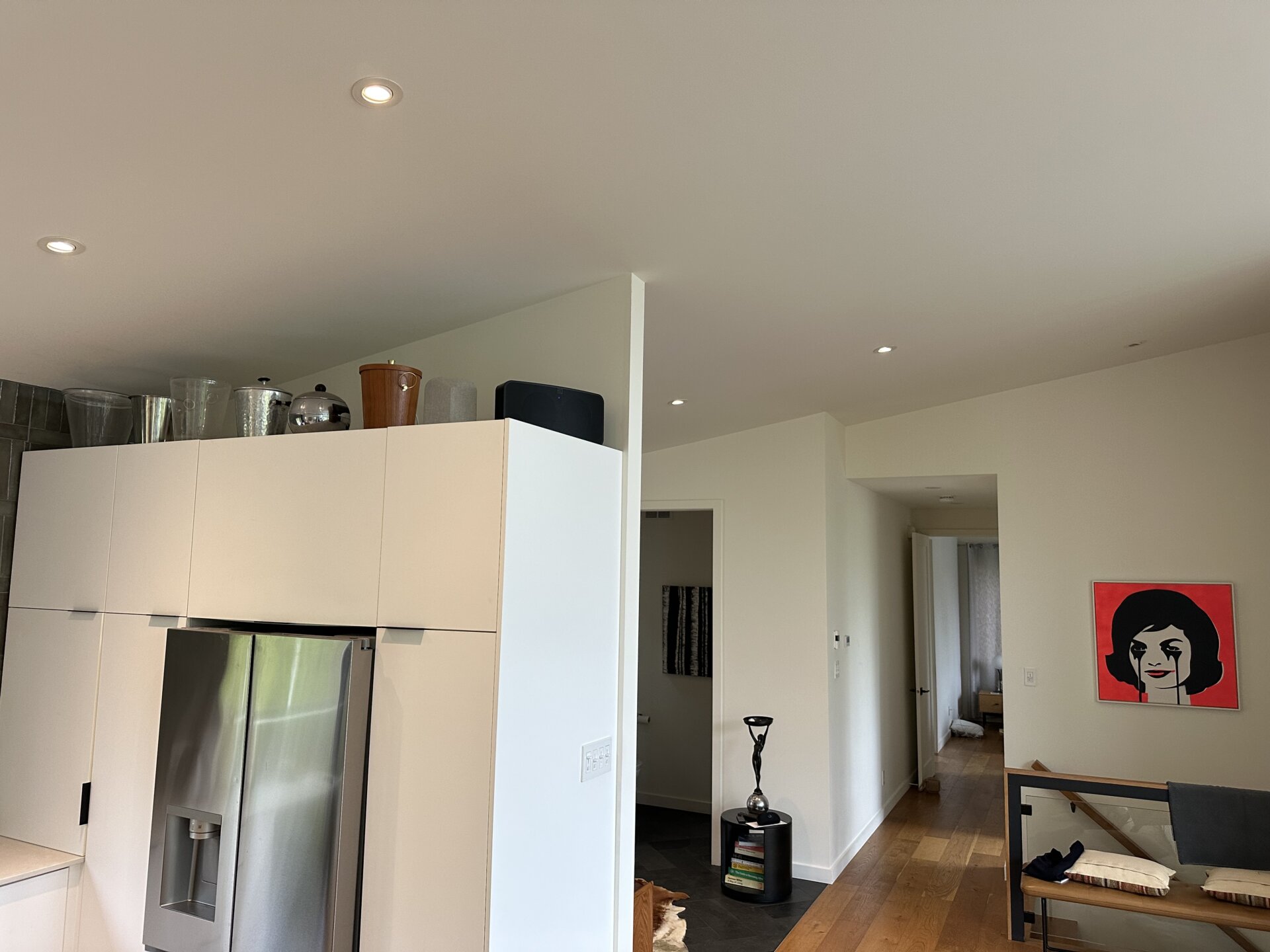
The Bluesound Pulse 2i is Bluesound’s flagship all-in-one BluOS streaming speaker and is rated at 150 watts by driving four speakers (two 5.25-inch woofers and two 1-inch tweeters) for room-filling true stereo sound. Compared to the Pulse Mini 2i (100 watts with two 4-inch woofers and two 0.75-inch tweeters), the Pulse 2i plays bigger, louder, and deeper. I have my Pulse 2i in the rafters of our living room. I have also adjusted the bass to be greater to add low-end to my overall set-up. The number of guests we have had that can’t get over the depth and range of our 2-channel system, only to be told that that 2-channel system is getting a lot of help from a flagship Pulse and two Pulse M’s!! And that’s the thing; whole home sound is the very best when you have lots of speakers filling in the sound gaps so that you can walk from the kitchen to living room to the bedroom with the volume remaining consistent and you don’t even know where the sound is coming from.
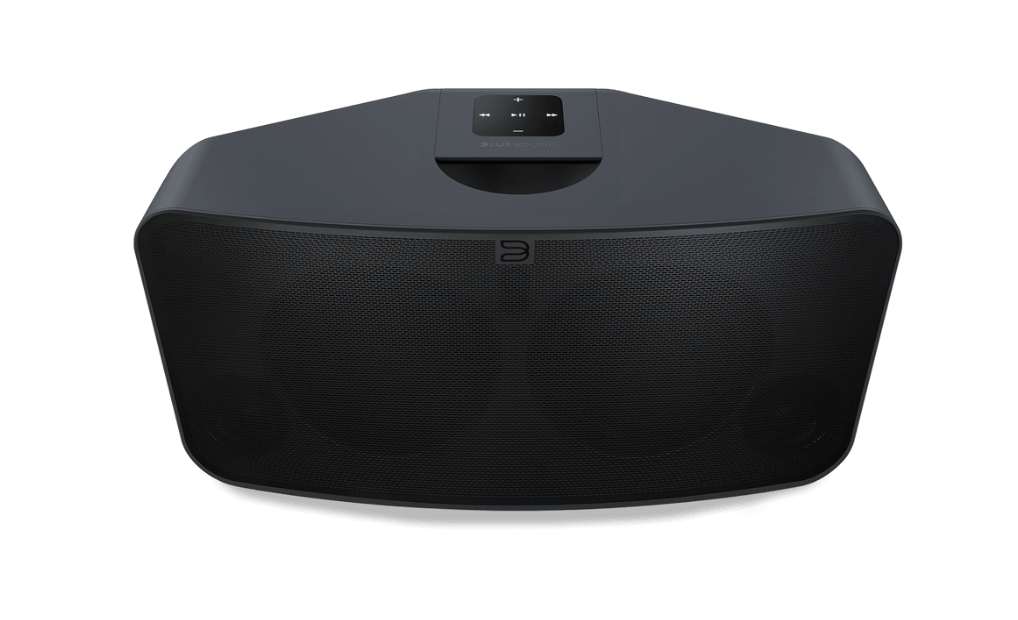
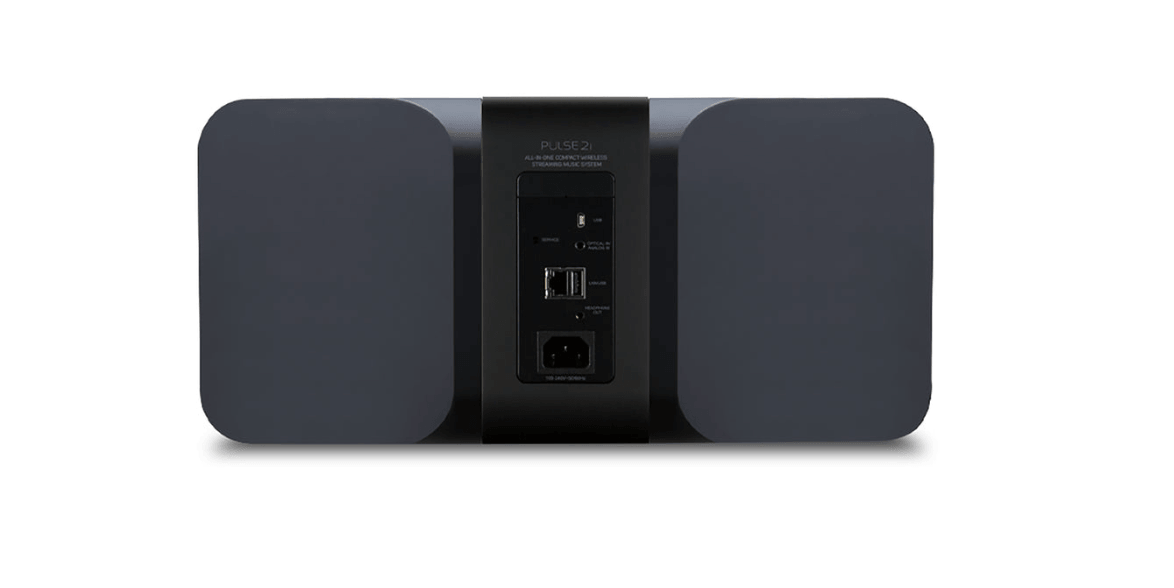
The newest speaker to the ecosystem: The Pulse Flex
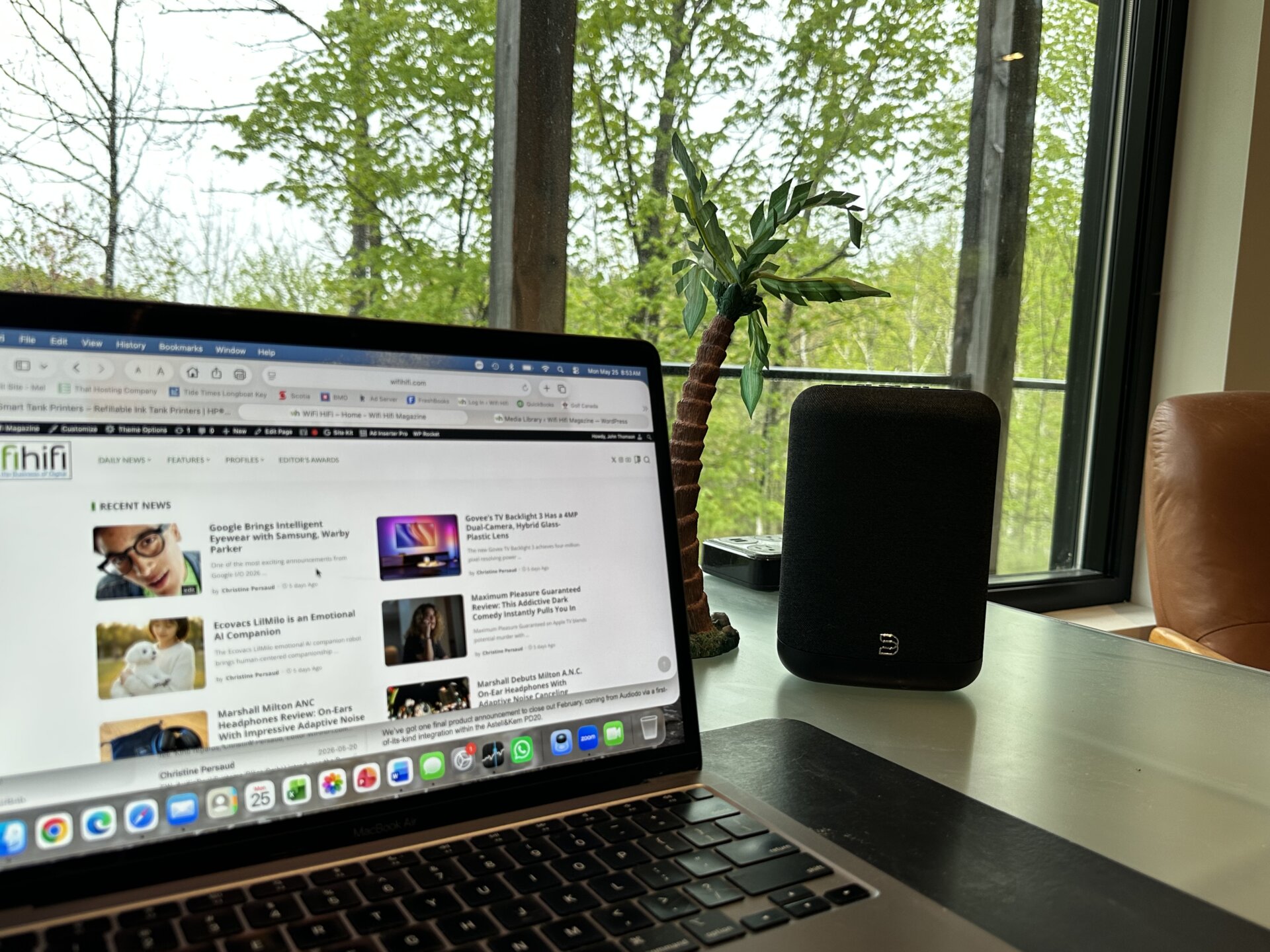
I don’t own the Pulse Flex but I have been given one on loan from Bluesound’s parent company Lenbrook Industries. The Flex is the smallest speaker offered by Bluesound and is also available in three colour options; white and tan, white and grey, and black and charcoal. The Pulse Flex is arguably the best looking of the Bluesound speakers too!
While the Bluesound Pulse M and Pulse Flex are both compact wireless speakers designed for high-resolution audio streaming, they seem to cater to different preferences and use cases. The Pulse M has its unique omni-directional sound that disperses audio evenly throughout the room. In contrast, the Pulse Flex offers a more traditional directional sound, making it well-suited for focused listening or use in smaller spaces. For me, that means the Pulse Flex is sitting on my office desk. I have found the Flex has been a valuable add-on for near-field listening such as Podcasts and when streaming Sirius XM news channels where voice and narration are dominant.

When comparing the Pulse M and the Flex, the Pulse M delivers richer bass and a broader soundstage, ideal for open areas or social gatherings where you want sound to fill the room. The Pulse Flex, on the other hand, is more portable and versatile making it a better choice for outdoor use or moving between rooms.
To decide which speaker is right for you, consider how you plan to use it: If you want immersive sound in a large room, go for the Pulse or Pulse Mini 2i as your starting point. I love the Pulse M as a second speaker to provide that whole home experience. A condo owner could have a Pulse Mini in the living room and a Pulse M in the bedroom as a terrific small home set up.
If portability and flexibility are important, but you’re on a tighter budget, the Pulse Flex is a great starting speaker. Also, remember with whole-home wireless streaming, the magic is really in having multiple speakers. If I had just over a $1,000 to spend, I’d be inclined to use that budget and buy three Pulse Flex speakers versus say one Bluesound flagship Pulse.
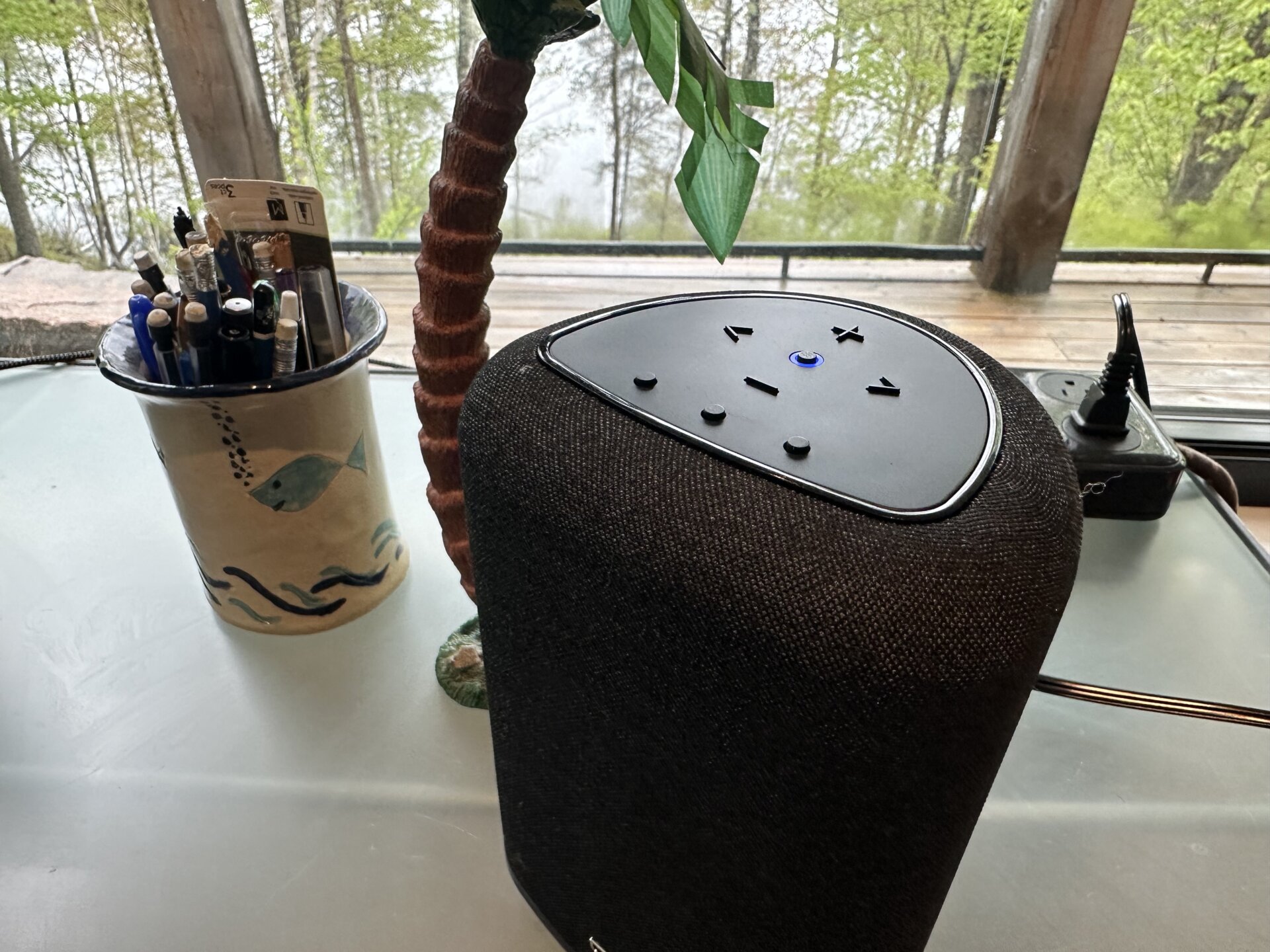
Have you ever visited a cottage or an Airbnb and there is no sound system? Outrageous I know, but it happens. If you are already heavily invested in Bluesound like me, having a floating speaker like the Flex to pop in a weekend bag won’t take up much space and guarantees some cool mellow jazz while having your morning coffee by the lake.
While Bluesound was the very first of the big streaming companies to offer an optional battery pack, the new Pulse Flex doesn’t have a battery option. I think that this is a mistake and that the engineering team could rethink introducing a battery option. The Flex being the smallest and lightest of the Bluesound speakers, it will better live up to its name by not being tethered by a power cord. I could see myself just wandering to the deck, the hot tub, the garage with the Flex in hand if it was battery operated.
But for now, the Bluesound Flex has an aggressive price point making it an easy entry to the world of streaming audio. This is a great speaker for travel, near field listening in an office or for a university dorm room, and since the Flex is rated at 50 watts total system power (10W x 1 tweeter 40 watt X 1 woofer) it is still plenty loud to warrant complaints from the kid down the hall who studies too much.
I have not listed the specs for each speaker I own individually. That can be found in the supplied links. What I will mention is that Bluesound speakers share a range of features across their lineup. All models support BluOS streaming, enabling high-resolution wireless audio playback throughout the home. They are all equipped with robust amplification and quality drivers proportional to the size of the speaker and all have multi-room capabilities allowing users to synchronize audio across multiple speakers. Wireless connectivity and app control provide easy access to a variety of streaming services, podcasts, and radio stations, making the speakers versatile for different listening preferences. Bluesound speakers are all compatible with each other so you can mix and match speakers based on the size of the room. Their modern design and portability make them suitable for both permanent installations and travel.
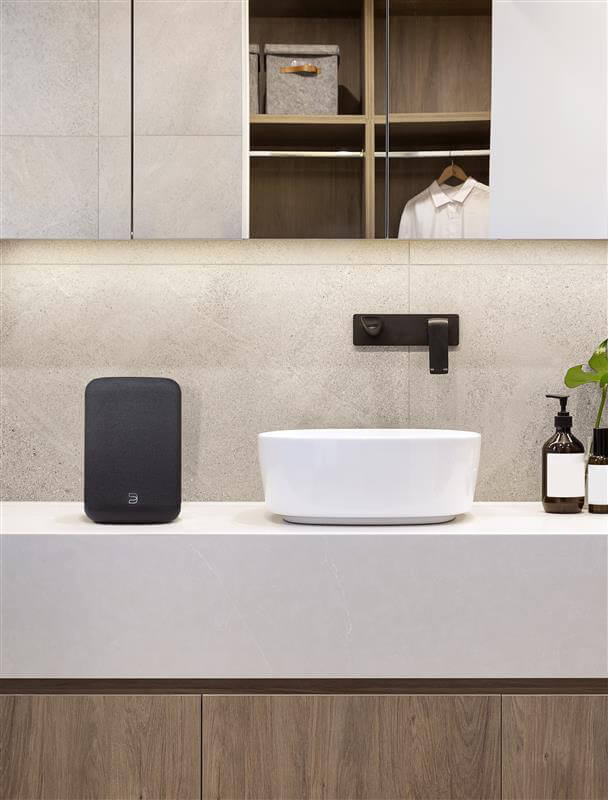
Adding Bluesound speakers is one of the easiest ways to create a whole-home listening experience and with so many speaker options available, creating your perfect system can be accomplished at whatever budget you have.
Incorporating Bluesound speakers into your home is one of the simplest ways to achieve a seamless whole-home audio experience. With a wide range of speaker options available, you can design an ideal system tailored to your preferences and budget. Happy Listening!!
What to Buy?
I am a vintage audio enthusiast and I have a 2-channel audio system but would like to add streaming capabilities. Buy the Bluesound Node, Node Icon or Node Nano
I have a small condo, and I love to watch movies but space is limited. Buy the Bluesound Pulse Cinema Soundbar or Pulse Cinema Mini. When budget allows add the Bluesound Pulse Sub+ and two Bluesound Pulse Flex for rear channel enjoyment.
I just bought my first house. I am strapped for cash but I need a sound system. Buy the Bluesound Pulse Mini for your living room and add a Pulse M to your kitchen and a Pulse Flex to your bedroom.
I need a system that can give me better sound when I am watching TV but will also play music when I am entertaining. Buy the Bluesound Cinema Mini soundbar and two Pulse M’s to space around your home.
Here’s what you can do with a $3000 (Canadian) budget to create your perfect Bluesound configuration. In this scenario each speaker represents one zone. Often, retailers will bundle speakers at a special price so it pays to shop around.
| Configuration | What you buy | Zones | Best for | Est. total (CAD) | Notes |
| Whole-home coverage | 4 × PULSE M 1 × PULSE FLEX 2i | 5 | Easy, flexible room-to-room coverage without needing any existing hi-fi gear | (4×599) + 399 = $2,795 | Strong coverage for medium homes; add another FLEX later if you want a 6th zone. |
| Big main room + several satellites | 1 × PULSE 2i 2 × PULSE M 1 × PULSE FLEX 2i | 4 | A “wow” main space (open-concept living room) plus 2–3 smaller rooms | (1×1199) + (2×599) + 399 = $2,796 | Flagship speaker anchors the home; satellites fill the kitchen/hall/office. |
| Condo / smaller home stereo focus | 2 × PULSE MINI 2i (stereo pair) 2 × PULSE FLEX 2i | 3 (or 4 if MINI used separately) | True left/right stereo in the main room plus two additional rooms | (2×999) + (2×399) = $2,796 | Pair the MINI 2i’s as stereo in BluOS; FLEX units cover bedroom/office. |
| “Modernize my existing hi-fi” + add rooms | 2 × NODE (for 2 existing systems) 2 × PULSE M 1 × PULSE FLEX 2i | 5 | Homes with existing amps/speakers on two floors, plus extra rooms that need sound | (2×849) + (2×599) + 399 = $3,095 | If you shop sales/recertified gear, this often lands under $3k; otherwise drop the FLEX to hit $2,696. |
| Maximum zone count (budget-per-room approach) | 7 × PULSE FLEX 2i | 7 | Lots of rooms at moderate volume; background music everywhere | 7×399 = $2,793 | Best “coverage per dollar”; you trade deep bass and max output vs larger models. |
| TV-first home theatre + whole-home music | 1 × PULSE SOUNDBAR+ 2 × PULSE FLEX 2i 1 × PULSE SUB+ | 4 | Movie lovers who want a proper TV setup (with bass) and music in a couple other rooms | (1×1499) + (2×399) + 999 = $3,296 | This is the “full” Bluesound TV stack; to stay under $3k, skip the SUB+ (soundbar + two FLEX = $2,297) or watch for bundle pricing. |