
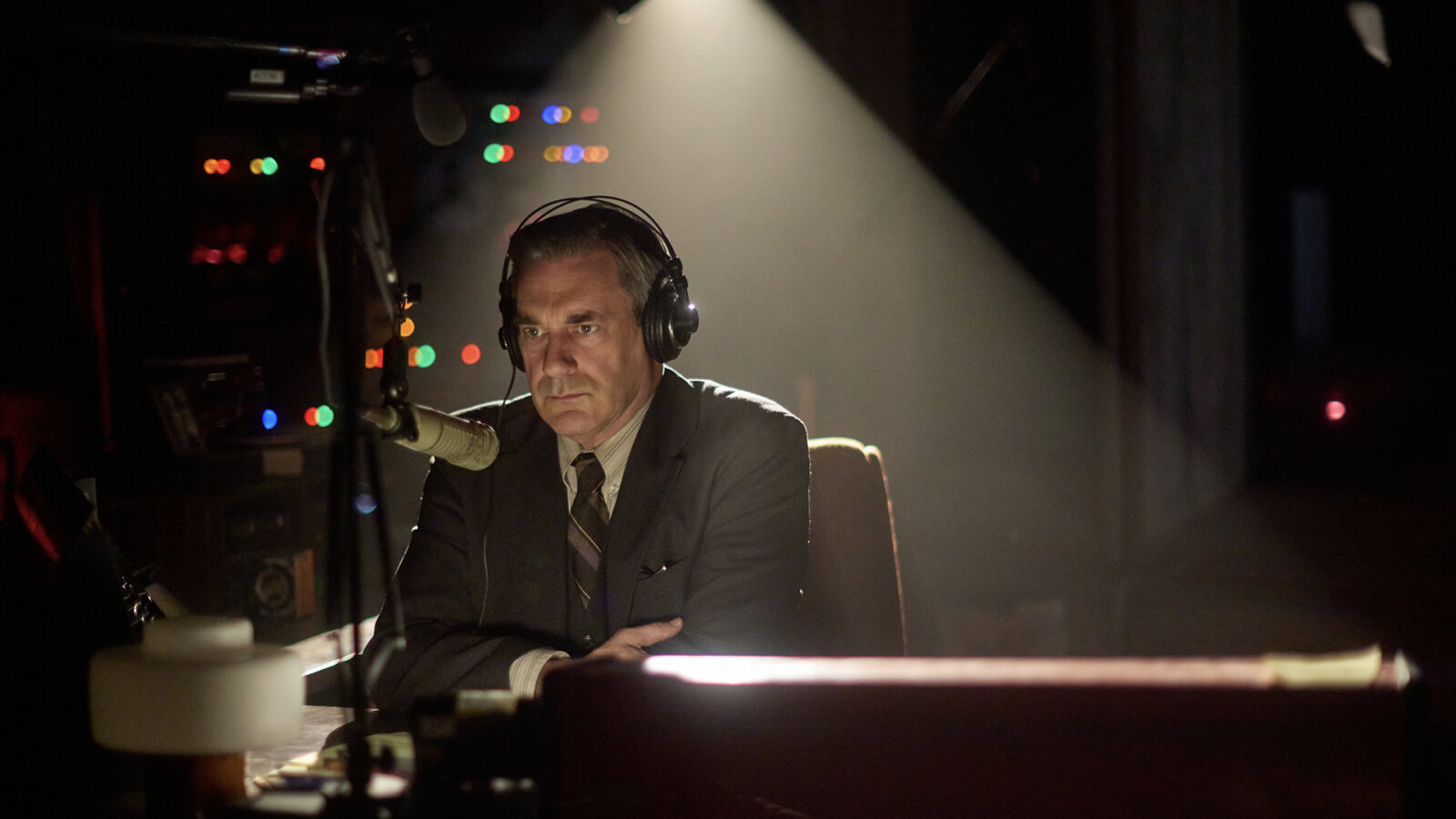
When I heard that a new show would star both Jon Hamm and Giovanni Ribisi, I was intrigued. When I learned that it was based on a true crime story, it was even more up my alley. American Hostage was instantly added to my watch list, and while I’m glad I watched, I was left feeling indifferent about the crime thriller.
The series tells the true story of Tony Kiritsis (Ribisi) who took his mortgage broker Richard Hall (played by Kristoffer Polaha) hostage. He not only held him at gunpoint, he fixed the sawed-off shotgun to a wire around Hall’s neck that he called a dead man’s wire. If anyone tried to interfere or Hall tried to run, he’d be instantly killed. The part of the story the series focuses on is that Kiritsis then called local radio reporter Fred Heckman (Hamm) and asked to speak his grievances on air. Despite every concern around doing so, Heckman obliged. And so begins the 63-hour standoff.
American Hostage Starts Strong
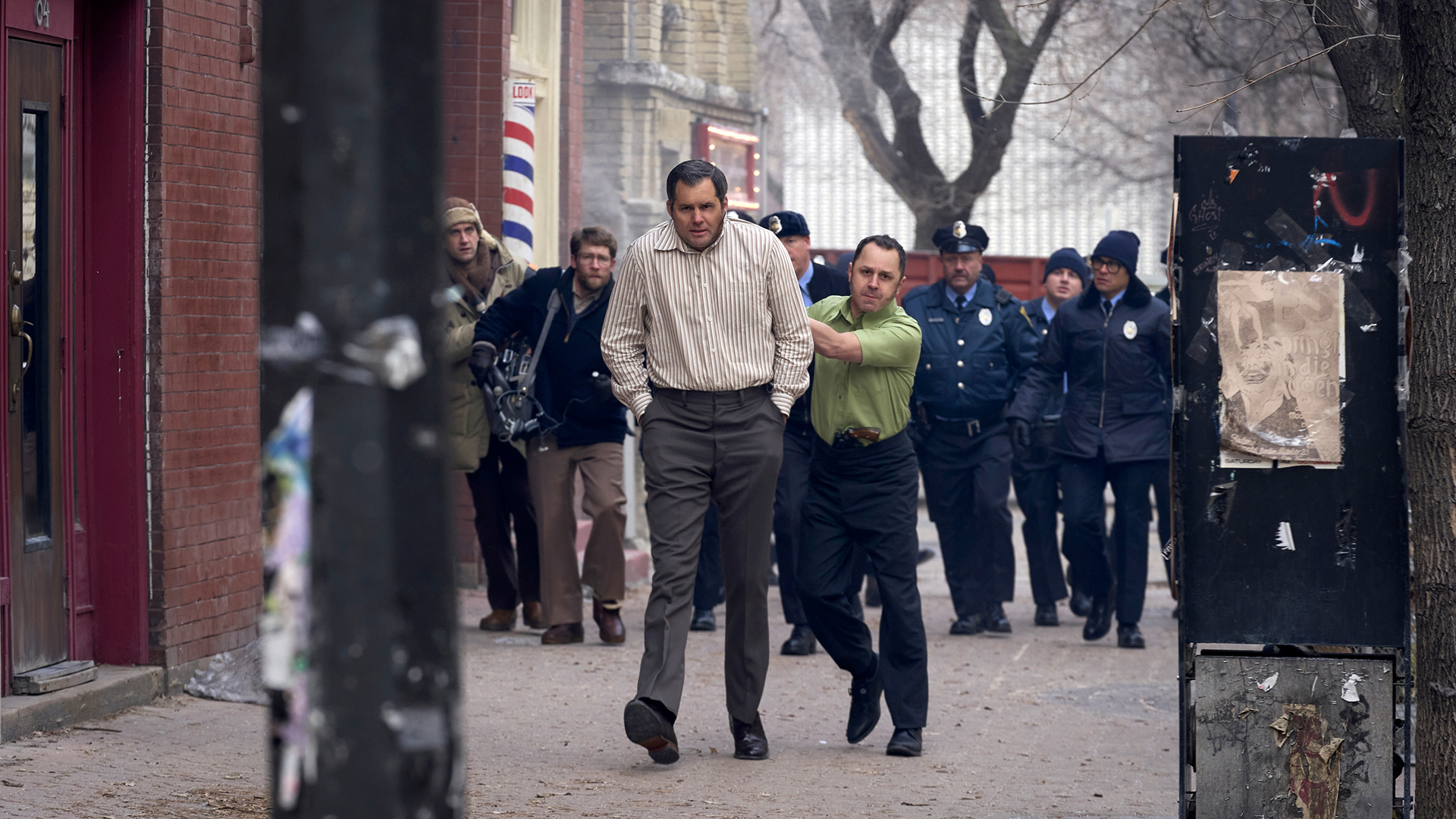
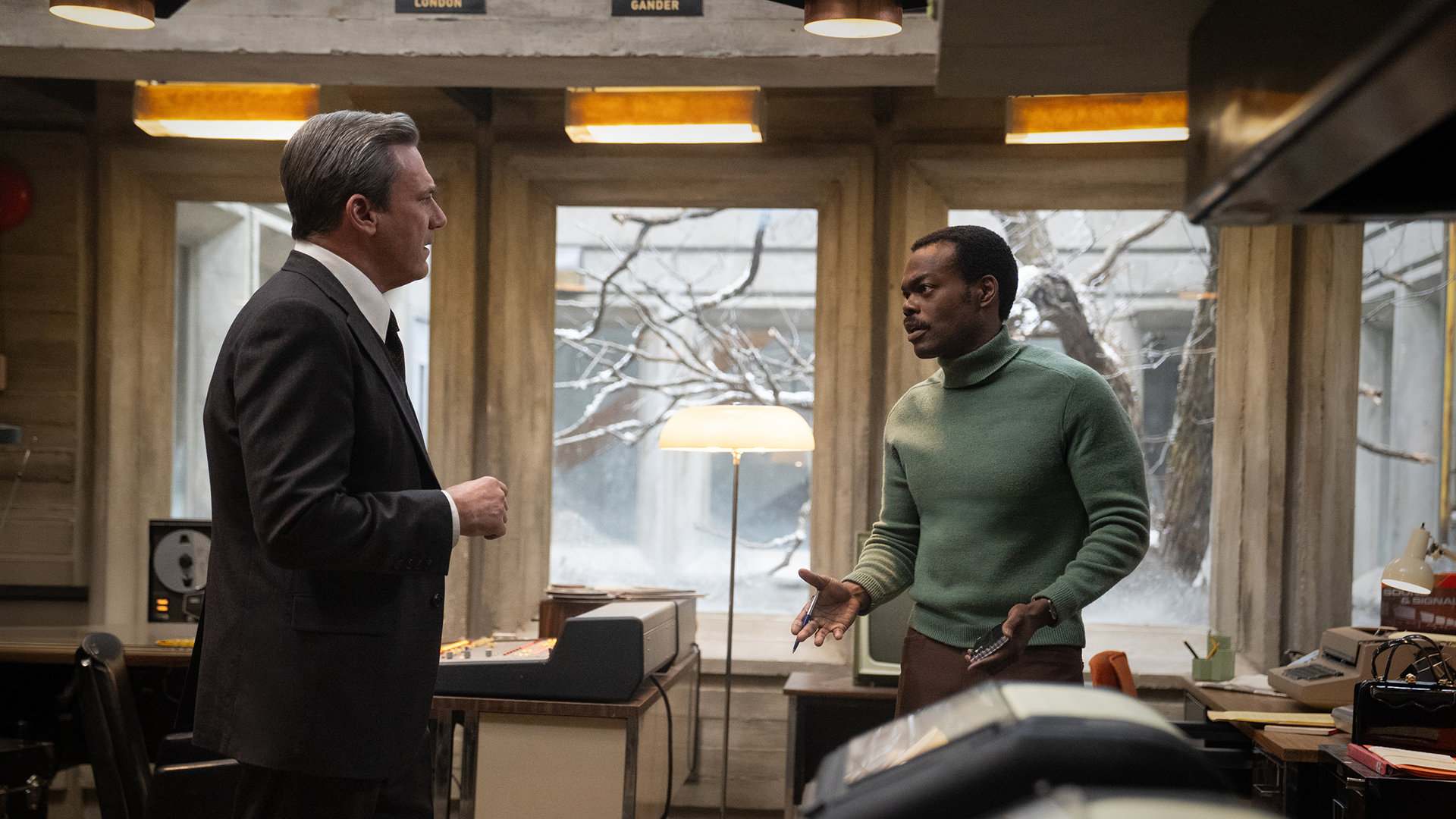
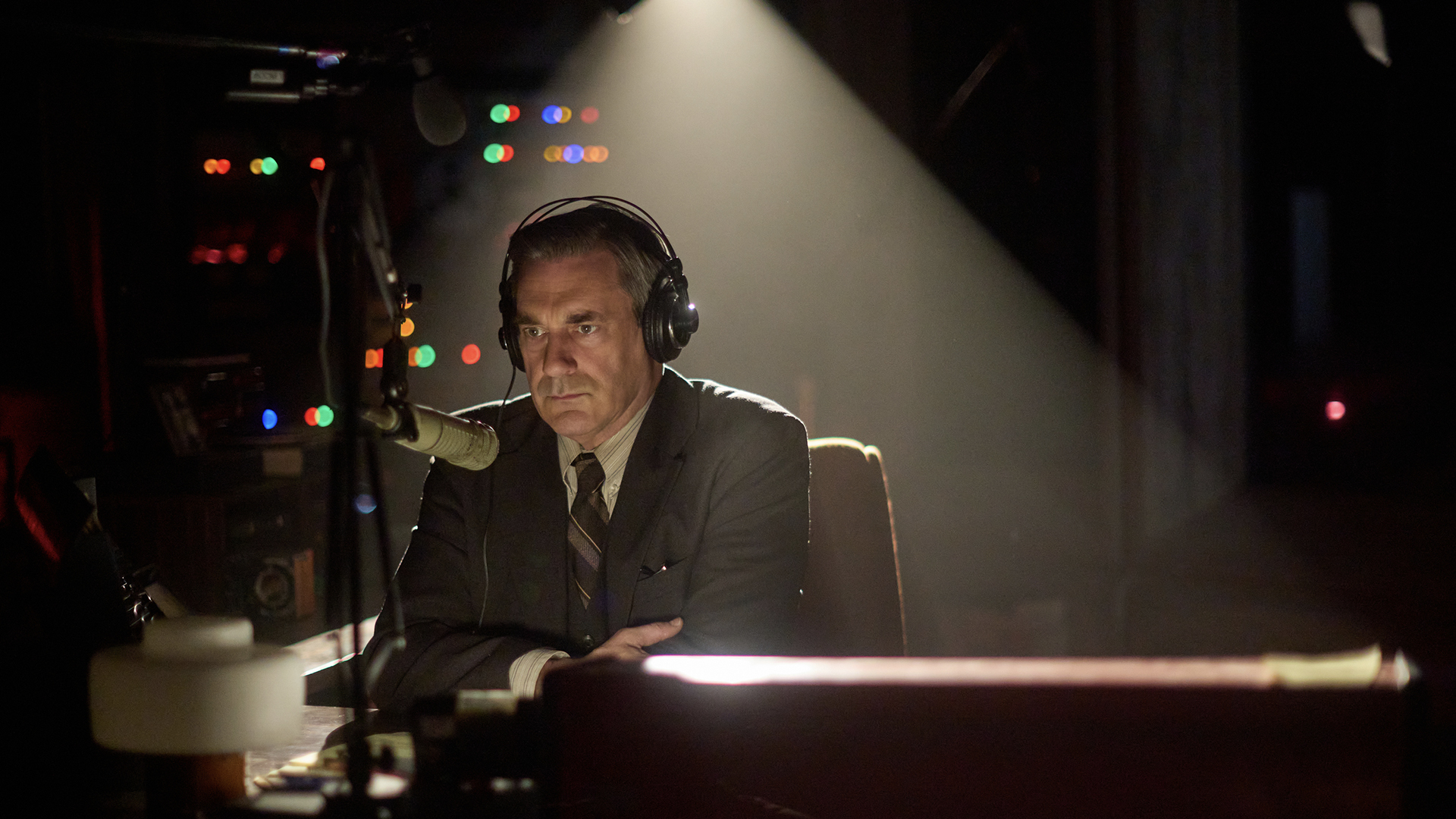
American Hostage delves right into the story, simultaneously showing Heckman at work doing his thing and Kiritsis walking into the bank, ready to enact his plan. Hamm is in his closest role to Don Draper since Mad Men ended (the story is another period piece, this time set in the ’70s) while Ribisi fits perfectly as another unhinged, eccentric character he’s known to play so well.
Once the two converge and Hamm gets the shocking call, it’s all hands-on deck. The story focuses largely on the role of the media and the challenges they face, especially at that time when there was no “dump button,” a delay that could ensure things like profanity didn’t make it on air. Kiritsis was not exactly politically correct in his language, and the station head was not keen on drowning in FCC fines. But Heckman was adamant that this was a story that should be told.
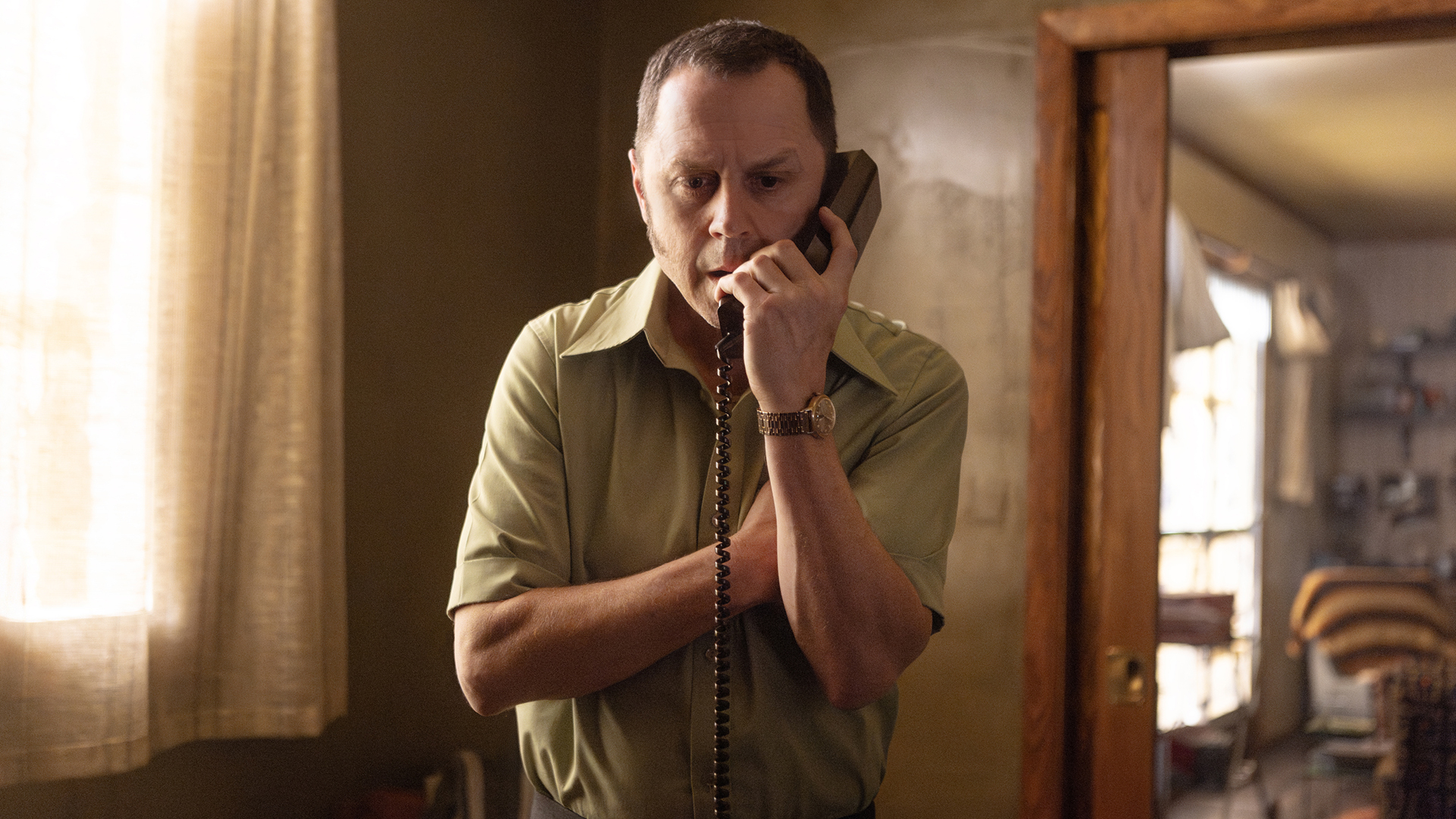
When we learn the reason behind Kiritsis’ unforgiveable actions, he becomes a sympathetic character, as evidenced by public reaction. He was sold property he wanted to build a restaurant on (the real Kiritsis hoped to develop a shopping mall) but couldn’t get it off the ground. Unable to pay the mortgage, Meridian Mortgage was about to foreclose. This sounds reasonable, but Kiritsis believes the company set him up to fail so they could buy the property back at a bargain and resell it at a higher price. Suddenly, everyone was listening, “Free Tony” T-shirts being sold in the streets. Yes, that purportedly really did happen.
The story makes you question if Kiritsis was simply looking for an excuse for why he failed or if there was truth to his claim. The fact that he didn’t have a steady job when he was given the mortgage raises red flags as to why it was granted anyway. As the real story goes, the company’s CEO took a personal liking to Kiritsis, which is why he was approved. The series takes a slightly different slant.
The Dynamics Shift and the Plot Slows

What’s most interesting about the dynamic in the show isn’t what you would expect. It’s not the police officers and an agent from the FBI’s Behavioral Analysis Unit (BAU), it’s Heckman’s handling of the situation in relation to his co-workers. While he wants to do things one way, they feel they have a duty to do it another. It becomes a battle between journalistic integrity and duty and ethics and morality, a story that has stood the test of time in the decades since.
Unfortunately, as the show progresses, it also starts to slow. The ordeal did play out over 63 hours, and the show’s eight episodes feel at times like they are dragging out in real time. It’s perhaps an intentional strategy so we feel the frustrations others did. In a real-life hostage situation, it’s not necessarily always exciting like it is in the movies. It’s quiet, tense, and everyone is on edge but can’t really do much until they wait and see what tactics work.
In that sense, then, there’s an air of realism surrounding the show. But this also means the plot slows to a turtle’s pace. The solution, it appears, is to throw in some side storylines that don’t play much into the plot, but add flavour. Perhaps the most interesting is one involving Heckman’s wife Barbara (Mireille Enos) and Hall’s wife Ibby (Kat Cunning), reflective of two very different type of women of that time. Another side story involving Heckman’s father seemingly serves to give his character some depth, but it’s nothing more than a distraction.
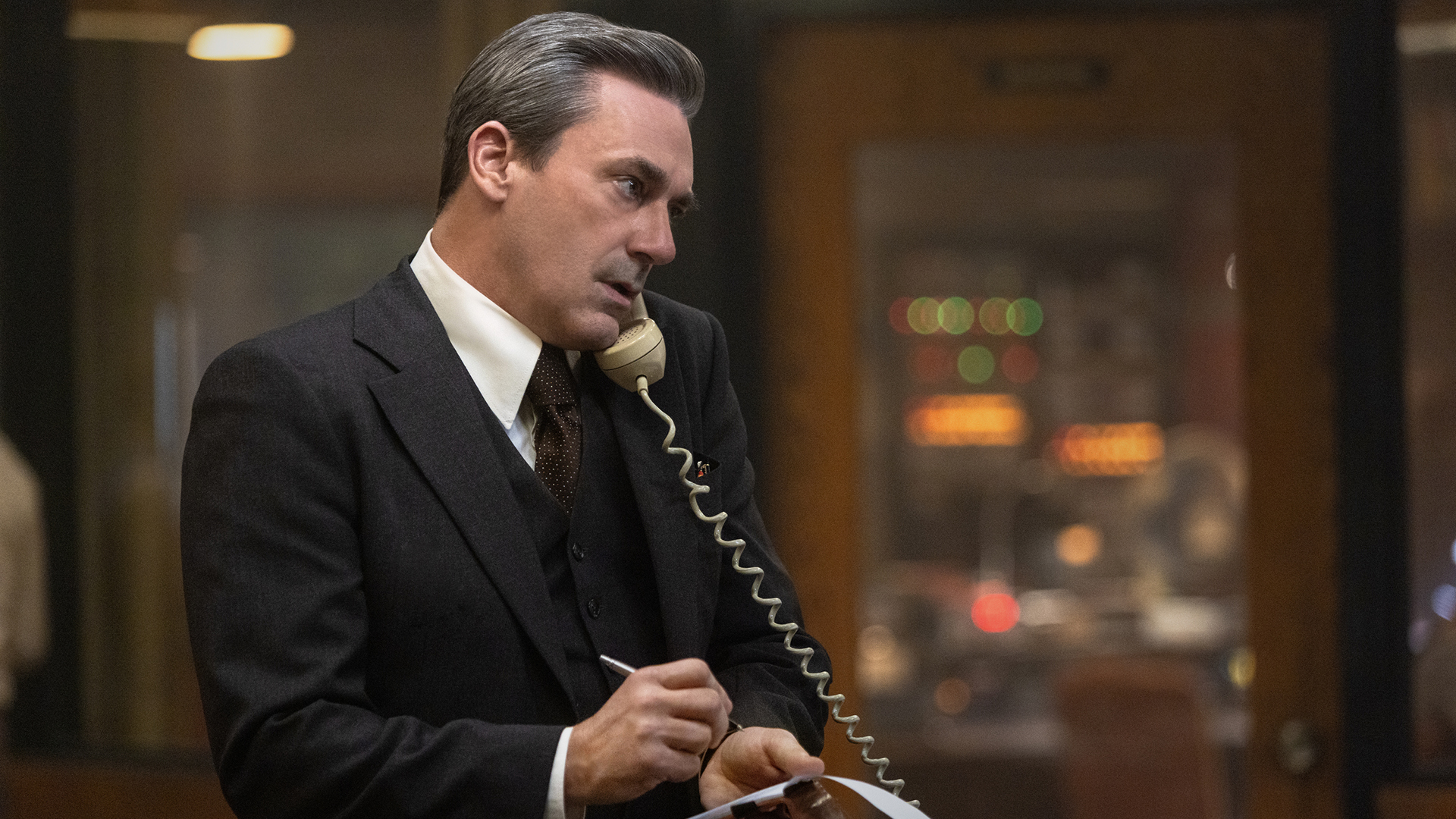
Other side storylines fall flat, too, like the ambitious Ginny (June Laporte) whose story could have been much more impactful had it not been glossed over, and Ben (William Jackson Harper) who is once again left out in the cold when he could have had a much bigger role.
Both Hamm and Ribisi do get the spotlight, which is a good thing. But scenes with Kiritsis and Hall are awkward at times. They needed more two-sided dialogue, even if it was completely fabricated for dramatic effect. Instead, we get a lot of Kiritsis talking to himself, talking to Heckman, and blabbing to Hall while Hall stares blankly into space most of the time. It’s a strange decision to perhaps denote his complete state of shock. But having more meaningful dialogue between the hostage-taker and his hostage would have elevated the plot.
American Hostage is Good, Not Great
If you know the story of Kiritsis, you’ll appreciate seeing it play out and an ending that makes suggestions about a version of the truth. The plot may be pulled from the ’70s, but it’s social commentary that is still as relevant today as it was back then.
In real-life, Kiritsis called himself a “goddamned hero” and the public had mixed feelings about the situation. Some believed he was wronged, and many had been in similar situations before. While they didn’t agree with what he did, they understood, on some level, why.
Unfortunately, American Hostage runs out of steam halfway through and doesn’t live up to promises from its first episodes, not to mention the fantastic intro sequence that denotes something far superior to what it is. Admittedly, there’s little to work with in the story: a man was taken hostage, his kidnapper repeatedly called into a local radio station, and he spoke his mind while police and others tried to figure out how to put an end to the situation without lives lost.
It’s tough to build an eight-hour story around that and some stories aren’t meant to be stretched for episodic formats. For this reason, the show falls perfectly into “it should have been a movie” territory. (Fun fact: It was a movie with Gun Van Sant’s 2025 film Dead Man’s Wire starring Bill Skarsgård, Dacre Montgomery, and Colman Domingo).
The show explores topical themes of journalism, duty to report, the importance of investigating claims, corporate greed, and the value of human life. There are intense moments, quiet ones, and some that will have you wishing you could just fast forward to the end to find out what happens. The series could have been condensed into six episodes, would have been even better at just three or four. Superfluous details removed, narrative tightened, and more dialogue for the sorely underutilized Polaha could have made American Hostage a great show instead of a good one.
Stream American Hostage on Crave in Canada and MGM+ in the U.S.