

There’s an old joke that we used to say when we operated our retail boutique that went something like this;
Q: How do you make networked whole-home speakers sound better?
A: Easy…By adding more speakers!
OK, I agree that joke is not award winning and it’s certainly not a diss on Sonos, Bluesound or HEOS, all companies that make capable powered, streaming speakers. The reality however is that no audiophile or serious audio enthusiast is ever going to use a Bluesound Flex or a Sonos Play as their primary listening source, but an audiophile will indeed add multiple Bluesound Flex’s around their home for ambient listening so the music or news, never leaves you from room-to-room.
That’s why products such as the Bluesound Node are so incredibly important to audio enthusiasts, for they allow you to turn your high-end principal (audiophile) system into a Bluesound streaming zone, so you get audiophile performance through your two-channel separates plus the convenience of whole-home streaming when your 2-channel system is paired to other streaming speakers.
We can debate all day on what’s the biggest motivator in buying streaming speakers. Is it for the sound or is it for the convenience? No one can argue that there is a very real lifestyle benefit to having Bluesound speakers scattered throughout the home. A compact speaker in the kitchen, another in the bedroom, one in the office and perhaps a few more in living spaces means you are never tied to a single listening area. You can start a playlist or a podcast while making coffee in the kitchen, carry the same content into the bathroom, keep background jazz playing while you work in the home office and then group the whole system together when guests arrive. It turns music from something that you sit down to experience in one specific place, into something that follows the rhythm of daily life. That’s the absolute magic of streaming speakers and why as the old joke goes, you can never go wrong by adding more speakers throughout your home.
What if you could have both the audiophile experience that comes from a high-end system, plus the streaming convenience from a single speaker like a Bluesound Pulse? That would be the best of everything in a single product, right? Well, that’s exactly what PSB Speakers, the Canadian loudspeaker manufacturer with over fifty years of acoustic research and design has created with the iQ series, a new generation of all-in-one streaming speakers designed to deliver high-fidelity sound along with Bluesound streaming simplicity without the complexity of traditional stereo systems. Behind the brand is Paul Barton, PSB’s founder and longtime chief designer, whose loudspeaker work has been shaped by decades of research at Canada’s National Research Council.
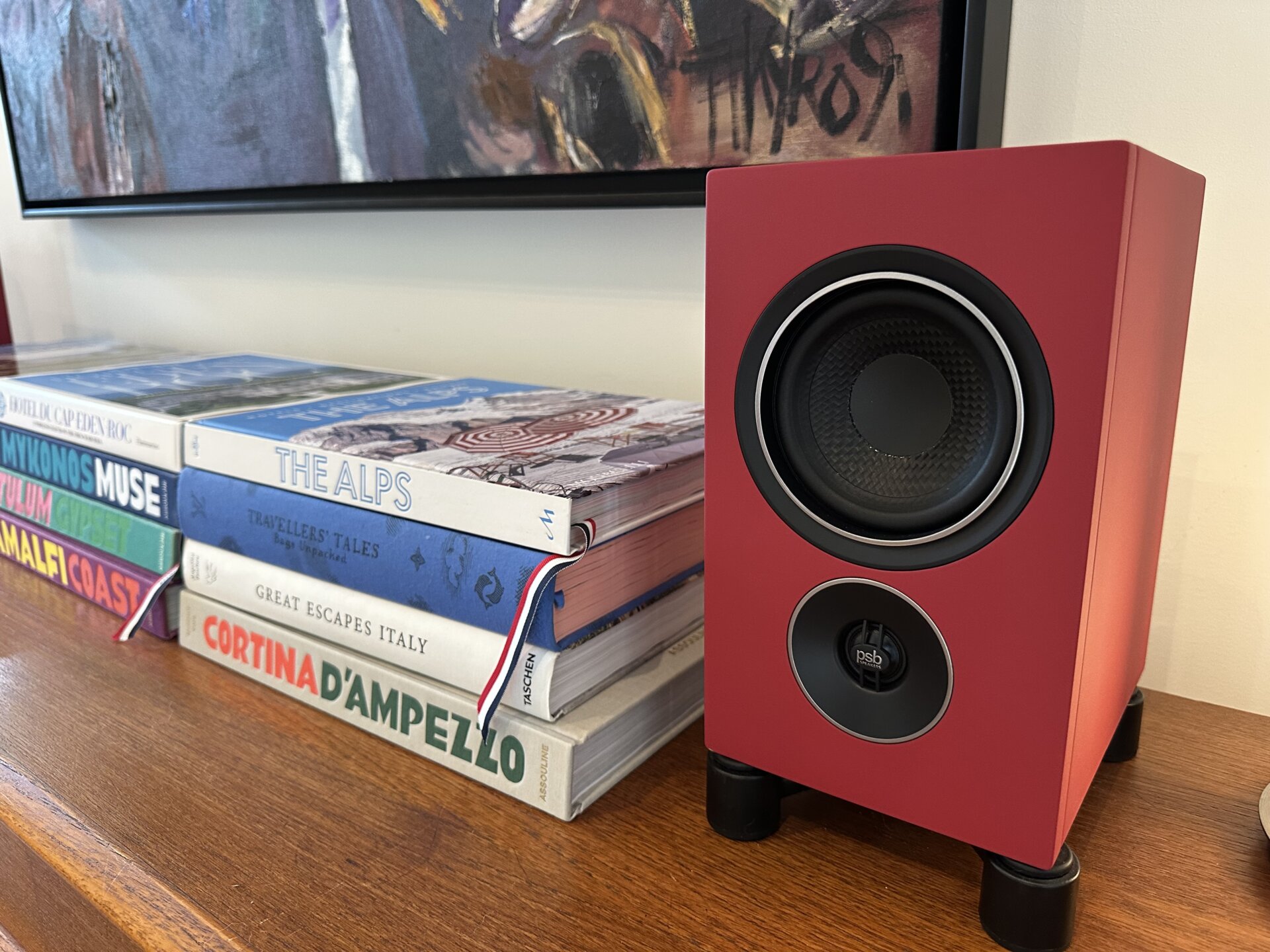
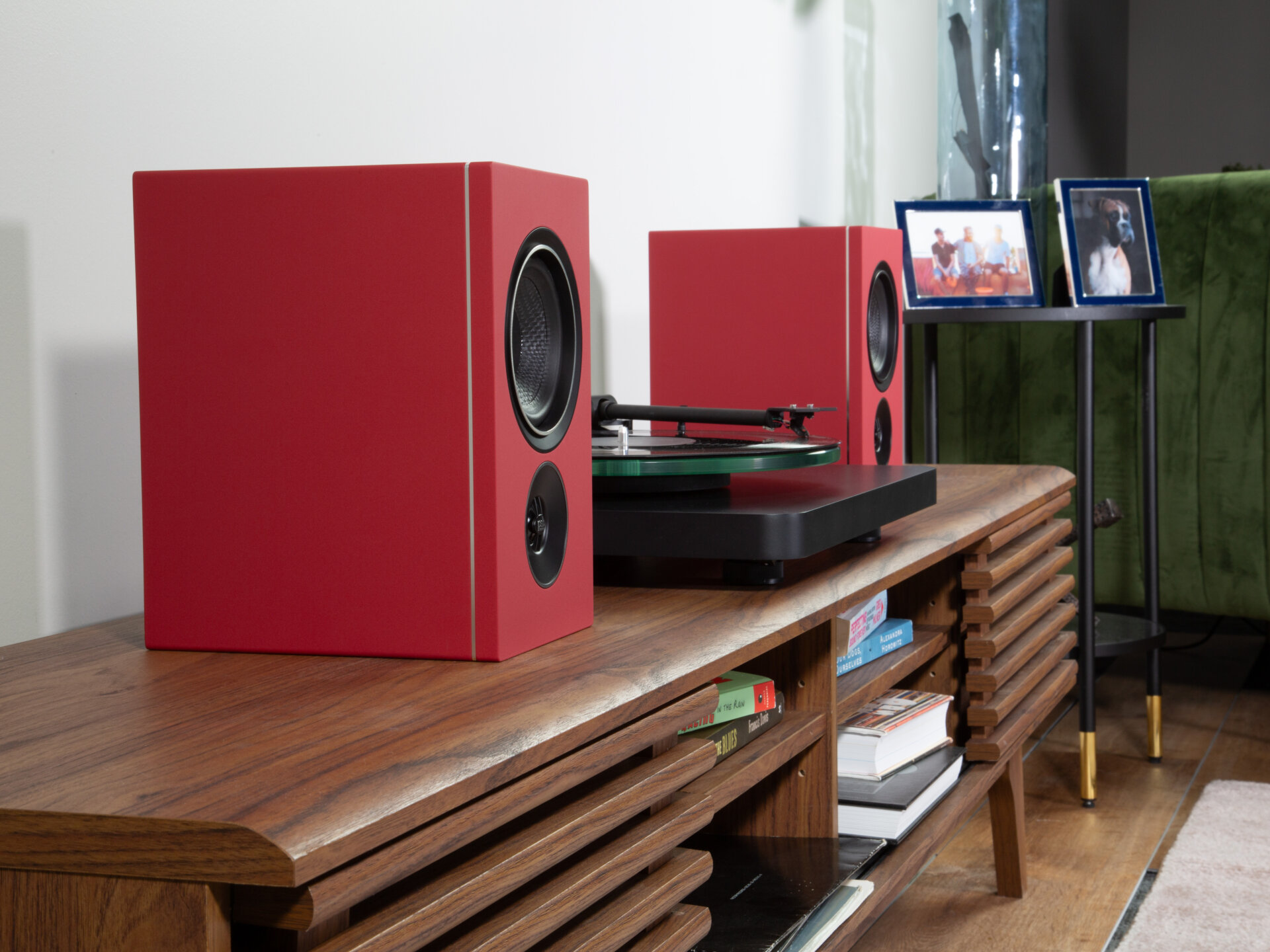
The iQ Series, simply put, is PSB’s answer to the modern listener who wants a real high-fidelity stereo system without the rack of components, the cable clutter or the intimidation factor that often comes with traditional separates. Each Q series speaker combines dedicated amplification, an audiophile-grade DAC, BluOS streaming and PSB’s loudspeaker engineering, into a compact pair of active bookshelf speakers, so the source, control, amplification and speakers are all designed to work together from the start. The integrated Q series platform really works in Paul Barton’s favour by being a fully closed-loop system, so he controls the whole chain from DSP through amplification to the drivers. Instead of voicing a passive speaker for an unknown amplifier and cable run, Barton tunes the complete system, which allows the fullest expression of his tuning.
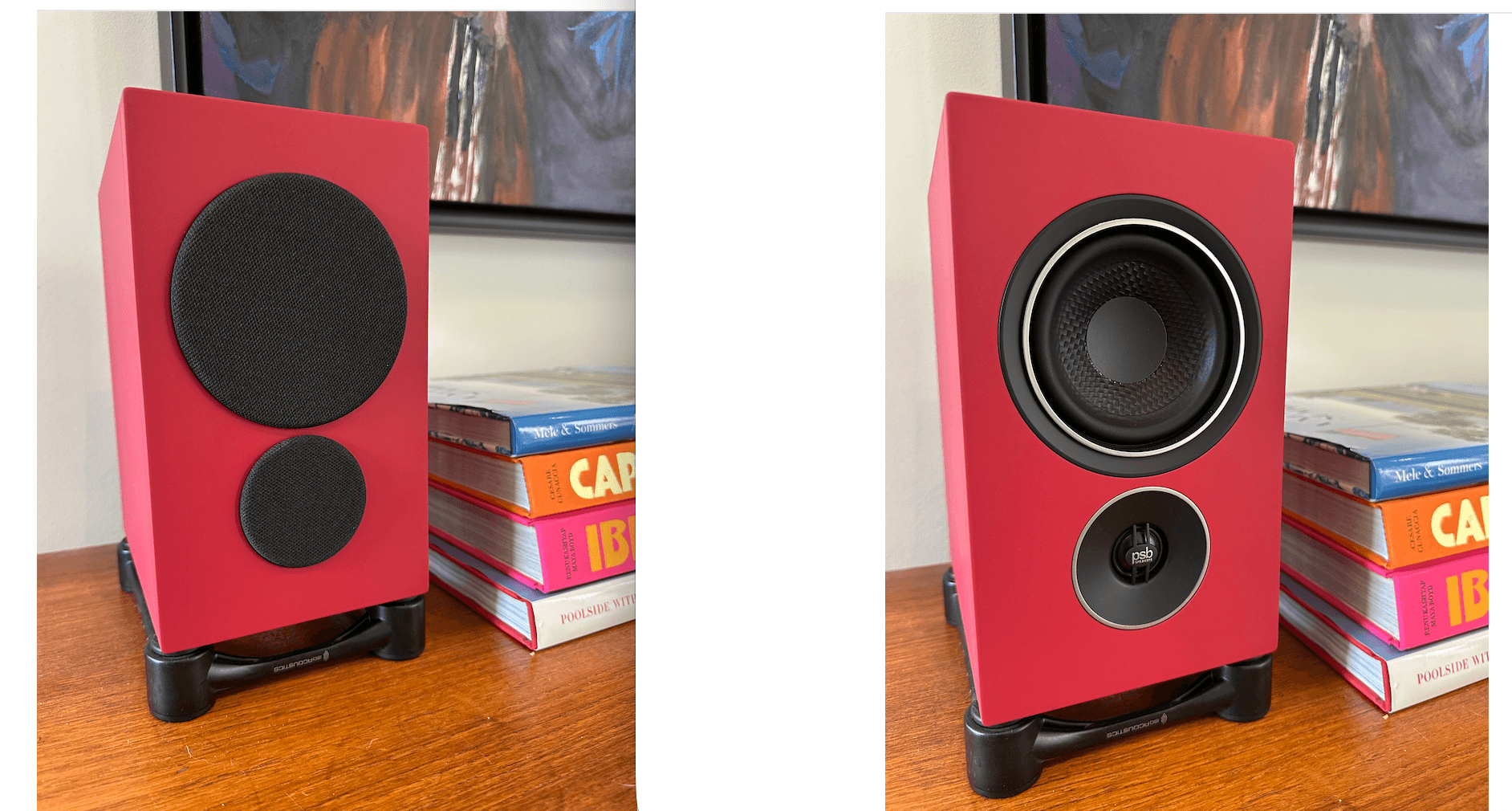
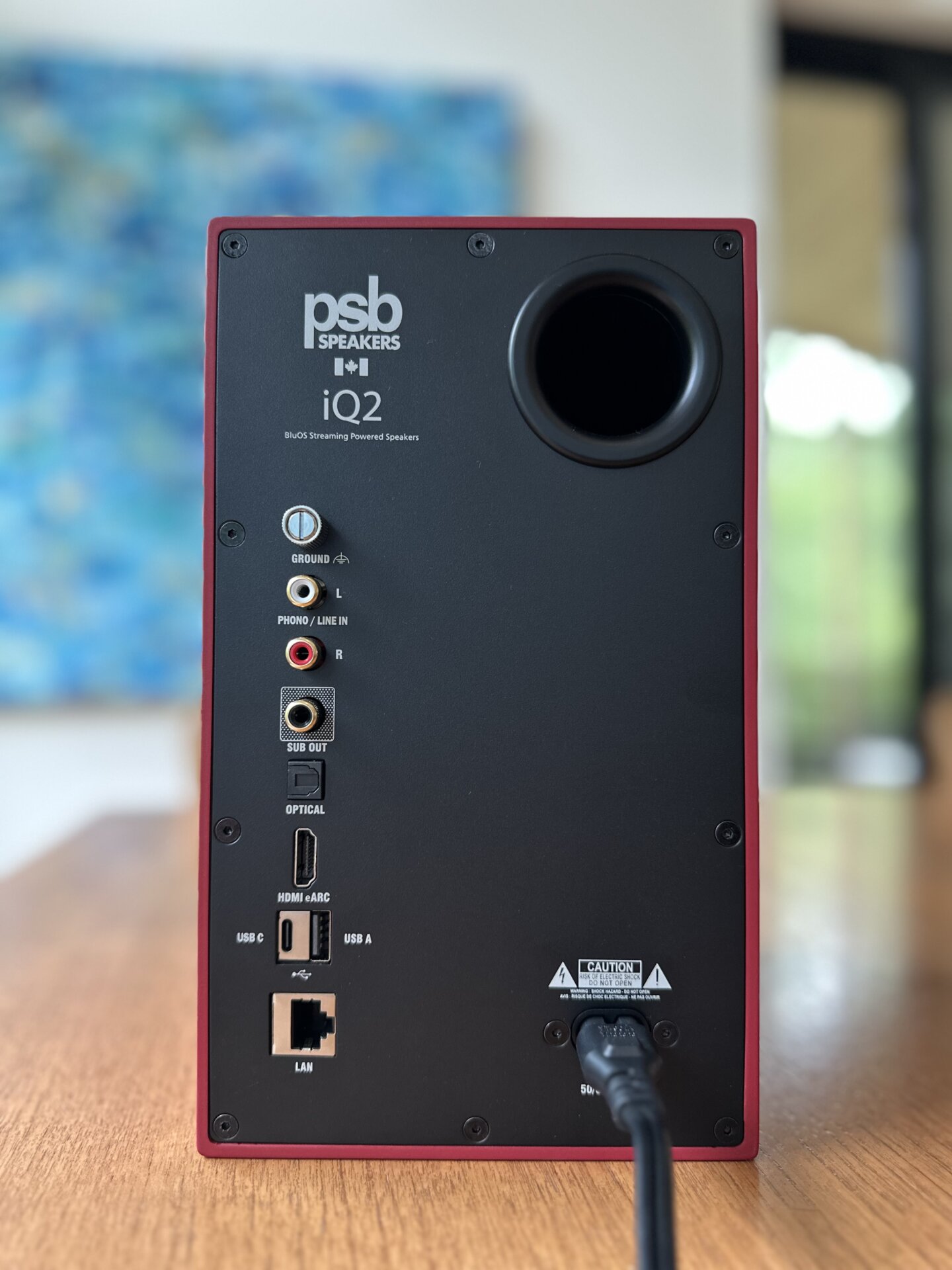
PSB has launched two iQ series models. The iQ1 is the more accessible entry point, linking the left and right speakers with a supplied stereo cable for synchronization. The iQ2 steps up to a true wireless stereo design experience, using a low-latency wireless connection between the speakers so they can be placed more freely while still operating as dedicated left and right speakers. Both models support high-resolution BluOS playback up to 24-bit/192kHz, access to more than 20 streaming services, multi-room playback with other BluOS products, and practical inputs for TV, vinyl, computers and other sources.
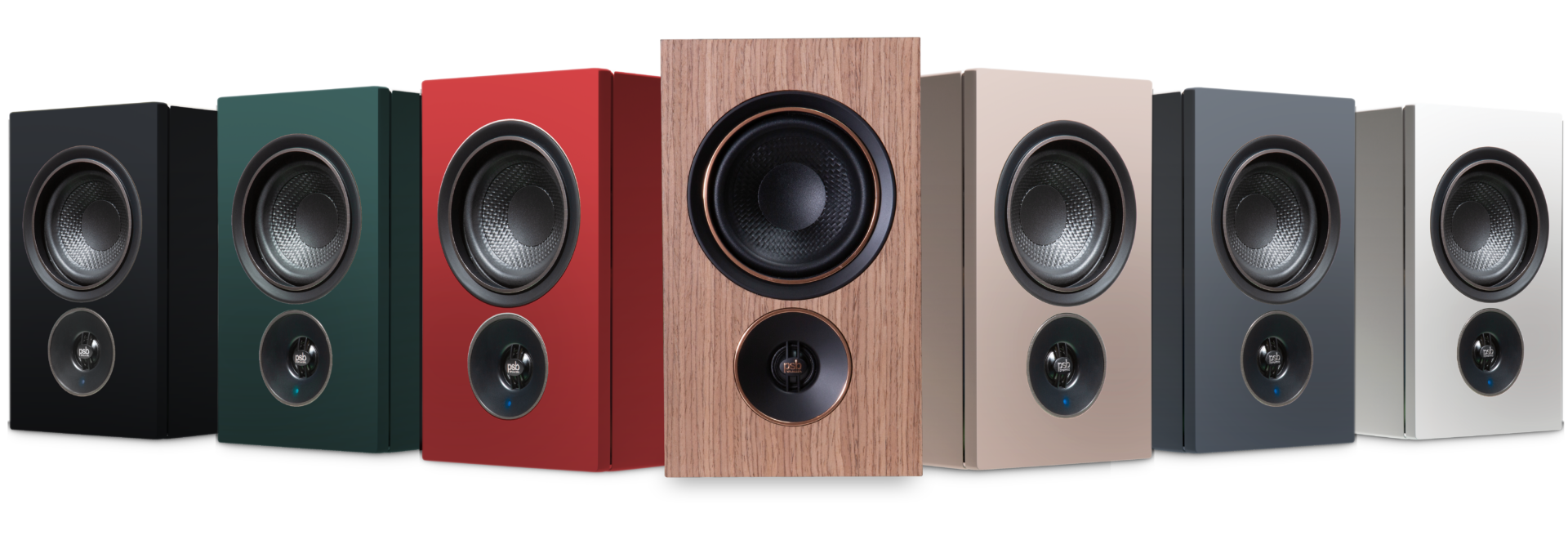
What makes the iQ Series especially interesting is that it is built around PSB’s long-standing acoustic priorities that have driven the brand for half a century such as proper stereo imaging, controlled dispersion, active amplification matched to the drivers, DSP-assisted bass tuning and the balanced, natural sound the brand is known for. The iQ series also features a new Burr-Brown DAC platform and cosmetically, the speakers feature cloth fabric grilles and a broad range of seven different finishes.

When asked who is the iQ2 customer versus a Bluesound Flex or Pulse customer Paul Barton reflects that “we see two core distinct buyers amongst others for the iQ series: listeners who want a simple, clean, single-product system without stacking components, and legacy hi-fi owners downsizing from separates who still want serious two-channel reproduction. The Flex/Pulse buyer” adds Barton “is typically solving for whole-home music and convenience first. The iQ2 buyer is focused on stereo performance and imaging, as well as lifestyle design aesthetics with streaming and multi-room built in.”
“Strategically” adds Barton, “we expect a good share of iQ buyers to be new to PSB (among those upgrading from the previous generation Alpha iQ). It’s a complete system in one box, an easy first step into the brand for someone who wouldn’t take on a components build, and it gives our dealers a simple way to put PSB sound in front of a customer they couldn’t reach before.”
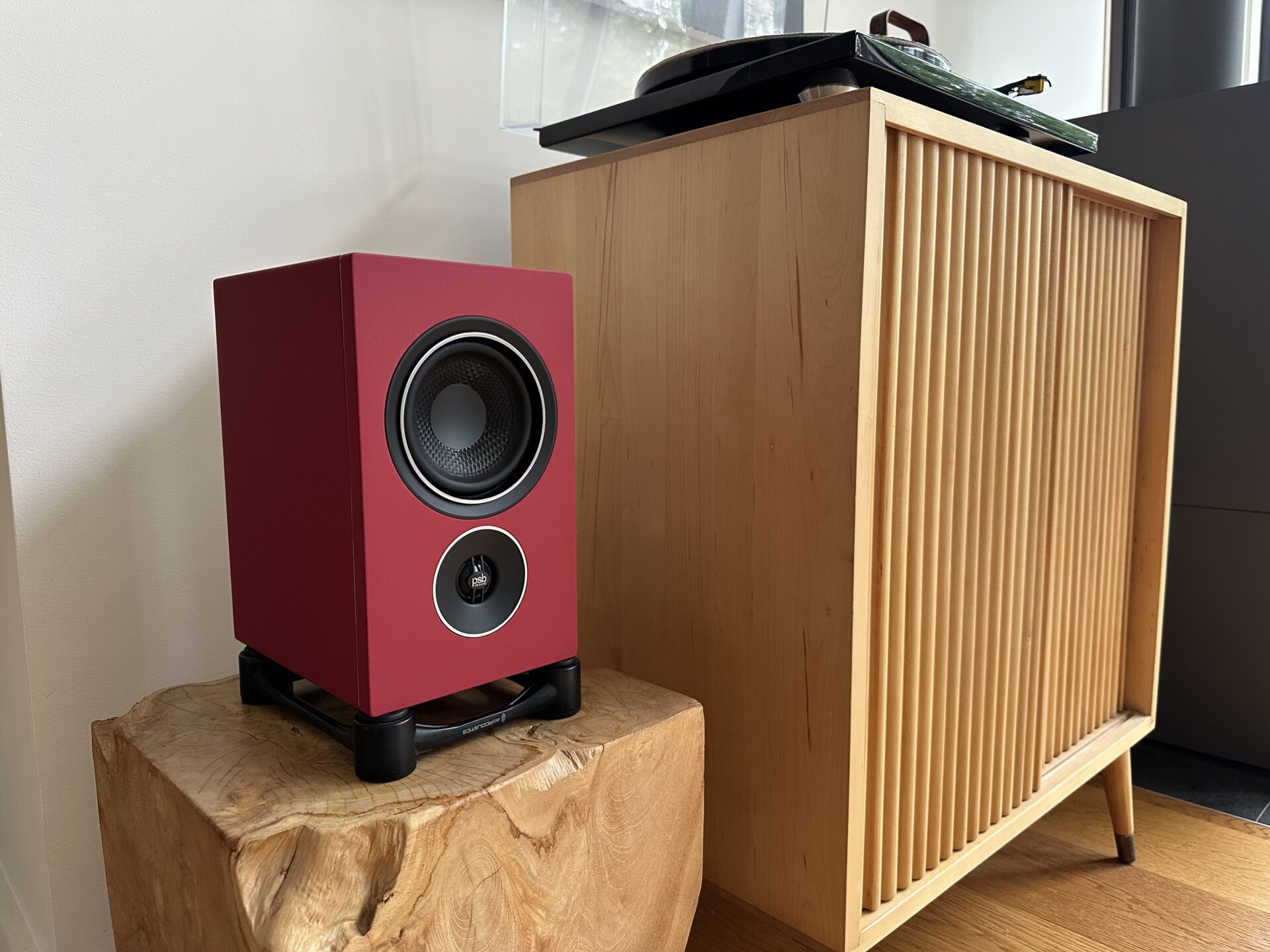
Unboxing to playing the iQ2 is a five-minute process. Both right and left speaker are powered with their own amplification and through the BluOS app, the primary speaker is added as a new zone to a home network. A wireless low-latency connection then pairs the secondary speaker to the primary for right and left channel playback. The primary iQ2 carries two Wi-Fi radios: one for the home network and one as a dedicated point-to-point link to the secondary speaker. That link is continuously monitored and corrected to hold sync. With Bluesound speakers, multi-room sync keeps zones aligned closely enough that rooms don’t echo against each other. Stereo from the Q series requires strict phase-coherent alignment between left and right or the image collapses.
You would perhaps think that there would be similarities in sound reproduction between the PSB Q series and the Bluesound group of speakers, seeing that both brands are owned by the same parent company Lenbrook. The answer is not even close. Bluesound is really built for ambient streaming and convenience first and PSB is designed for dedicated high performance listening.. The iQ2 have deep bass stemming from the 4”, 90 watts per speaker woofers, and detailed high’s coming from the 0.75” 45 watts per speaker tweeters. The sound from the iQ2 indeed compares to a 2-channel system of separates and as Paul Barton attests “the Q series is defined by 50 plus years of acoustic research at Canada’s NRC with precision anechoic measurement, controlled dispersion, accurate stereo imaging and the balanced signature sound accomplished with a fourth-order Linkwitz-Riley crossover and a DSP-tuned bass reflex system. Also, a dynamic EQ, tracks how human hearing perceives spectral balance at lower listening levels, so the tonal balance the mixing engineer intended holds at any volume.”
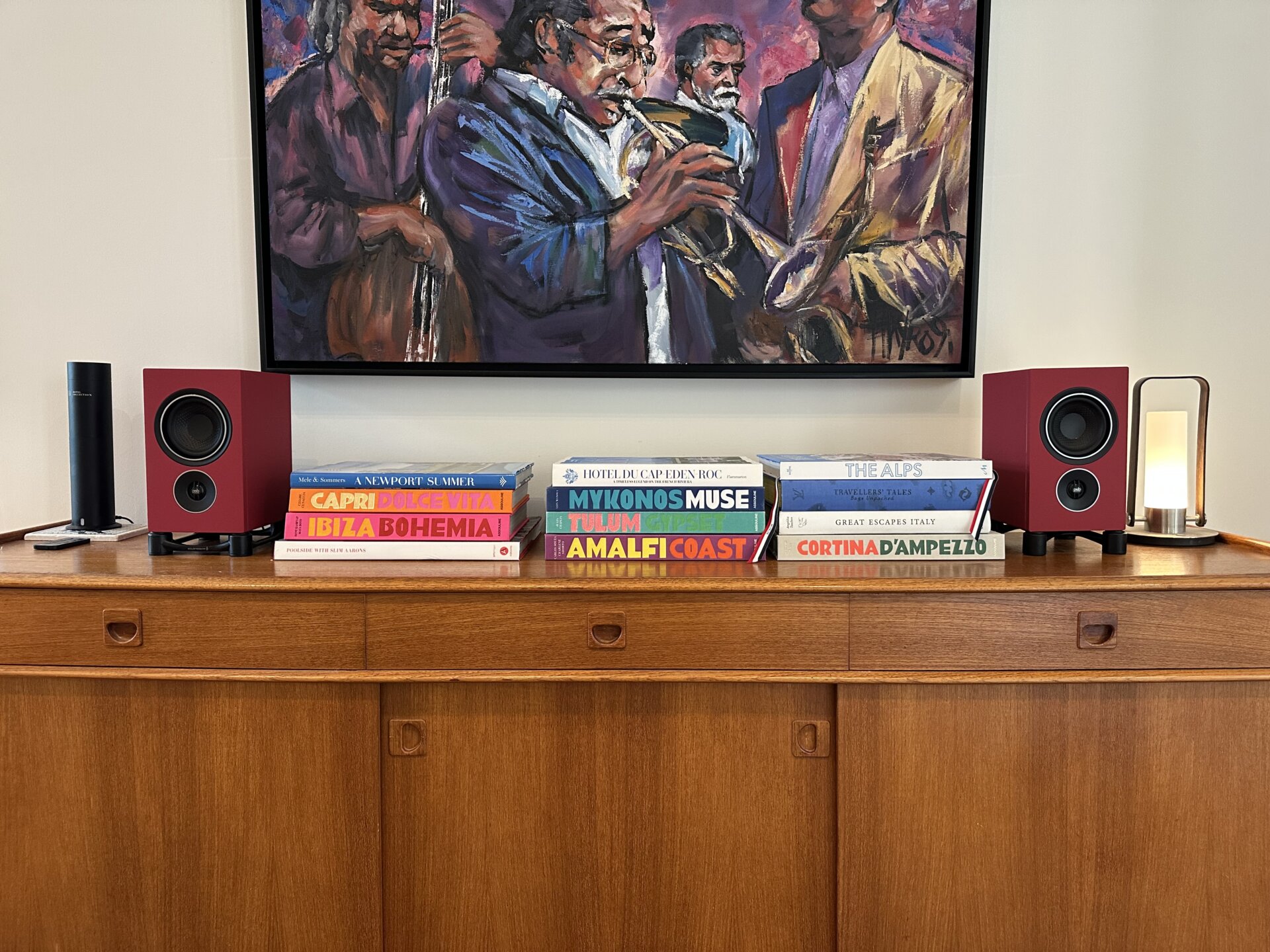
“The iQ series is also the next generation of the powered PSB platform introduced as the Alpha iQ with meaningful upgrades” adds Barton. “We developed an all-new amplifier platform that’s the biggest audible upgrade with cleaner and more powerful sound. We added cloth fabric grilles and other esthetic enhancements and also expanded the premium finishing choices including a real walnut veneer with copper trim.”
So how do the Q series differ from say pairing two Bluesound Flex speakers for R and L stereo? “A paired Flex zone is a convenience feature running over the home network” explains Barton. “The iQ2 was designed from day one as a stereo pair of speakers with a dedicated wireless link between the speakers, matched drivers, crossover and DSP, and imaging validated as part of the design program.” So not even close to being the same. While the BluOS streaming front end is shared between PSB and Bluesound with both offering hi-res up to 24-bit/192kHz, the PSB playback chain is iQ-specific with an audiophile-grade DAC feeding the all-new amplifier platform, with the DSP (crossover, EQ, dynamic EQ) implemented to Barton’s acoustic targets.
Lenbrook has been building a global brand with Bluesound since 2013. I asked Barton if there were any internal concerns about creating a new PSB competitor for Bluesound? “Less than you might expect” explains Barton who admits “the Alpha iQ was our experiment on exactly this question in late 2022/early 2023 and the market response showed the two brands reach different buyers showing the category grew rather than being cannibalized.”
For Lenbrook, the Q series is an opportunity to expand the BluOS ecosystem and internal research has shown that a customer who starts with an iQ product often adds Bluesound zones, and vice versa. “If anything” adds Barton, “the bigger opportunity runs the other way with BluOS giving PSB a route to listeners who start from streaming rather than from hi-fi, an audience that PSB has historically not reached.”
There should be no surprise that the iQ2 became my favourite streaming speaker of the bunch in my Bluesound wholehome ecosystem, and while Bluesound speakers are all about giving effortless hi-res music throughout the home, the PSB iQ2 speakers place musical reproduction at its founding and just so happen to also benefit from also having a BluOS brain for streaming.
PSB brands the iQ2 as a “Wireless stereo with no compromise” priced at $1,399 USD/ $1,699 CAD per pair in paint finishes and $1,499 USD/ $1,849 CAD in real walnut veneer. The iQ1 is being branded as “PSB sound, simplified.” With an aggressive price at $999 USD/ $1,299 CAD as an entry point that opens the brand to more buyers.
A perfect household setup would have the PSB iQ2 as a dedicated listening system in the room where you sit and listen (or watch) and then add Bluesound Flex or Pulse speakers in the areas of your home where music is ambient.
While I asked Barton if the Q series could end up competing against Bluesound speakers I should really have asked if there is a future for the Node, my favourite Bluesound product because it turns my Bryston system into a streaming system. Can you imagine a day when there’s a top-of-the-line PSB Synchrony T800 driven by BluOS? I would be the first in line to do away with my 2-channel system with wires galore for such a product. We need the Q series to be the best selling PSB speaker so Barton and his team are motivated to expand the powered BluOS concept to all the lines in the PSB family!

But for now, any audio enthusiast seeking a true sound system with half a century of pedigree and design should start their search with the PSB iQ2 and as a bonus they will become a favourite zone when you inevitably start adding Bluesound speakers throughout your home. And remember, the more speakers the merrier!
PSB Q series: 5-stars!