
Pros
- Stylish design, unique case
- Nicely organized app
- Fantastic battery life
- Affordable on sale compared to others
Cons
- Data like steps, calorie burn can be inaccurate
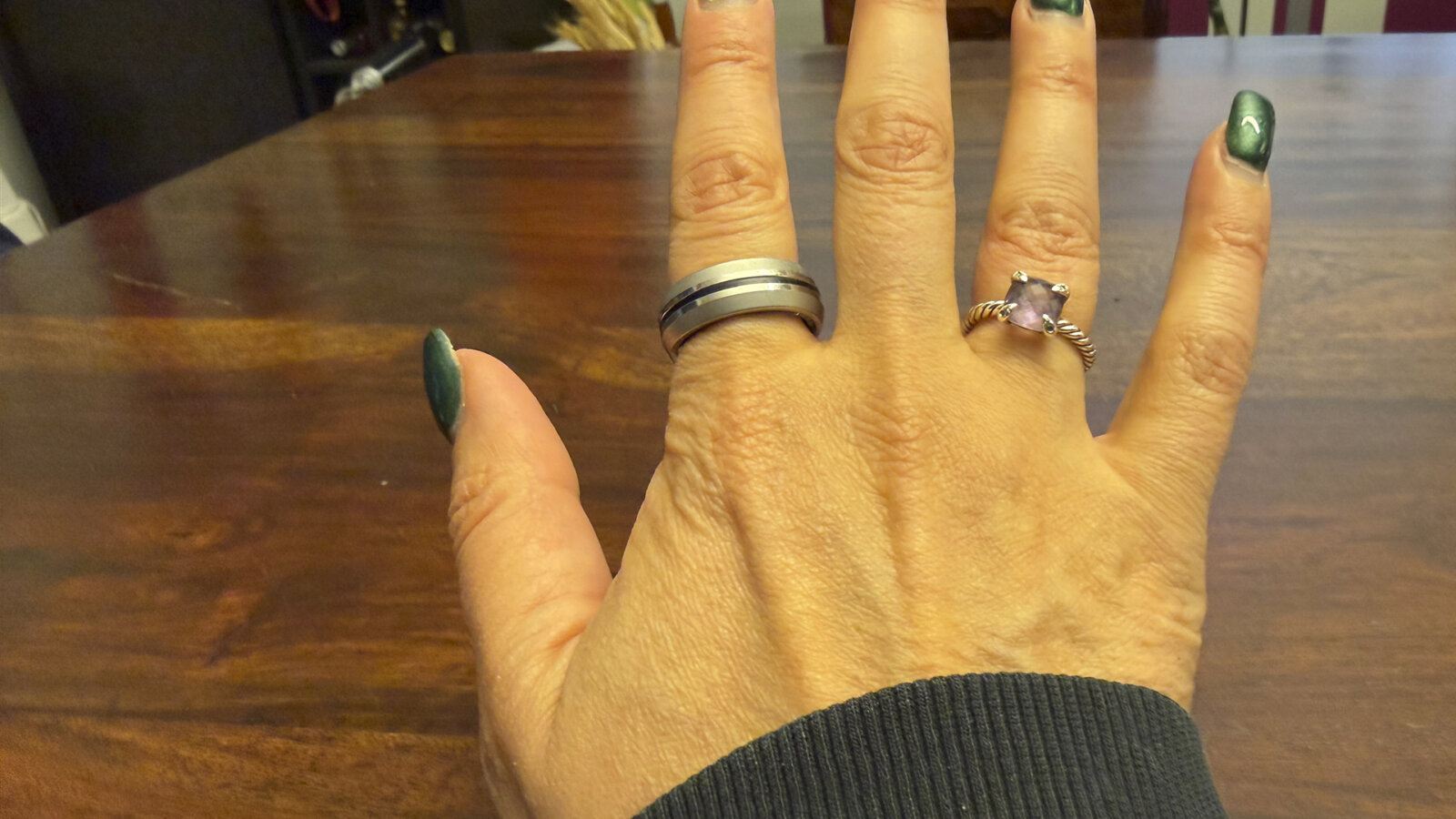
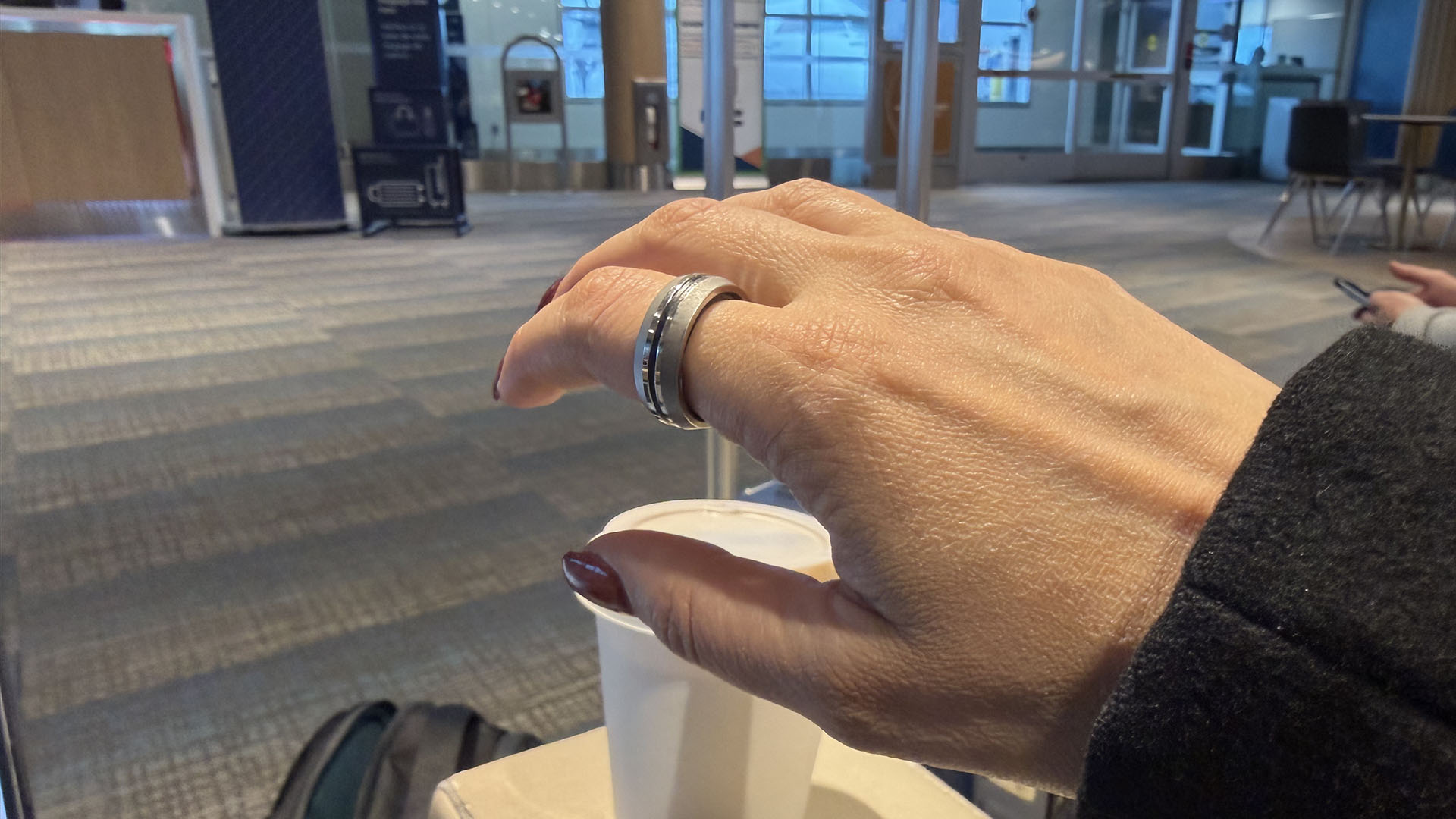
- Doesn’t sit flush around your finger
- Historical exercise tracking hidden in app
- Gets very warm while charging
Everyone is getting into the smart ring game nowadays. You might know Renpho for its handheld massagers, eye massagers, therapy masks, smart scales, and other wellness products. So, it’s a natural progression for the company to expand into smart rings. The Renpho Lynx smart ring quietly entered the market in mid-2025, and I had the chance to wear one for the last few weeks, comparing and contrasting it to others I have reviewed and gauging how it assists in overall health and wellness tracking.
About the Renpho Lynx Smart Ring
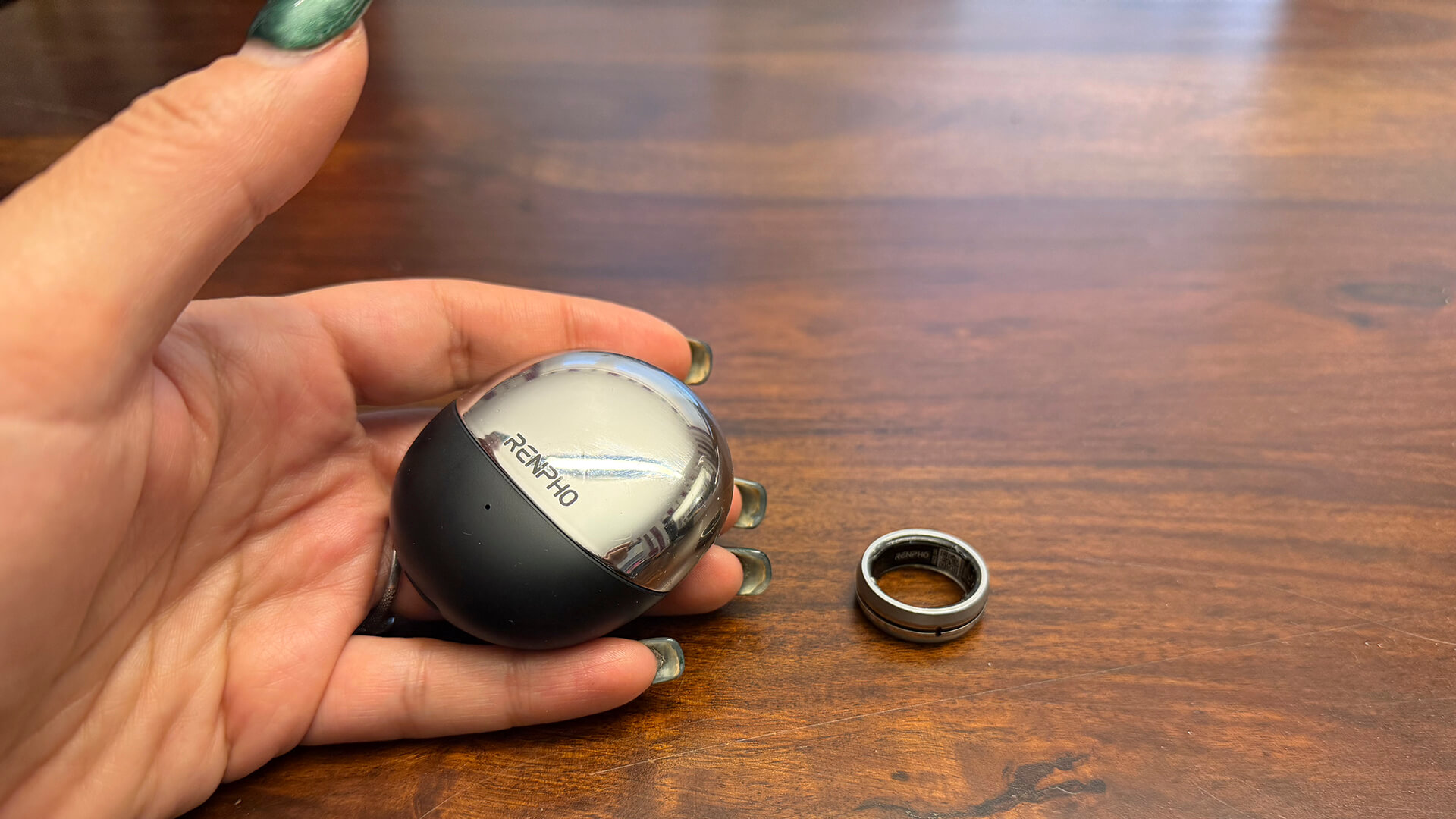
The Renpho Lynx smart ring tracks essential health metrics with its always-on design and companion Renpho Health app. Shipping with a water-resistant charging case, it tracks the basics like activities, steps, and calorie burn, as well as stress levels including patterns and fluctuations in mood, blood oxygen, heart rate, heart rate variability (HRV), and heart rate zones for exercises, and sleep along with sleep score and stages.
Available in titanium or black for $300 (currently on sale for $210), it’s one of the more affordable options on the market. Renpho products are available in Canada through Erikson Consumer.
Renpho Lynx Smart Ring Review
The Design
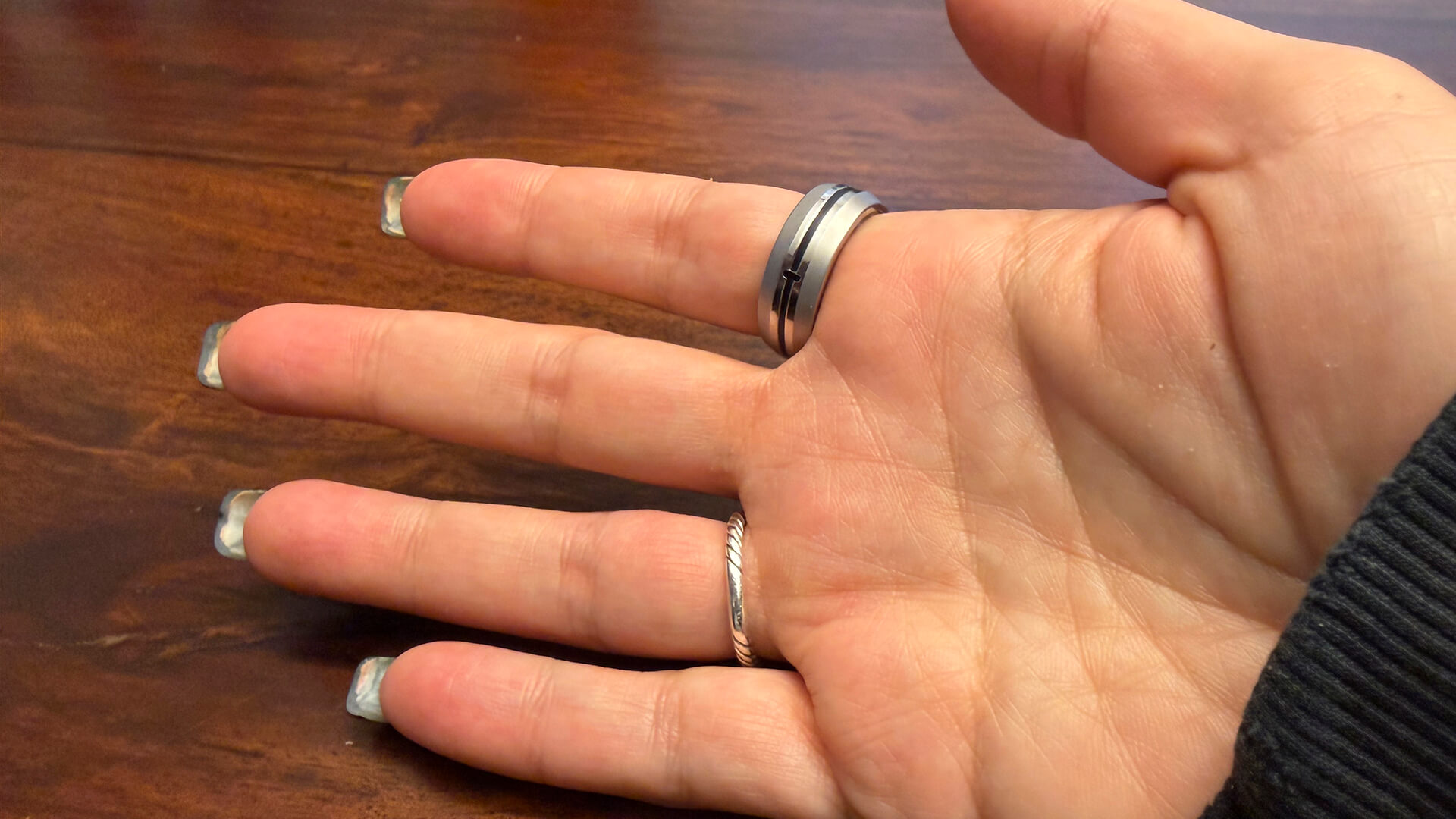
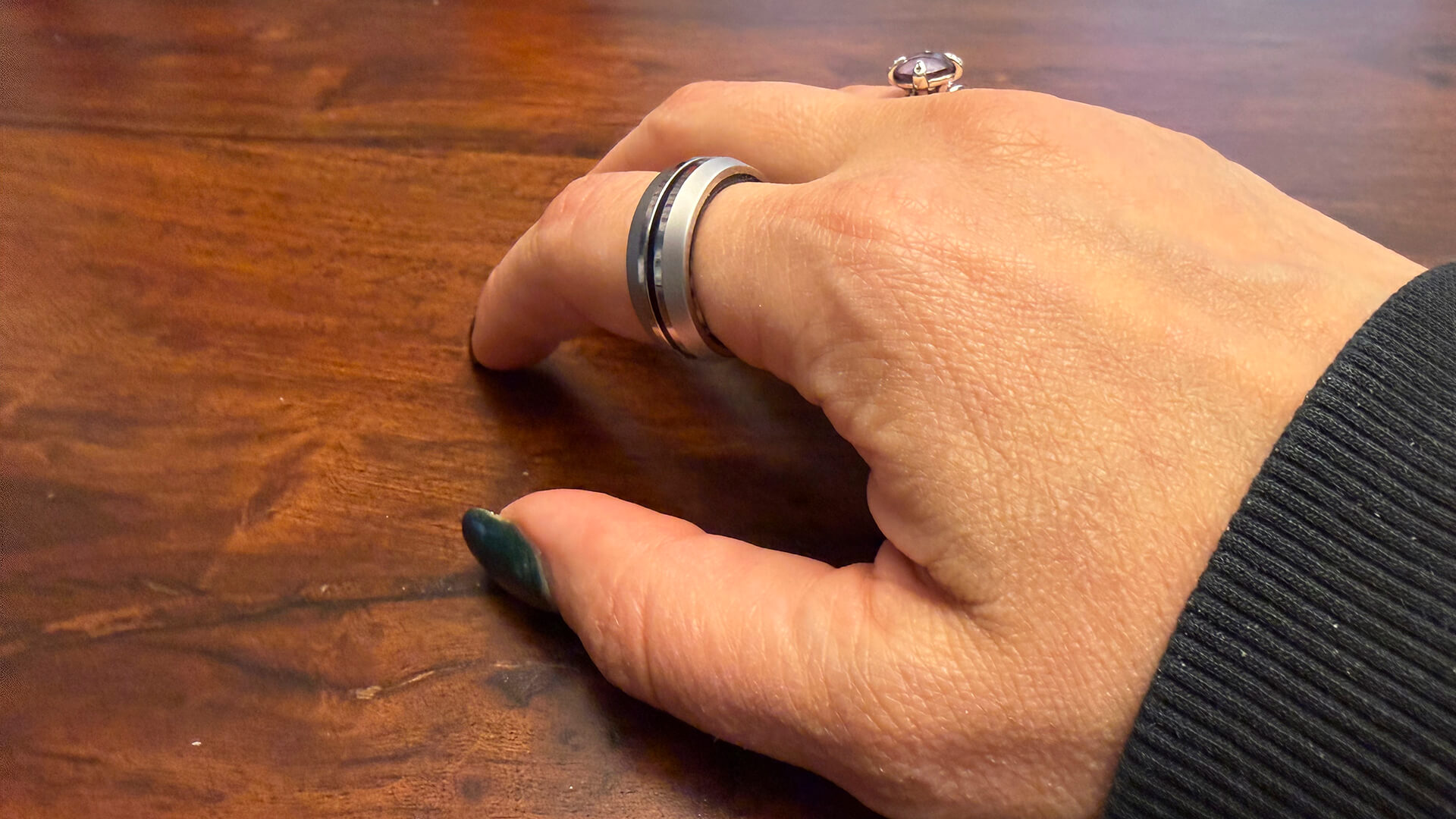
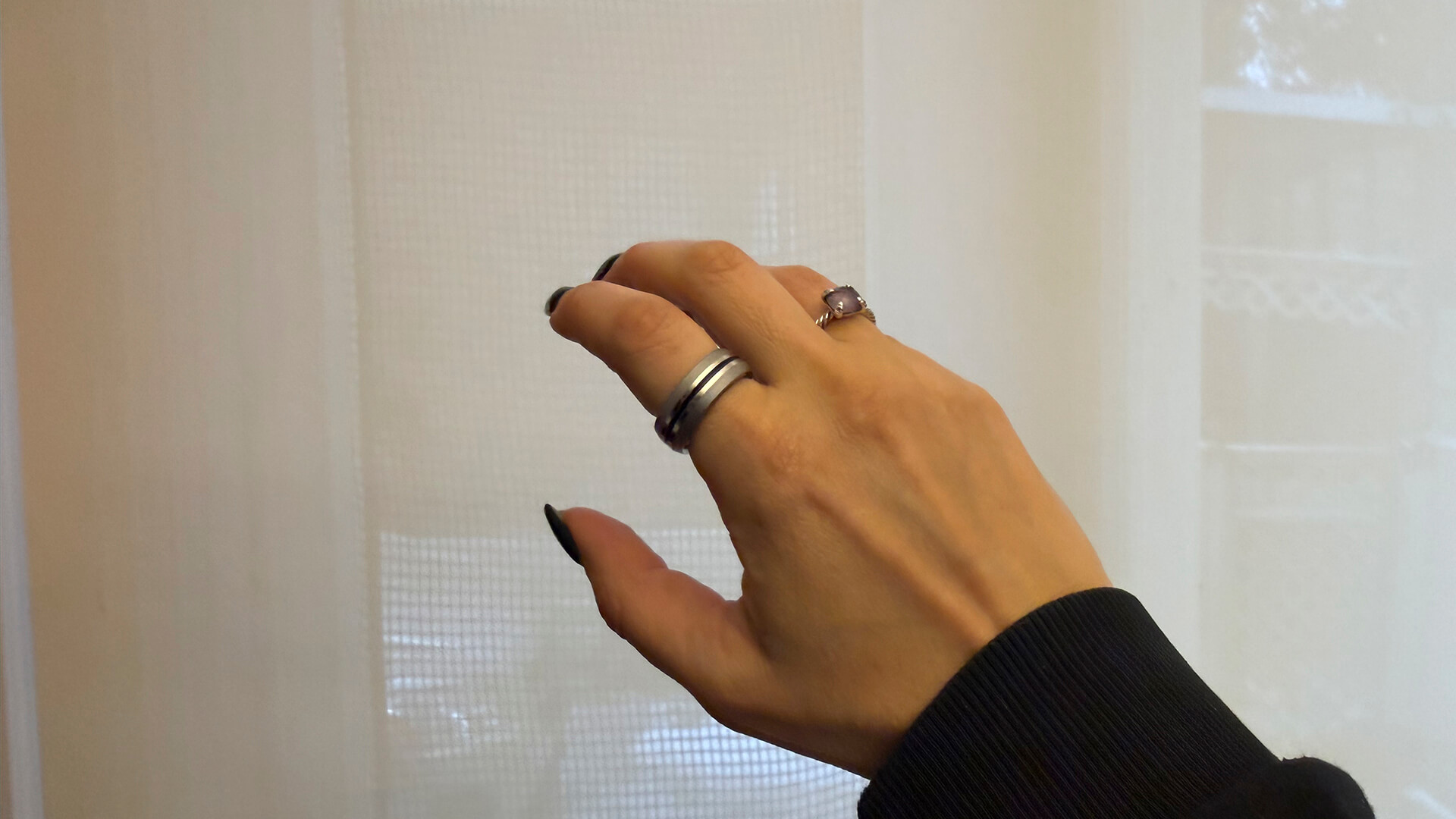
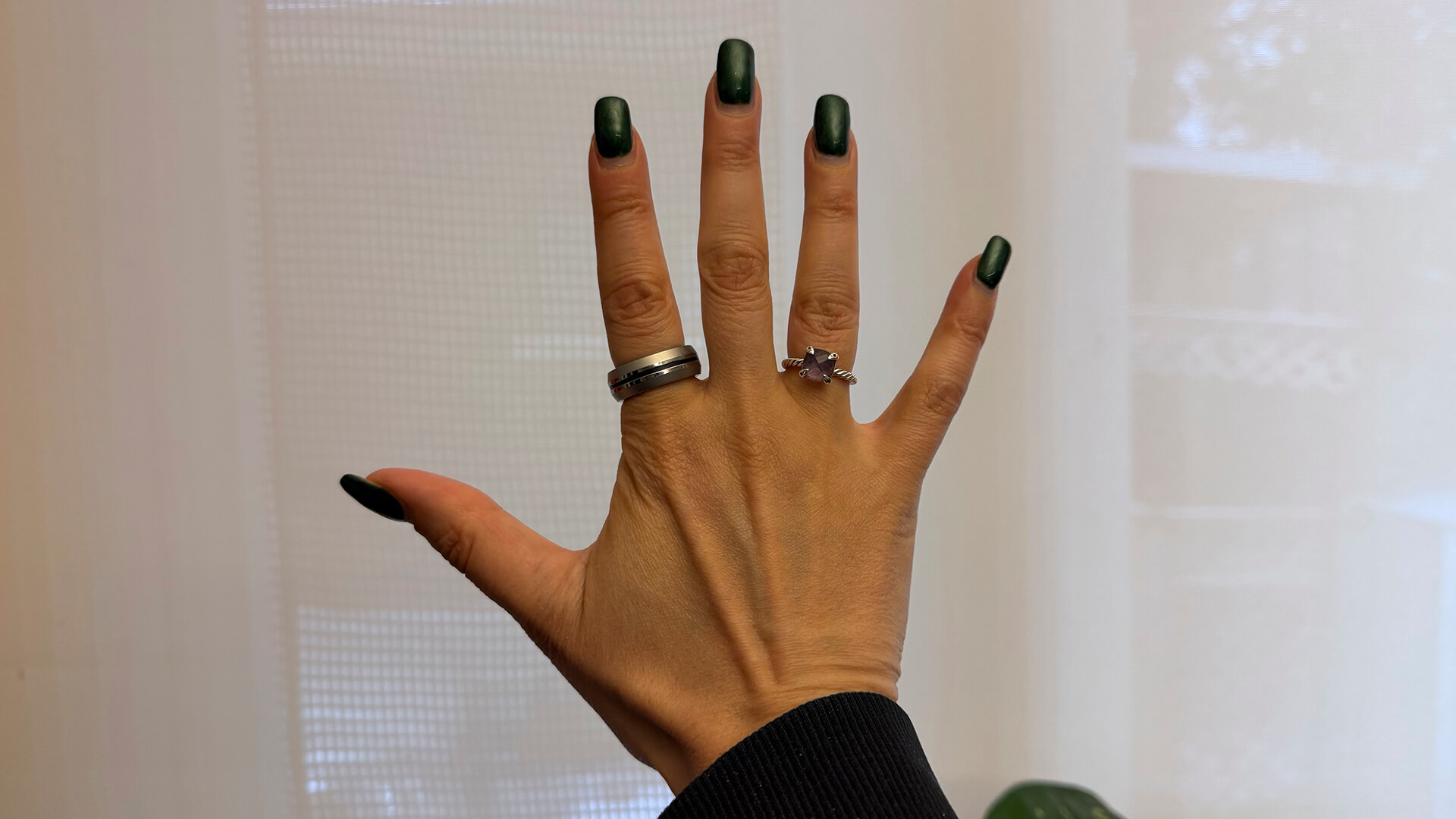
The Renpho Lynx smart ring is the first one I have tried that stands out as much for its look, which is both good and bad. The titanium finished option I received is silver with a black indented middle around the circumference and a tiny black notch that indicates which side should be facing your palm. On the positive side, this gives it a unique and stylish look. On the negative, it’s rather thick, not sitting as flush to your finger as others.
It doesn’t have an official IP rating, but I have washed dishes and showered with it on without issue. Renpho says it is “designed to go where you go — even when you’re in the pool or simply showering.”
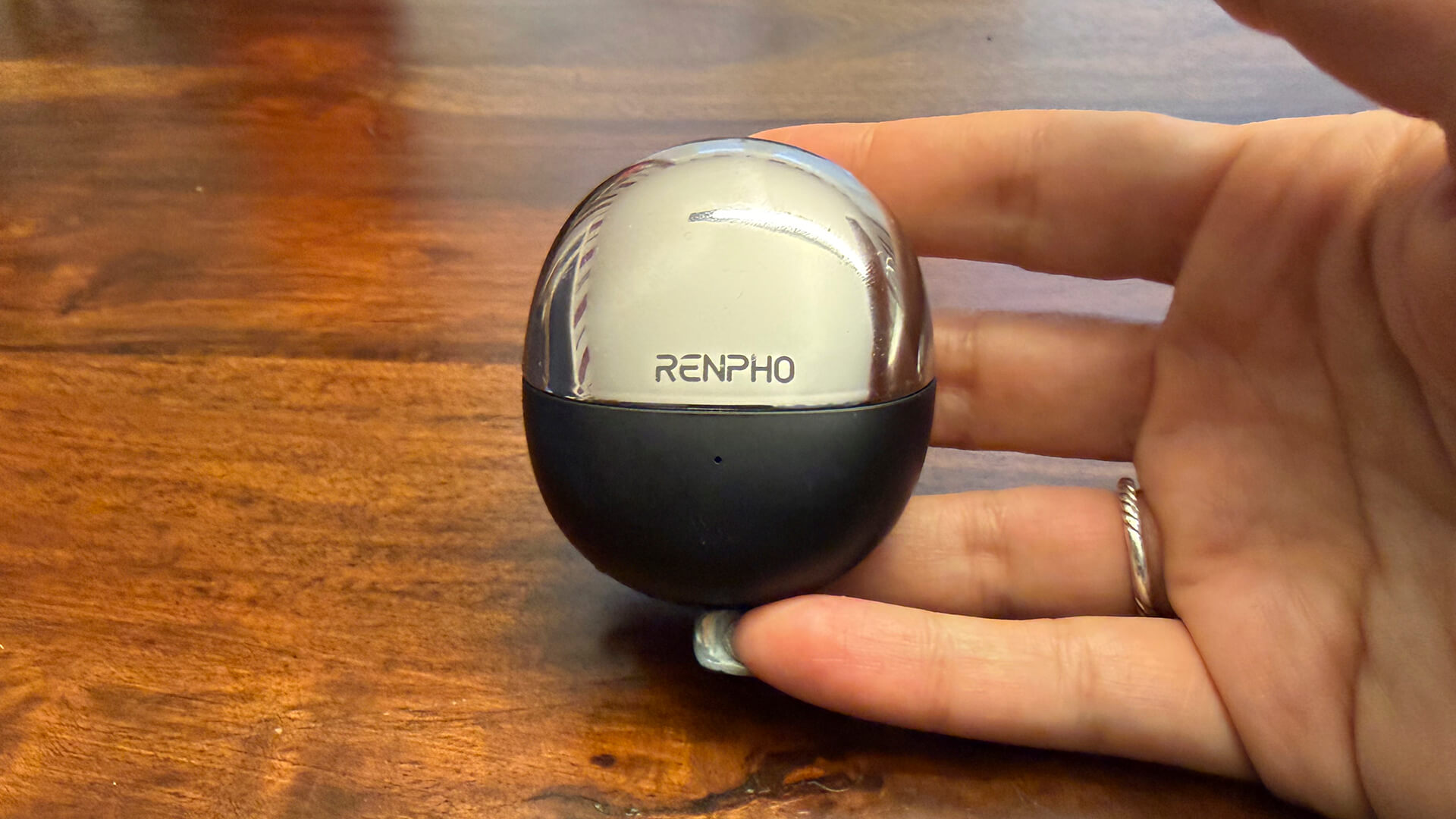
The case stands out as well, designed similarly to cases for wireless earbuds. It’s oval-shaped with the ring positioned upright inside versus lying flat. The interesting design choice sets it apart since most smart ring cases either come with a cover-less puck or square-shaped charger that resembles a ring box.
The App
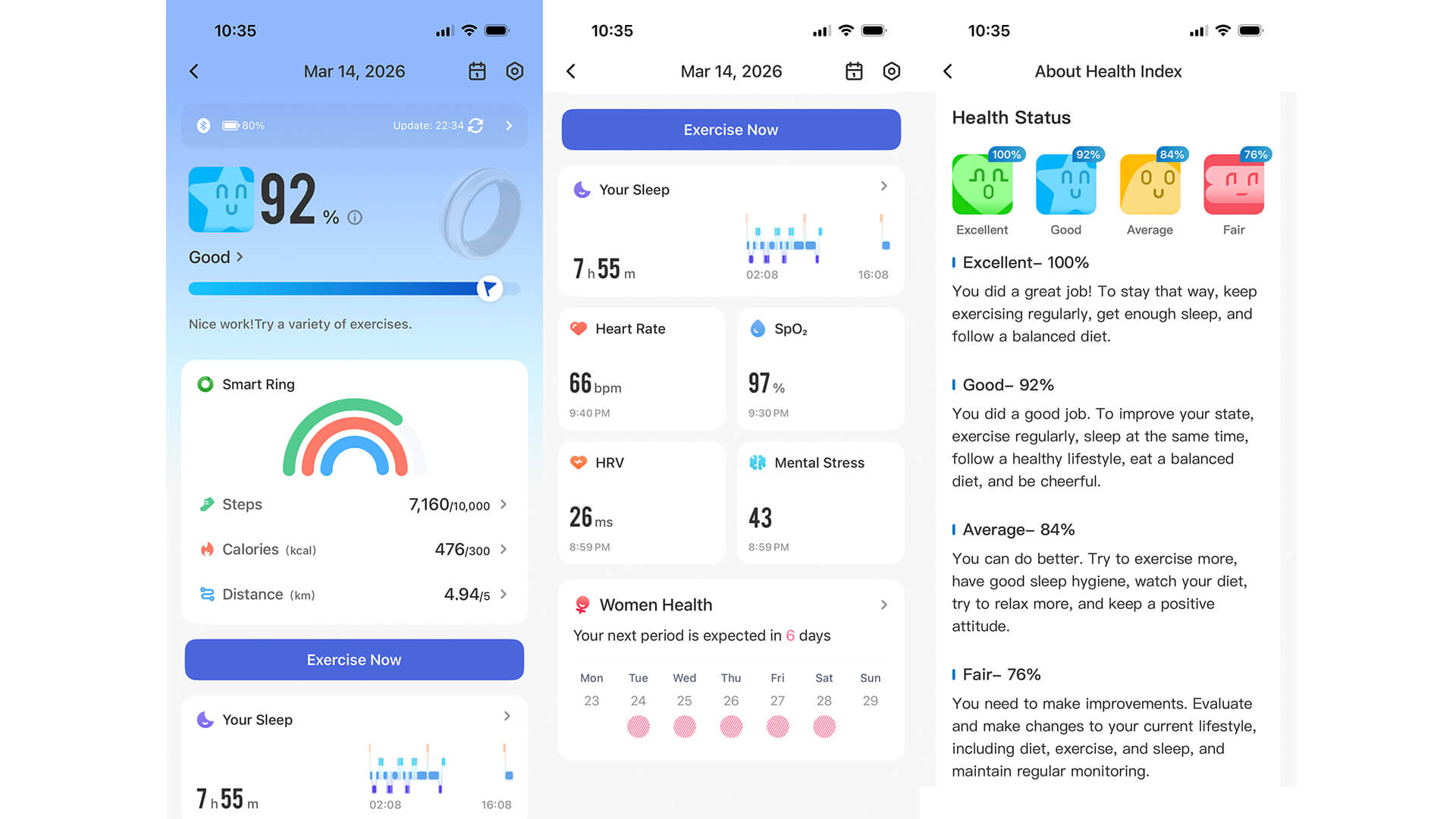
Use the Renpho Health app to monitor stats. You can see all your data from the ring as well as connected apps like Apple Health, Fitbit, and MyFitnessPal. For the sake of my review, I did not connect Apple Health so that I could ensure all data was coming from the ring and the ring only. This way, I was also able to compare the data separately to what was collected from my Apple Watch Series 11.
It takes a moment to sync each time you open the app, so if you want to start a workout, you’ll have to wait a few seconds before it connects. The same happens once you’re ready to end a workout. You get useful data, including a health index assessment of your daily health status in the form of a percentage. This number factors in exercise data, lifestyle, and stress levels with a handy legend advising what the percentage means. You also get steps, calorie burn, distance, sleep tracking with efficiency, latency, and a breakdown of sleep stages, heart rate and heart rate variability, Sp02, and mental stress. Keep tabs on women’s health, too, including your menstrual cycle and manual symptom logging.
The app is well organized, much more in line with a standard smartwatch app versus the more feature-rich, sometimes overwhelming smart rings apps I’ve used. It’s refreshingly simple. But what really matters is tracking accuracy.
Data Tracking and Accuracy
I find that the Renpho Lynx overshoots data at times and with certain metrics. On one day, it had logged twice as many steps as my Apple Watch. Is the ring mistaking furious typing for walking whereas the Apple Watch knows the difference? As it result, it also inflates calorie burn. My Apple Watch showed 180 calories burned by midday one day, for example, while the Renpho Lynx had already logged 330. As I write this, my Apple Watch has logged 3,541 steps so far with a distance traveled of 2.37 km while the ring has logged 6,885 and 4.82 km. That’s not a small discrepancy.
It’s possible the sensors were not always aligned correctly on my finger, which can happen if the ring shifts throughout the day. Renpho also notes that accuracy can vary based on “individual differences, usage habits, and environmental factors.” I did find that data like heart rate is more reliable, with real-time measurements generally falling in line with what was captured by my Apple Watch. Sp02 levels were identical as well. So, while you might have to take steps and calorie counting with a grain of salt, you can more comfortably rely on data like heart rate and Sp02. (Note that like any other smart ring, this is not a medical device.)
Exercise Tracking
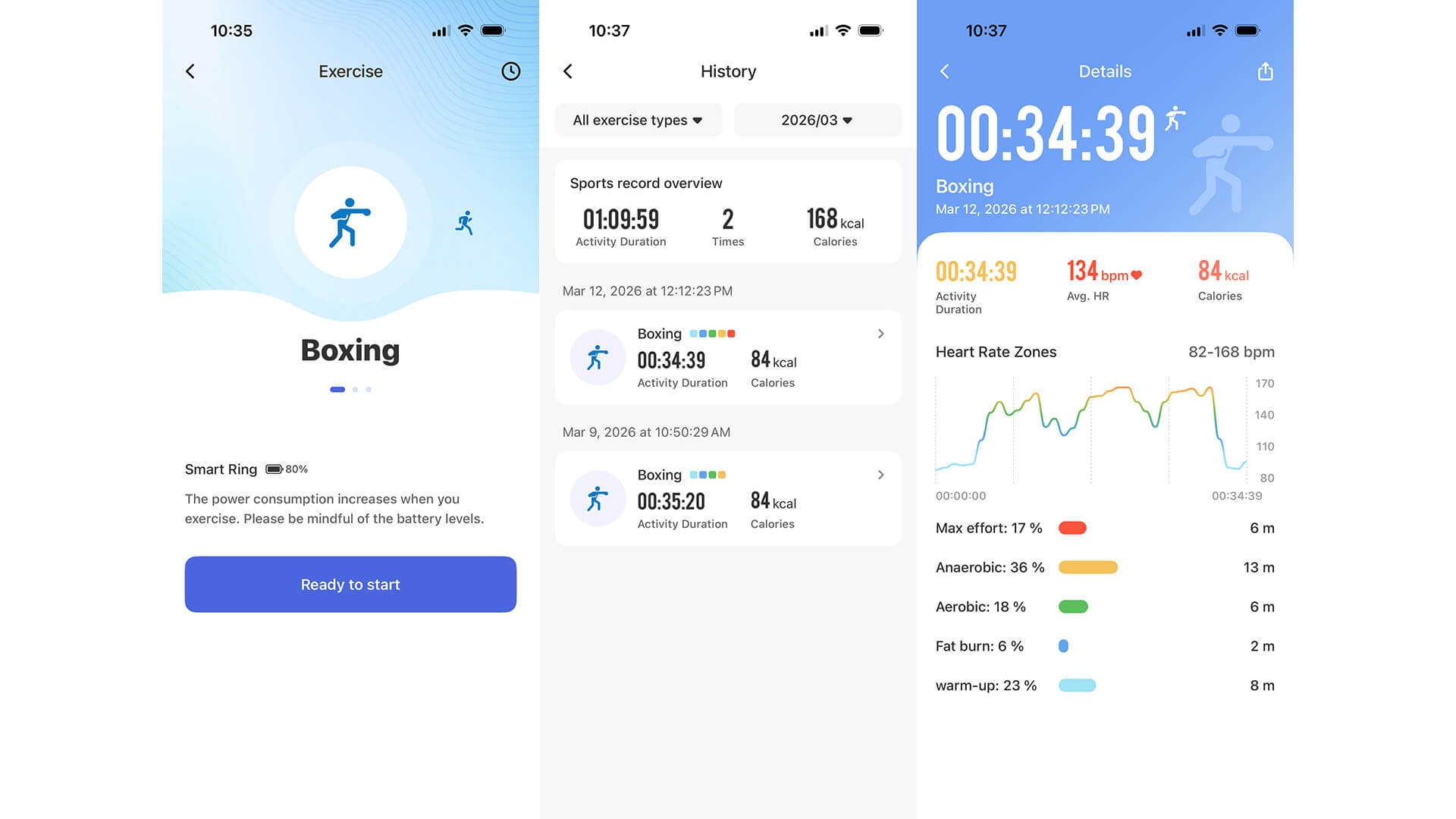
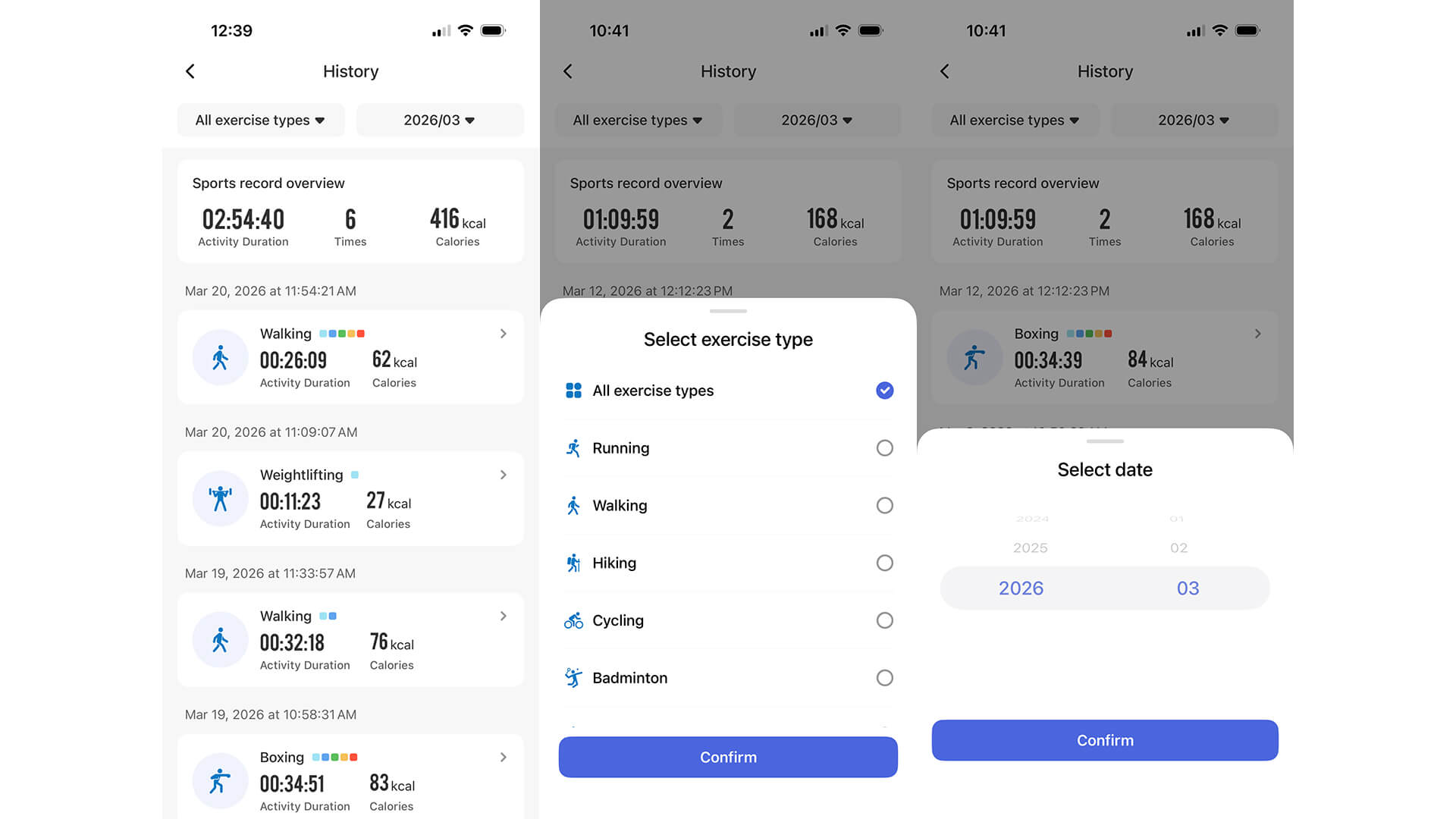
Track exercises manually: the ring does not automatically track anything, even walks. Tap the Exercise Now button, choose the relevant exercise from the list, and start, then stop once you’re done. Oddly, after tracking an exercise and seeing the stats, I could not find it anywhere in the app – the data seemed to just disappear.
It took me a while to figure out that if I select Exercise Now again then the tiny clock icon at the top, right, this is where all my previous workout stats reside. It’s oddly buried within this button instead of being a panel on the home screen, which would have made much more sense. I do like, however, that you get a list view of your workouts and can filter by month or even exercise type if you want to see all your running workouts, for example, or all your weightlifting in one view.
Once you find them, select any exercise to review a summary of stats, including the duration, average heart rate, calories burned, and heart rate zones. The data seems slightly wonky. For a 34-minute boxing workout, for example, the ring logged an average heart rate of 134 bpm and 84 calories burned whereas the Apple Watch logged an average heart rate of 112 bpm with 136 active calories burned. In another 34-minute boxing workout, my Apple Watch logged 149 active calories burned and an average heart rate of 113 bpm and the Renpho Lynx only 82 active calories with a 111 bpm average. I compared stats to another smart ring worn on a different finger on the same hand and it logged 196 calories and an average heart rate of 108 bpm. I suspect the heart rate measurement is fairly accurate given the consistency among all three and that the Renpho Lynx may be far more conservative with calorie burn than other wearables. This is also interesting since the Renpho Lynx, as noted above, seems to log more average daily calorie burn than the Apple Watch, overshooting the calorie burn when I’m at rest while undershooting when I workout.
For a 26-minute walk, the ring logged an average 113 bpm and 62 calories burned with a speed of 12’21” and a distance of 2.12 km compared to the Apple Watch that logged 114 bpm, 63 calories burned, but an average pace of 14’35” and 1.67 km. Since it’s a route I walk often, I know the pace and distance from the Apple Watch is the accurate one. However, at least in this instance, the bpm and calorie burn were the same. But the data is inconsistent.
Sleep Tracking
Sleep tracking data is inconsistent as well. Some nights, it’s right on par with my Apple Watch, other times, there’s a big discrepancy. This could, once again, relate to how to ring moves around on my finger. If I’m especially restless and it misses bits of tracking, that can impact overall accuracy. One evening while away in New York City, the Apple Watch recorded 7 hours and 29 minutes sleep, the Renpho Lynx only 5 hours and 34 minutes, and another smart ring I was wearing on a different finger on the same hand 6 hours and 39 minutes. It just goes to show you how much discrepancy there can be. With that said, when it was in line with my Apple Watch, however, the data was very close with no more than a half hour difference in each stage.
Battery Life and Charging
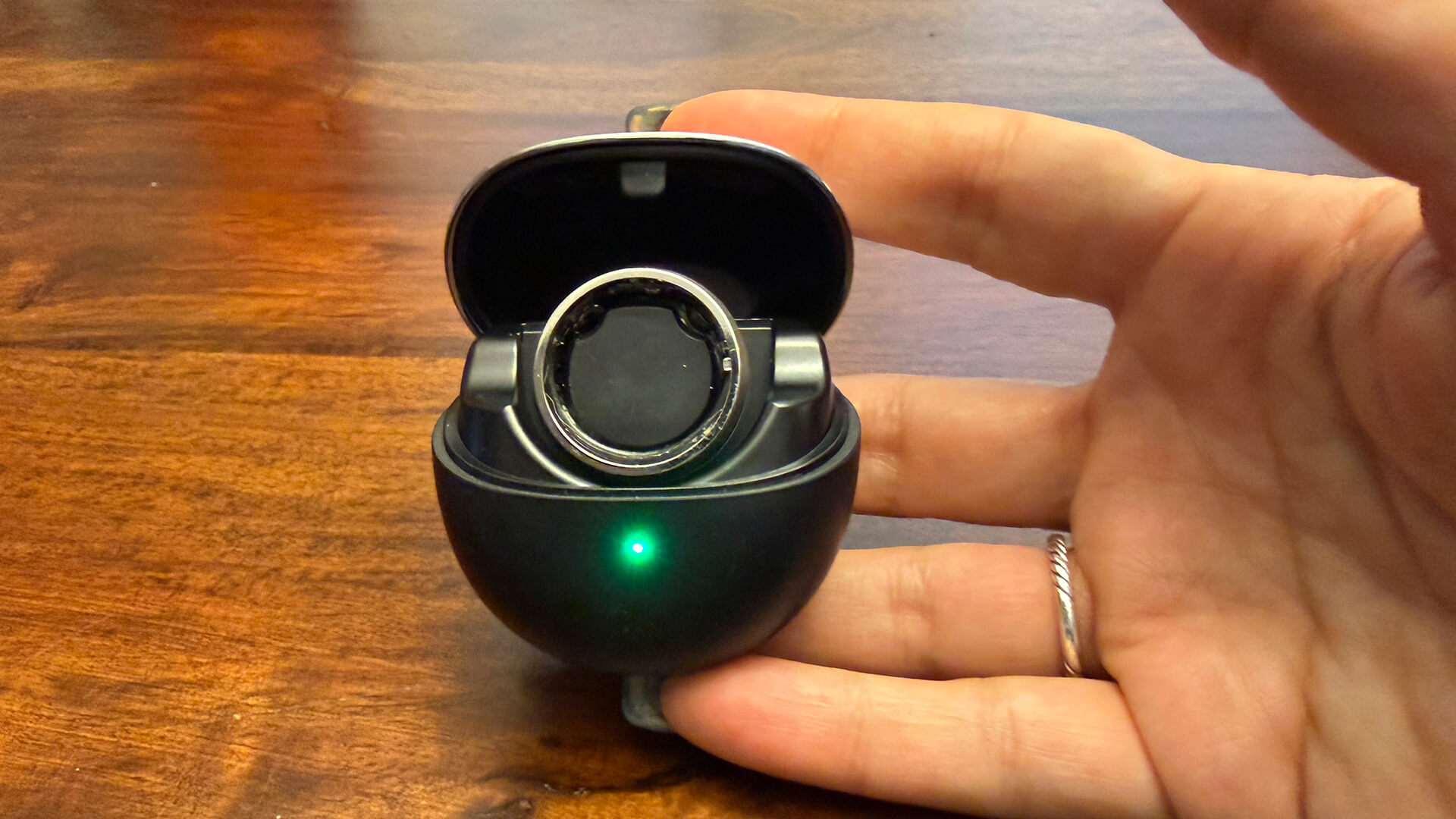
Battery life is an important feature in smart rings. The Renpho Lynx is rated to last up to 12 days per charge. That’s overly generous, but in my experience, it still lasts about seven or eight days, which is impressive. This even includes when recording daily workouts, which increases power consumption. I suspect if you don’t track exercises, it could probably last the full 12 days, or at least a few days longer than a week. After five days of 24/7 wear, the battery was still at 30%. One thing to note is that it gets quite warm while charging in the case, to the point that I can feel the heat around my finger when I put it back on.
Should You Buy the Renpho Lynx Smart Ring?
The Renpho Lynx smart ring is a good starter ring. It doesn’t quite measure up to more expensive options on the market in terms of design and accuracy. But you can rely on the most important vitals. While I don’t like how exercise data is buried, I do like how it’s arranged once you find it.
There’s no fancy AI, but you do get a holistic picture of your health, the importance of which is reinforced by the percentage health status score being front and centre when you open the app. Based on the consistently inflated numbers for steps and calorie burn, I wouldn’t trust this ring to confirm that you’re actually getting your 10,000 steps or burning the calories you aim to burn.
The Renpho Lynx smart ring wouldn’t be my first choice, especially at its regular price of $300 in Canada. The current discounted price of $210 is more palatable if you want something simple and relatively affordable.
Ideally, this is a smart ring to get if you already have a smartwatch you use for essential tracking but want secondary or back-up data if your watch dies while you’re out. I wouldn’t replace a smartwatch with this smart ring. But as a supplemental health device, you might find it valuable. I’d only get it at the sale price, though.
Get the Renpho Lynx smart ring for $300, currently on sale for $210.