
Up until now, the core feature in smartwatch and smart ring apps just for women including cycle tracking, allowing ladies the track their menstrual cycles, fertile window, and ovulation. Some also include pregnancy tracking features. Now, Oura is adding advanced women’s health features, including deeper pregnancy support as well as symptom logging and analysis for women going through menopause or perimenopause.
“We’re expanding the Oura experience to better reflect the deeply personal and varied realities of women’s health,” explains Holly Shelton, Chief Product Officer at Oura. “From pregnancy to perimenopause, women undergo profound physiological changes that have too often been dismissed or misunderstood. For generations, many have faced these transitions without the knowledge, resources, or care they deserve, and we’re committed to changing that. These launches represent a new chapter in health technology, one grounded in empathy and privacy, backed by science, and built on the belief that every stage of life deserves to be seen, understood, and supported.”
Pregnancy Insights Follow Along With Your Journey
For pregnant women, the next-generation Pregnancy Insights provide comprehensive insights into how biometrics evolve throughout pregnancy versus only during periodic check-ins with a doctor. (It should be noted that Oura Ring is not a medical device and is not intended to diagnose, treat, cure, monitor, or prevent medical conditions/illnesses.) Expectant mothers can enjoy continuous, individualized, and contextualized tracking of physiological changes, informative educational content, and daily tools to help interpret and navigate each phase of pregnancy more effectively.
The ring helps define common patterns of pregnancy, informed by biometric data from over 10,000 pregnancies. This includes gestational age tracking, which updates women via trimester rings with expandable weekly insights for better discoverability and usability.
For the first time, members can visualize how key biometrics, including temperature trends, resting heart rate (RHR), heart rate variability (HRV), and respiratory rate, change across their pregnancy. This allows members to view data by trimester or across the full length of the pregnancy and displays it alongside a reference range derived from anonymized and aggregated Oura population data. While Oura is not a diagnostic device, this ongoing visibility provides reassurance as members progress through pregnancy, helping them distinguish between expected fluctuations and patterns that may warrant a conversation with a care provider.
Members can also tag symptoms, experiences, and emotions, in a new section called Keeping Track. Weekly messages are delivered based on scientific literature about common symptoms based on the user’s gestational age are, prompting members to reflect and track what they’re experiencing. There’s an expanded library of pregnancy-specific symptom tags, such as Braxton Hicks contractions, nausea, food aversions, pelvic pain, and skin changes.
Developed in collaboration with leading women’s health experts, including Oura Medical Advisor and Reproductive Endocrinologist Eleni Jaswa, MD, the new Pregnancy Insights experience offers integrated educational content as well that helps demystify changes in sleep, recovery, and overall well-being. Through this, members gain practical context for how their metrics are expected to shift and how to navigate those changes with confidence.
In addition to the core feature redesign, Oura is introducing several pregnancy-aware updates across the app to deliver more personalized feedback. Biometrics like HRV, RHR, and temperature trends follow distinct, evidence-backed trajectories across pregnancy, providing valuable physiological insights for expectant mothers. Oura’s Readiness, Sleep, Rest Mode, and Recovery Mode insights messages now contextualize pregnancy so women can understand why their scores are impacted.
Members can bring pregnancy into their conversations with Oura Advisor, gaining deeper context, education, and support throughout their journey. Reproductive health history is now in one streamlined view so members can explore how their data evolves before, during, and after pregnancy. This includes full visibility into their pregnancy and all past and current cycles when they return to Cycle Insights.
New members who join Oura during pregnancy and do not already have Oura data will enter a calibration state lasting seven to 15 days, after which they will begin to see Pregnancy Trends. This ensures that all members enter the experience with an individualized baseline.
Perimenopause Check-in Could be a Game-Changer
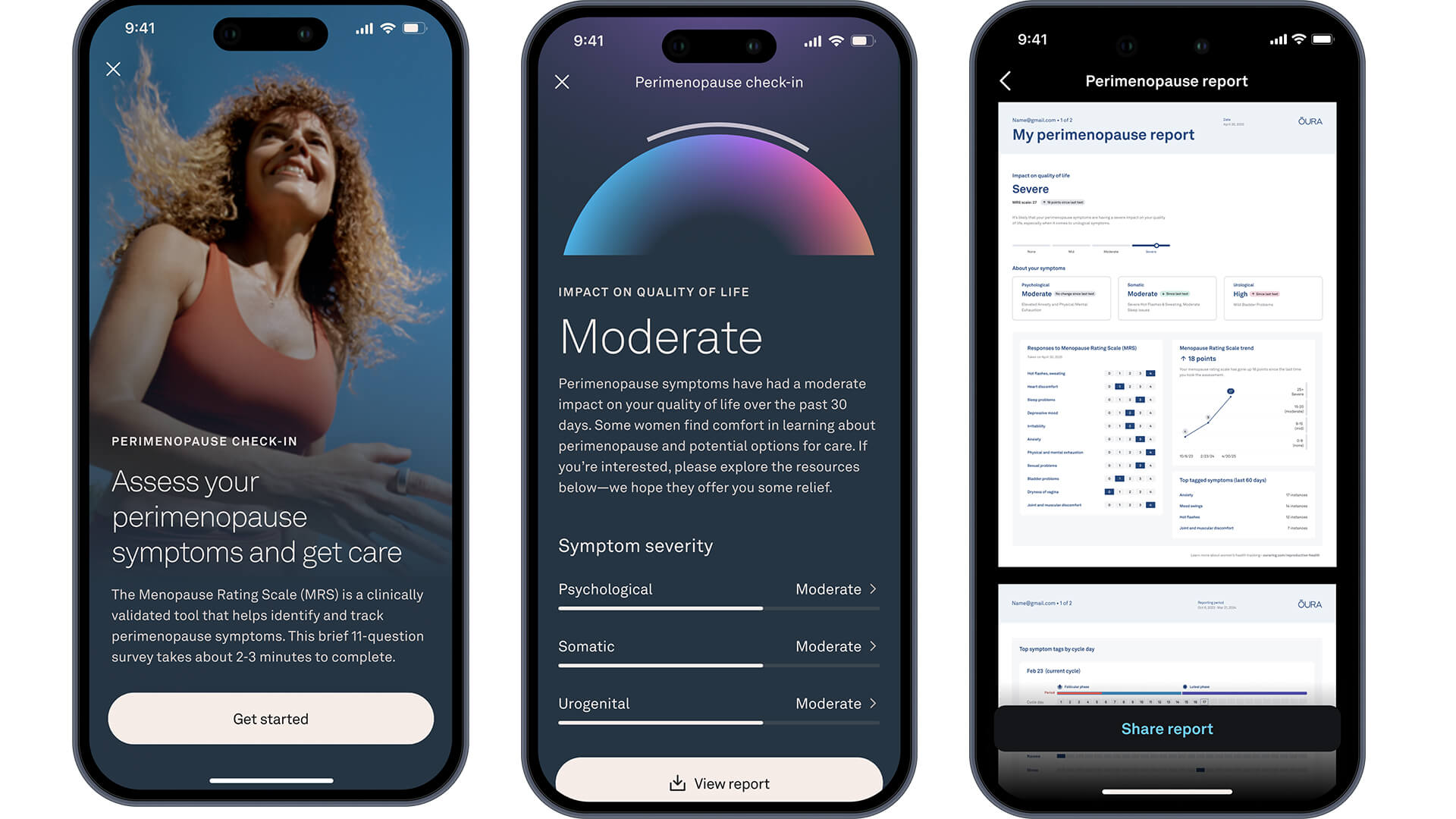
For women approaching pre- or perimenopause, or who might already be in full-blown menopause, Perimenopause Check-In is designed to help membersassess the impact of their symptoms through a clinically validated survey, track trends over time, and connect directly to expert care.
According to Oura, perimenopause is one of the most overlooked phases in health and wellness, despite the fact that there are currently over one billion women worldwide either in perimenopause or post-menopause. Women navigating perimenopause have little access to tools that recognize the physiological complexity of this transition.
Perimenopause Check-In integrates validated symptom scoring, wearable data, and direct access to specialty care, all in one platform. The new tool empowers members to track symptoms, understand their impact, and secure care through a combination of structured self-assessment, health data visualization, and in-app care pathways.
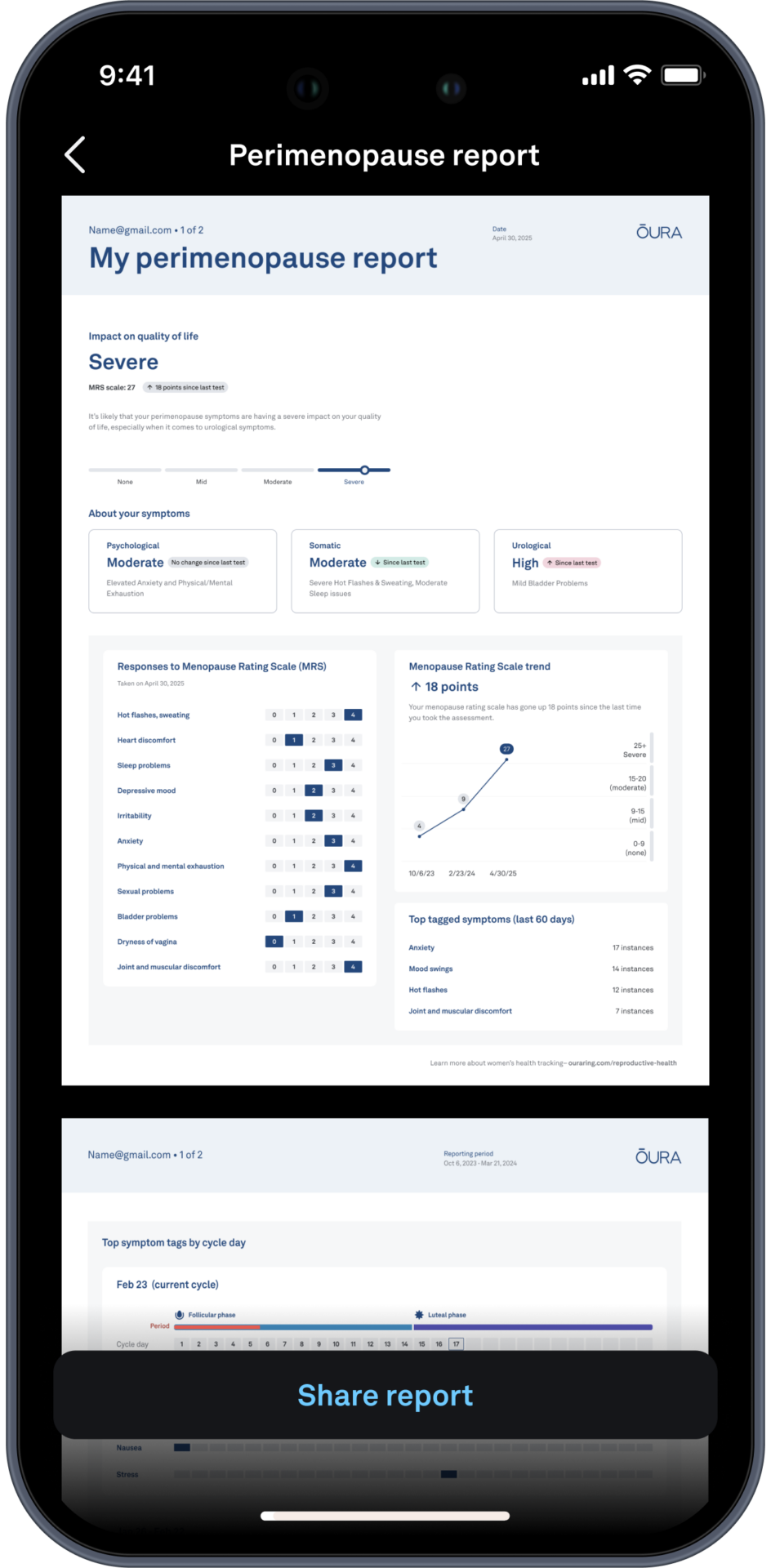
Members begin by completing the 12-question Menopause Rating Scale (MRS) survey to receive a personalized assessment reflecting the severity of their symptoms and overall quality of life. Following survey completion, members receive a PDF report summarizing their symptoms, biometric trends, and cycle data that they can share with healthcare providers. They also gain access to a curated educational content hub that illuminates perimenopause symptoms, shares science-backed guidance, and features stories from real women navigating this life stage.
Depending on their health needs, members can access care from Oura’s network of women’s health partners, where care teams are equipped to use Oura’s biometric data to provide more informed, individualized support. The Perimenopause Check-in feature is only available in the U.S. right now, but is planned for other countries by the end of the year.
What About Privacy?
Given that this information is very personal, Oura notes that it is committed to protecting member privacy, especially when it comes to this sensitive women’s health data. There are technical and organizational safeguards to keep data safe and secure. Members maintain full control over their data rights, with transparent privacy settings and the ability to opt in or out of features at any time.
As Oura expands into clinical partnerships with leading health providers, data sharing with third parties is only permitted if and when members choose to allow it. These collaborations are built on “trust, clinical integrity, and a shared commitment to advancing care without compromising individual privacy,” says Oura.