
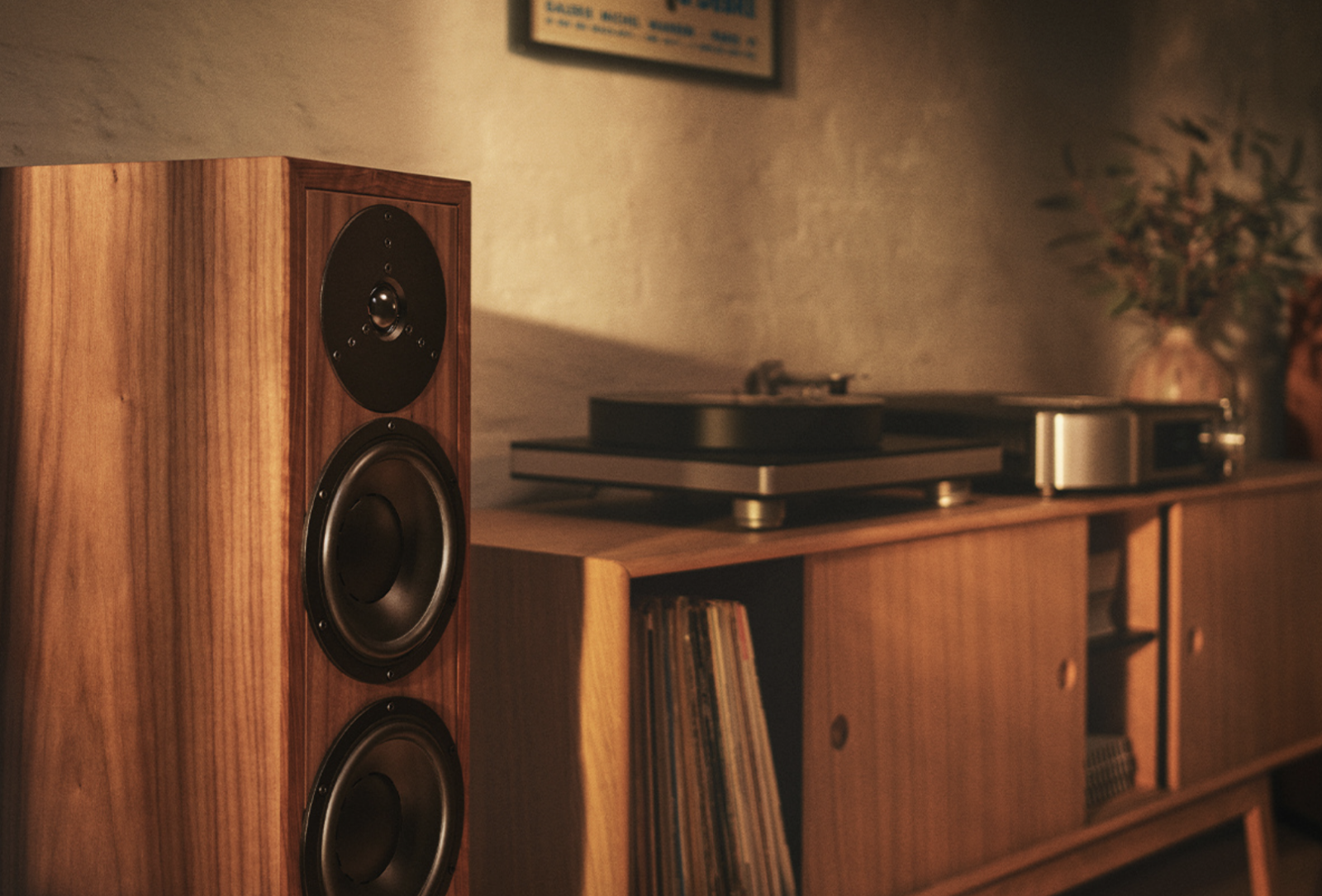
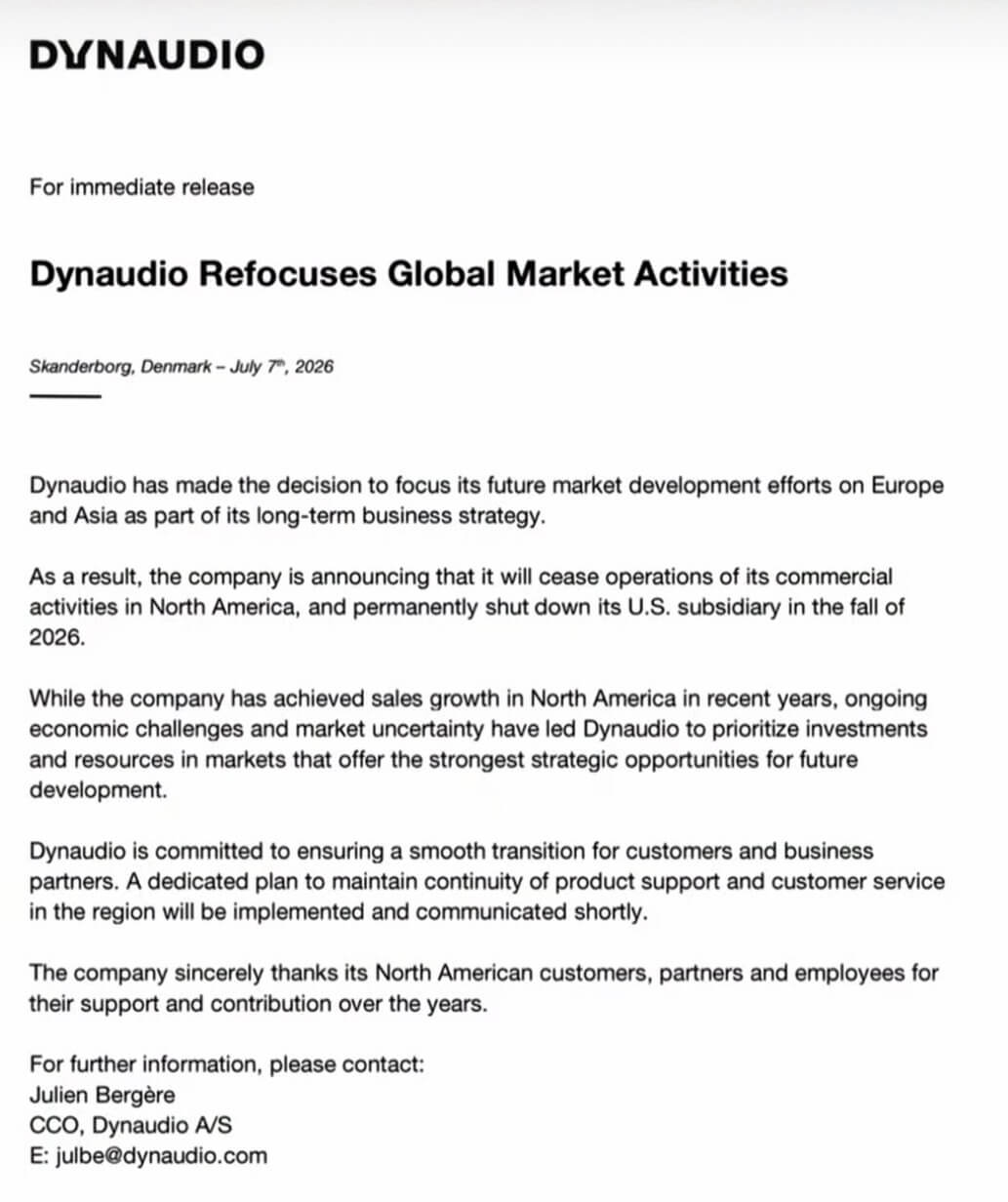
Yesterday’s Dynaudio announcement that it will cease commercial operations in North America and permanently close its U.S. subsidiary in fall 2026 lands as a genuine shock to many hi-fi enthusiasts, dealers, studio professionals, and long-time owners. The company’s own explanation is measured and brief, stating it will refocus future market development on Europe and Asia, citing ongoing economic challenges and market uncertainty, while acknowledging recent sales growth in North America.
Founded in Denmark in 1977, Dynaudio became one of the most respected names in loudspeakers by pursuing a philosophy that was unusually demanding for the industry: if the company wanted a better speaker, it would have to build more of the speaker itself. Rather than relying primarily on off-the-shelf parts, Dynaudio developed a reputation for designing and manufacturing its own drivers, including the woofers, midrange units, and soft-dome tweeters that helped define its sound.
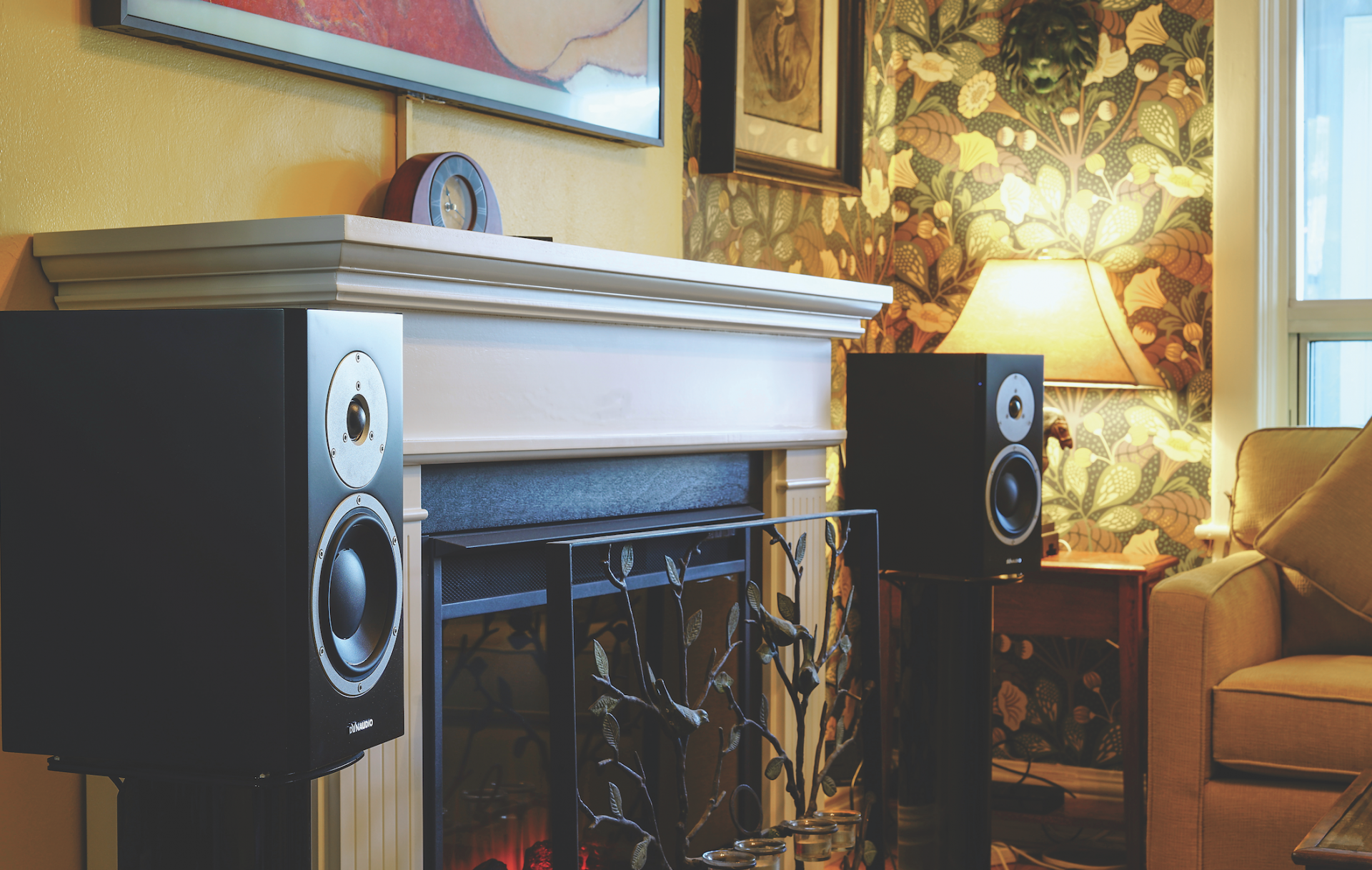
While loudspeakers are usually judged by their cabinets, finish, and brand image, their character is largely shaped by the drivers and crossovers inside. Dynaudio’s decision to control those core components gave the company a distinctive identity that celebrated clean Scandinavian design on the outside, meticulous acoustic engineering on the inside. Its proprietary materials, notably magnesium silicate polymer cones, and its celebrated tweeter designs became part of the brand’s mythology among audiophiles and recording engineers.
Over the decades, Dynaudio expanded beyond traditional home hi-fi. Its speakers found homes in recording studios, custom installations, and premium automotive systems. The brand’s professional monitors earned credibility with engineers while its consumer lines appealed to listeners who wanted detail without harshness. Partnerships with automakers such as Volvo, Volkswagen, and Bugatti helped reinforce Dynaudio’s image as a premium engineering brand rather than simply another loudspeaker label.
So why would Dynaudio exit North America while acknowledging sales in the region are on the rise? The official reason is strategic with Dynaudio saying Europe and Asia now offer stronger opportunities for future development. But it is hard to avoid some speculation that this could be a big F-U to the current U.S. administration not only against the frustration of tariffs but also the on-going rhetoric of the United States wanting to own Greenland. Yes, North America is expensive to serve, especially for a company selling large, premium products that require shipping, warehousing, dealer support, service infrastructure, and careful brand presentation. Even when sales are growing, the cost of maintaining a full subsidiary can become difficult to justify if margins are squeezed. Even more so when national pride is on the line.
Tariffs may be one part of the story. For a company with Danish manufacturing, Chinese ownership, and some production connected to global supply chains, unpredictable import costs can complicate pricing and planning. Inflation, shipping costs, currency fluctuations, and the changing economics of specialty audio retail may also have contributed. None of these factors alone needs to be decisive but combined they can turn a large market into a less attractive one.
There is also a political backdrop that is hard to ignore, though it should be handled carefully. President Donald Trump’s repeated rhetoric about U.S. control or ownership of Greenland, a self-governing territory within the Kingdom of Denmark, has created diplomatic tension between the United States and Denmark. It would be irresponsible to claim that this caused Dynaudio’s decision without evidence and the company has given us none. But in a climate where tariffs, trade uncertainty, and political friction are all part of the business environment, it is plausible that such tensions may have contributed to a broader sense of a legacy Danish brand saying enough is enough.
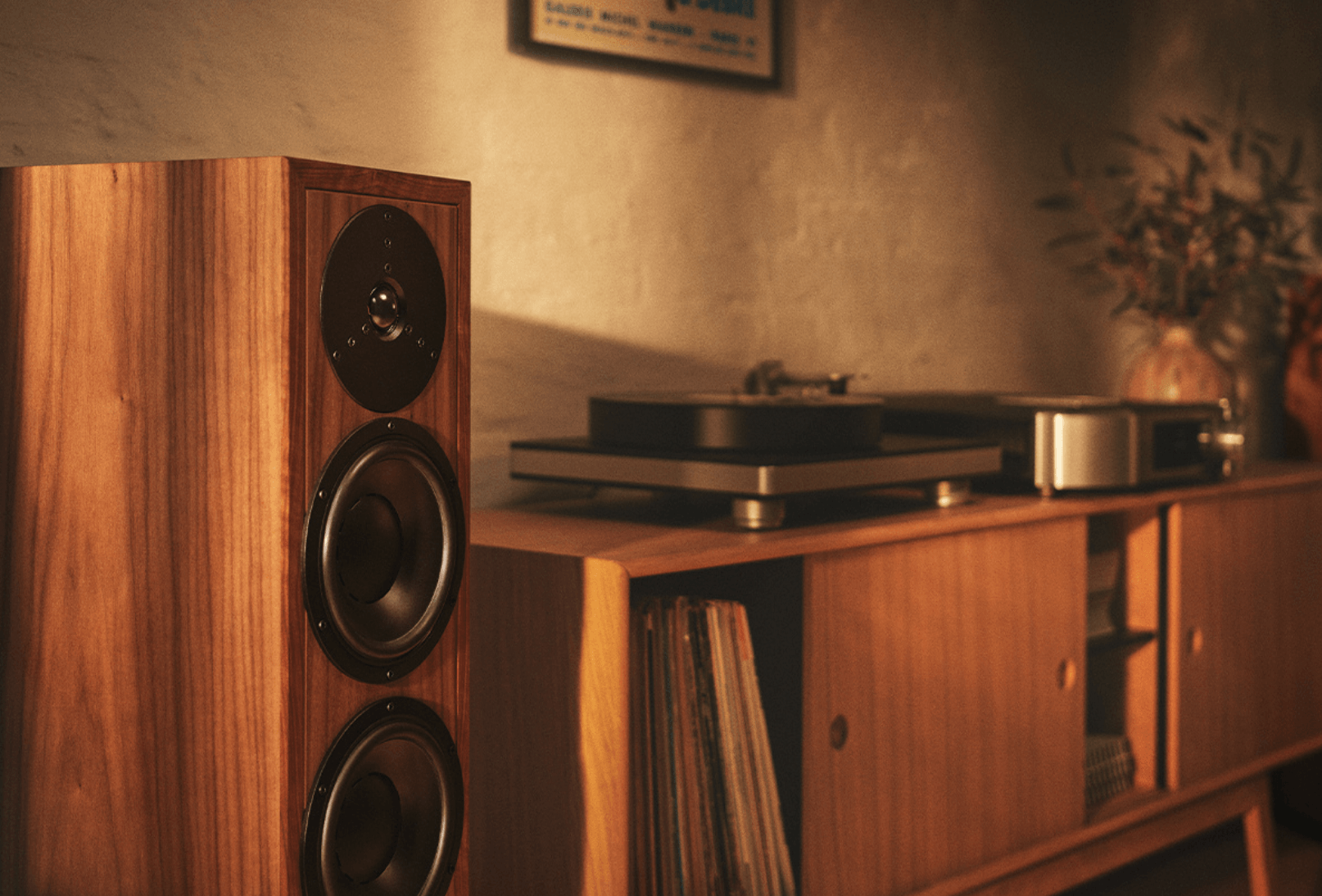
Whatever the precise combination of reasons, Dynaudio’s withdrawal is a meaningful loss for the North American market. Few loudspeaker brands have combined such strong design discipline, in-house driver expertise, studio credibility, and audiophile heritage. The company says it intends to maintain continuity of product support and customer service, but owners and dealers will naturally want details on warranty claims, parts, repairs, and service availability after the subsidiary closes.
For nearly half a century, Dynaudio’s story has been about controlling the driver, controlling the crossover, the cabinet, and ultimately the listening experience. Its North American exit may be another expression of that same instinct, this time applied to business strategy. When a market becomes too uncertain, too costly, or too politically unpredictable, even a growing market may no longer feel like the right one to serve directly.
Let’s just hope that this is not the start of a trend where we lose other European brands. Nobody wins if that were to happen.